El-İcliyye bint el-İcli was an astrolabe maker who worked in Aleppo in the 10th century. She is one of the few women known to be involved in scientific instrument making in the Islamic world, and today she is more commonly known as Meryem el-Usturlabiyye.
What is known about his life is based on a single source, İbnü'n-Nedîm's work called el-Fihrist. Accordingly, al-Icliyye was the daughter of the astrolabe maker al-Icli. Father and daughter were educated under Nastulus, an astrolabe master from Baghdad. Al-Ijliyya made tools in the service of Seyfüddevle, the Hamdani emir who ruled Aleppo between 944-967.
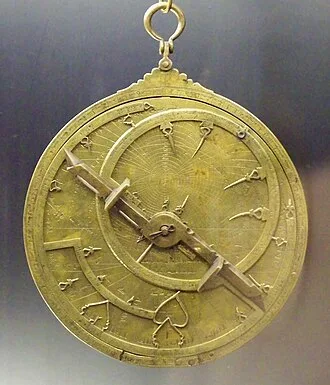
The astrolabe was an instrument used to measure the position of the Sun and stars, to determine time, and to find direction; Therefore, it was important for daily religious and practical needs as well as astronomy.
The commonly used name "Mary" is not mentioned in the only source about her; has appeared in modern popular publications. "Usturlabiyye" is not a personal name, but a description indicating his profession. The dates of his birth and death and the details of the tools he made are unknown.
commemoration
The main belt asteroid 7060 Al-'Ijliya, discovered by Henry E. Holt at the Palomar Observatory in 1990, is named after him. The astrolabe-master protagonist of Nnedi Okorafor's Nebula Award-winning science fiction novel Binti was inspired by him. The character Mariam in the Netflix series Vikings: Valhalla is also designed as a homage to her.
Despite the scarcity of information about her, al-Ijliyya has become a name frequently mentioned in discussions about the place of women in the history of Islamic science.