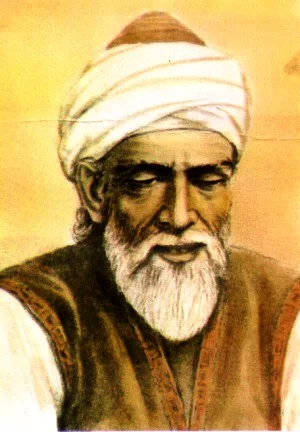
Ali bin İsa al-Usturlâbî was an astronomer and observation instrument maker who trained in Abbasid Baghdad in the 9th century. Dates of birth and death are unknown; Information about his life is based only on a few records related to his scientific work. The adjective "Astrolabî" added to his name comes from the fact that he made the astrolabe, an instrument used to measure the height of celestial objects and calculate their positions.
He was known as a master craftsman in this field during his time. The astrolabe was one of the fundamental tools of medieval astronomy, used in many tasks, from finding the night time to calculating prayer times and direction.
Observations during the period of al-Ma'mun
During the years when Caliph Me'mûn (813–833) supported scientific studies with the state, he worked together with astronomers gathered around the palace. It is reported that he participated in celestial observations made in Baghdad around 829 and in Damascus between 832-833. These observations aimed to test the astronomy values inherited from Greek sources with new measurements.
The work for which his name is most mentioned is the measurement expedition carried out in the Sinjar plain between the Tigris and Euphrates. Ali bin İsa participated in this expedition together with Halid bin Abdülmelik el-Merverrûzî and tried to determine the length of the one-degree meridian arc. The logic of the method was simple: if the ground distance between two points differing by one degree in the sky in the north-south direction was measured, the Earth's circumference could be calculated by multiplying this value by 360.
The measurement is considered among the first attempts in the Islamic world to find the size of the globe directly by field work.
works
- Astrolabe treatise: This short work describing the structure and use of the astrolabe is one of the earliest Arabic texts dealing with the subject. Louis Cheikho published the Arabic text in Beirut in 1913, and Carl Schoy translated the work into German in 1927. In addition to introducing the parts of the instrument, the treatise also explains practical uses such as finding time and position from the height of the sun and stars.
- Treatise against astrology: Another work attributed to him rejects the claim that celestial bodies determine human destiny. The opposition of an astronomer dealing with observation to astrology is one of the examples showing that these two fields began to separate in the scientific circles of the period.
Although it is estimated that there are astronomical tables prepared by Ali bin İsa, no such work has survived to the present day. Known studies show that the construction of observation instruments and measurement activities were carried out by the same people during the Ma'mun period.
He should not be confused with the Baghdad ophthalmologist Ali bin İsa al-Kehhâl, who bears the same name; "Tezkiretü'l-kehhâlîn", written on eye diseases, belongs to that physician.