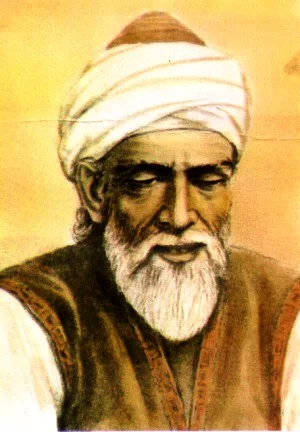
Ali bin İsa al-Kehhâl was an ophthalmologist who lived in Baghdad between the end of the 10th century and the first half of the 11th century. The word "kehhâl" in its name means ophthalmologist in Arabic. He is considered the most well-known ophthalmologist of the medieval Islamic world; In Latin sources, he is referred to as Jesu Haly or Jesu Occulist.
Information about his life is scarce and his death date is given differently in sources; It is widely accepted that he was active around 1010, but according to some records, he died around 1038.
Education
He learned medicine in Baghdad as a student of the philosopher and physician Ebü'l-Ferec bin Tayyib and continued his profession in the same city. Some sources record him as a Christian; It has also been suggested that this information may have originated from the "Jesus" in his name.
Tezkiretü'l-kehhâlîn
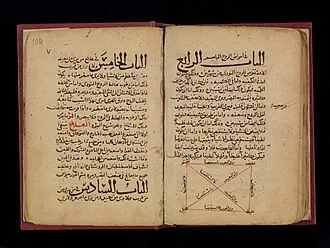
His fame is based on the work called "Tezkiretü'l-kehhâlîn" (Ophthalmologists' Notebook), which he wrote in the early 11th century. The book is written in Arabic on the eye and eye diseases and is the most comprehensive work that has survived to the present day. The author combined the knowledge of previous physicians, especially Galen and Huneyn bin Ishak, with his own observations.
The work consists of three parts:
- The first part describes the structure and functioning of the eye.
- The second part deals with the diseases and treatments of externally visible parts such as the eyelids, tear ducts and cornea.
- The third section is devoted to internal diseases and visual disorders that are not visible from the outside.
More than 130 eye diseases, their symptoms and treatment methods are introduced in the book. Finally, there is an alphabetical list of more than 140 drugs whose effects on the eye are described. Classifying diseases according to which part of the eye they affect made the work a useful reference book for later generations.
The author, who gives detailed descriptions of cataract surgery, also advises speaking to the patient in a calm and soft manner to calm his fear during the surgery. He is also known as one of the first to describe the symptoms of the eye inflammation disease, known today as Vogt–Koyanagi–Harada syndrome.
Effect
Tezkire has been the most used textbook by ophthalmologists in the Islamic world since the time it was written. The text, translated into Latin, was printed in Venice in 1497 and was read throughout Europe. In the 20th century, the work attracted renewed attention: It was translated into German by Julius Hirschberg and Julius Lippert in 1904; Casey Wood's English translation, published in 1936, is largely based on this German text.
He should not be confused with the 9th century astronomer Ali bin İsa al-Usturlabî of the same name.