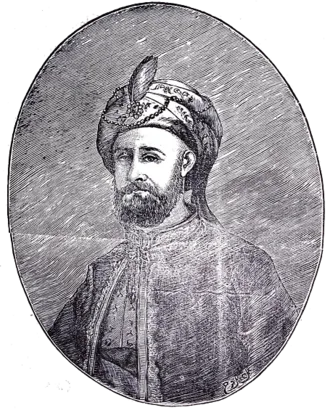
Harun established the legendary library Bayt al-Hikma ("House of Wisdom") in Baghdad in present-day Iraq, and during his rule Baghdad began to flourish as a world center of knowledge, culture and trade. During his rule, the family of Barmakids, which played a deciding role in establishing the Abbasid Caliphate, declined gradually.
In 796, he moved his court and government to Raqqa in present-day Syria. Domestically, Harun pursued policies similar to those of his father Al-Mahdi. He released many of the Umayyads and 'Alids his brother Al-Hadi had imprisoned and declared amnesty for all political groups of the Quraysh. Large scale hostilities broke out with Byzantium, and under his rule, the Abbasid Empire reached its peak.
A Frankish mission came to offer Harun friendship in 799. Harun sent various presents with the emissaries on their return to Charlemagne's court, including a clock that Charlemagne and his retinue deemed to be a conjuration because of the sounds it emanated and the tricks it displayed every time an hour ticked. Portions of the fictional One Thousand and One Nights are set in Harun's court and some of its stories involve Harun himself. Harun's life and court have been the subject of many other tales, both factual and fictitious.
Early life
Hārūn was born in Rey, then part of Jibal in the Abbasid Caliphate, in present-day Tehran Province, Iran. He was the son of al-Mahdi (r. 775–785), the third Abbasid caliph, and his wife al-Khayzuran, who was a woman of strong and independent personality who greatly influenced affairs of state in the reigns of her husband and sons.
Growing up Harun studied history, geography, rhetoric, music, poetry, and economics. However, most of his time was dedicated to mastering hadith and the Quran. In addition, he underwent advanced physical education as a future mujahid, and as a result, he practiced swordplay, archery, and learned the art of war. His birth date is debated, with various sources giving dates from 763 to 766.
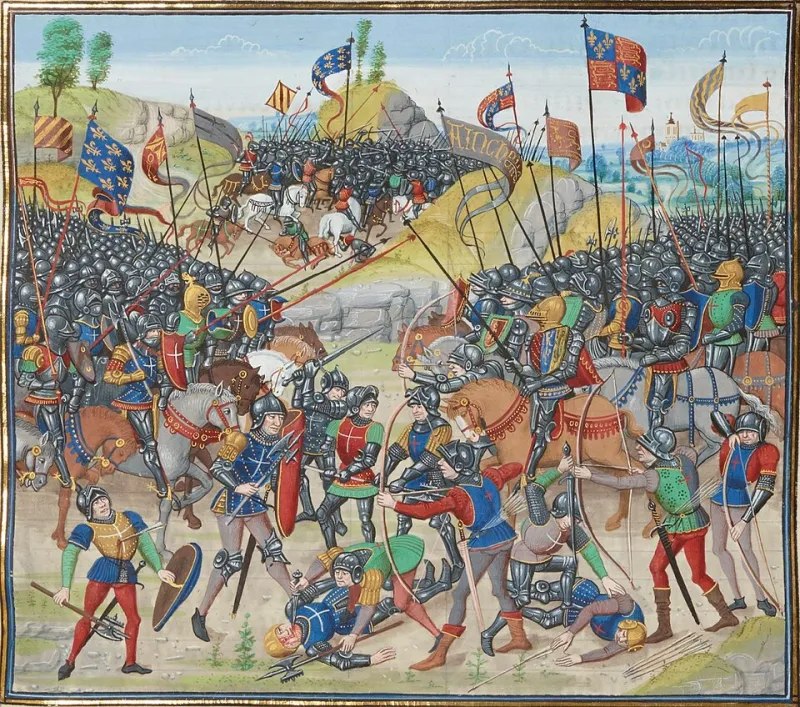
Before becoming a caliph, in 780 and again in 782, Hārūn had already nominally led campaigns against the caliphate's traditional enemy, the Eastern Roman Empire, ruled by Empress Irene. The latter expedition was a huge undertaking, and even reached the Asian suburbs of Constantinople. According to the Muslim chronicler Al-Tabari, the Byzantines lost tens of thousands of soldiers, and Harun employed 20,000 mules to carry the riches back.
Upon his return to the Abbasid realm, the cost of a sword fell to one dirham and the price of a horse to a single gold Byzantine dinar.
Harun's raids against the Byzantines elevated his political image and once he returned, he was given the laqab "al-Rashid", meaning "the Rightly-Guided One". He was promoted to crown prince and given the responsibility of governing the empire's western territories, from Syria to Azerbaijan.
Upon the death of his father in 785, Harun's brother al-Hadi became caliph. However, al-Hadi's reign was brief: a year and two months. Al-Hadi clashed with their mother over her great influence in court, and he attempted to depose Harun as crown prince in favor of his son Jafar. The position of their mother, al-Khayzuran, regarding these events was completely opposed to what al-Hadi wanted.
She clearly favored her son al-Rashid, who was dutiful toward her, until al-Hadi prevented her from handling any affairs of the state as she had been accustomed to at the beginning of his reign. Princes, commanders and petitioners would seek her permission to come to her door, asking her to intercede on their behalf so that al-Hadi would attend to their needs; they would line up outside her door and did so repeatedly.
She also tried to guide him in the way of his father, advising him on what to do and what to avoid; in every appointment and dismissal, financial reward, execution or punishment, and important political plan, she would offer him her counsel. However, al-Hadi gradually grew weary of her interventions and orders, especially when he saw her favoring his brother al-Rashid during his attempts to depose him.
His irritation increased because he was also jealous of the attention men gave her. Al-Hadi swore that if any prince or member of his household or servants approached her door again, he would strike off his head and seize his wealth, saying:
- “If it reaches me that any of my commanders, my intimates, or my servants stand at your door, I will strike off his head and confiscate his wealth. Let whoever wishes abide by that. What are these processions that come and go to your door every day? Do you not have a spindle to occupy you, a Qur’an to remind you, or a house to protect you? Beware, beware: do not open your door to a Muslim or non-Muslim."
Al-Khayzuran became angry at him, swore that she would never speak to him again, left the palace, and lived in another house. The historian al-Tabari notes varying accounts of al-Hadi's death, e.g. an abdominal ulcer or assassination prompted by his own mother.
Caliphate
On the night of al-Hadi's death, al-Khayzuran quickly released Yahya ibn Khalid from prison and ordered him to pay the army's wages, send the letters to the governors to pledge allegiance to al-Rashīd, and prepare him as caliph. They summoned the commanders of the army, Harthama ibn A'yan and Khuzayma ibn Khazim, and asked them to swear allegiance to Harun as caliph.
Khuzayma reportedly gathered and armed 5,000 of his own followers, dragged the Ja'far ibn al-Hādī from his bed and forced him to publicly renounce his claims in favour of Hārūn. Hārūn became caliph in 786 when he was in his early twenties. At the time, he was tall, good looking, and slim but strongly built, with wavy hair and olive skin.
On the day of accession, his son al-Ma'mun was born, and al-Amin some little time later: the latter was the son of Zubaida, a granddaughter of al-Mansur (founder of the city of Baghdad); so he took precedence over the former, whose mother was a Persian. Upon his accession, Harun led Friday prayers in Baghdad's Great Mosque and then sat publicly as officials and the layman alike lined up to swear allegiance and declare their happiness at his ascent to Amir al-Mu'minin.
He began his reign by appointing very able ministers, who carried on the work of the government so well that they greatly improved the condition of the people.
Under Hārūn al-Rashīd's rule, Baghdad flourished into the most splendid city of its period. Tribute paid by many rulers to the caliph funded architecture, the arts and court luxuries.
In 796, Hārūn moved the entire court to Raqqa on the middle Euphrates, where he spent 12 years, most of his reign. He appointed the Hanafi jurist Muhammad al-Shaybani as qadi (judge), but dismissed him in 803. He visited Baghdad only once. Several reasons may have influenced the decision to move to Raqqa: its closeness to the Byzantine border, its excellent communication lines via the Euphrates to Baghdad and via the Balikh river to the north and via Palmyra to Damascus, rich agricultural land, and the strategic advantage over any rebellion which might arise in Syria and the middle Euphrates area.
Abu al-Faraj al-Isfahani, in his anthology of poems, depicts the splendid life in his court. In Raqqa the Barmakids managed the fate of the empire, and both heirs, al-Amin and al-Ma'mun, grew up there. At some point the royal court relocated again to Al-Rayy, the capital city of Khorasan, where the famous philologist and leader of the Kufan school, Al-Kisa'i, accompanied the caliph with his entourage.
When al-Kisa'i became ill while in Al-Rayy, it is said that Harun visited him daily. It seems al-Shaybani and al-Kisa'i both died there on the same day in 804.
For the administration of the whole empire, he fell back on his mentor and longtime associate Yahya bin Khalid bin Barmak. Rashid appointed him as his vizier with full executive powers, and, for seventeen years, Yahya and his sons served Rashid faithfully in whatever assignment he entrusted to them.
Harun made many pilgrimages to Mecca by camel (2,820 km or 1,750 mi from Baghdad) several times, e.g., 793, 795, 797, 802 and last in 803. Tabari concludes his account of Harun's reign with these words: "It has been said that when Harun ar-Rashid died, there were nine hundred million odd (dirhams) in the state treasury."
According to Shia belief, Harun imprisoned and poisoned Musa ibn Ja'far, the 7th Imam, in Baghdad.
Under al-Rashid, each city had its own law enforcement, which besides keeping order was supposed to examine the public markets in order to ensure, for instance, that proper scales and measures were used; enforce the payment of debts; and clamp down on illegal activities such as gambling, usury, and sales of alcohol.
Harun was a great patron of art and learning, and is best known for the unsurpassed splendor of his court and lifestyle. Some of the stories, perhaps the earliest, of "The Thousand and One Nights" were inspired by the glittering Baghdad court. The character King Shahryar (whose wife, Scheherazade, tells the tales) may have been based on Harun himself.
Advisors
Hārūn was influenced by the will of his powerful mother in the governance of the empire until her death in 789; When he became caliph, Harun allowed her (Khayzuran) a free hand and, at times, restrained his own desires out of deference to her expressed wishes, and Khayzuran acted as an overseer of affairs, and Yahya deferred to her and acted on her advice.
His vizier (chief minister) Yahya ibn Khalid, Yahya's sons (especially Ja'far ibn Yahya), and other Barmakids generally controlled the administration. The position of Persians in the Abbasid caliphal court reached its peak during al-Rashid's reign.
The Barmakids were an Iranian family (from Balkh) that dated back to the Barmak, a hereditary Buddhist priest of Nava Vihara, who converted after the Islamic conquest of Balkh and became very powerful under al-Mahdi. Yahya had helped Hārūn to obtain the caliphate, and he and his sons were in high favor until 798, when the caliph threw them in prison and confiscated their land.
Al-Tabari dates this event to 803 and lists various reasons for it: Yahya's entering the Caliph's presence without permission; Yahya's opposition to Muhammad ibn al Layth, who later gained Harun's favour; and Ja'far's release of Yahya ibn Abdallah ibn Hasan, whom Harun had imprisoned.[citation needed]
The fall of the Barmakids is far more likely due to their behaving in a manner that Harun found disrespectful (such as entering his court unannounced) and making decisions in matters of state without first consulting him. Al-Fadl ibn al-Rabi succeeded Yahya the Barmakid as Harun's chief minister.
Diplomacy
Both Einhard and Notker the Stammerer refer to envoys traveling between the courts of Harun and Charlemagne, king of the Franks, and entering friendly discussions about Christian access to holy sites and gift exchanges. Notker mentions Charlemagne sent Harun Spanish horses, colorful Frisian cloaks and impressive hunting dogs.
In 802 Harun sent Charlemagne a present consisting of silks, brass candelabra, perfume, balsam, ivory chessmen, a colossal tent with many-colored curtains, an elephant named Abul-Abbas, and a water clock that marked the hours by dropping bronze balls into a bowl, as mechanical knights – one for each hour – emerged from little doors which shut behind them.
The presents were unprecedented in Western Europe and may have influenced Carolingian art. This exchange of embassies was due to the common interests, Charlemagne's conflict with the Umayyad state of Córdoba is one of the possible military conflicts which made him an ally of Harun al-Rashid, as they found a common enemy to unite against.
For Charlemagne, the alliance may also have functioned as a counterweight against the Byzantine Empire, (traditional political enemy of the Caliphate) which was opposed to his role in Italy and his claim to the title of Roman Emperor. For Harun al-Rashid, there was an advantage in having a partner against his rivals in the Umayyad state of Córdoba, Al-Andalus.
When the Byzantine empress Irene was deposed in 802, Nikephoros I became emperor and refused to pay tribute to Harun, saying that Irene should have been receiving the tribute the whole time. News of this angered Harun, who wrote a message on the back of the Byzantine emperor's letter and said, "In the name of God the most merciful, From Amir al-Mu'minin Harun ar-Rashid, commander of the faithful, to Nikephoros, dog of the Romans.
Thou shalt not hear, thou shalt behold my reply". After campaigns in Asia Minor, Nikephoros was forced to conclude a treaty, with humiliating terms. According to Dr Ahmad Mukhtar al-Abadi, it is due to the particularly fierce second retribution campaign against Nikephoros, that the Byzantine practically ceased any attempt to incite any conflict against the Abbasid again until the rule of Al-Ma'mun.
An alliance was established with the Chinese Tang dynasty by Ar-Rashid after he sent embassies to China. He was called "A-lun" in the Chinese Tang Annals. The alliance was aimed against the Tibetans.
When diplomats and messengers visited Harun in his palace, he was screened behind a curtain. No visitor or petitioner could speak first, interrupt, or oppose the caliph. They were expected to give their undivided attention to the caliph and calculate their responses with great care.
Religious policy
His father, al-Mahdi had two important religious policies: the persecution of the zanadiqa, or dualists, and the declaration of orthodoxy. Al-Mahdi declared that the caliph had the ability, and indeed the responsibility, to define the orthodox theology of Muslims to protect the umma against heresy.
His father, Al-Mahdi, ordered the composition of polemical works to refute freethinkers and other heretics, and for years he tried to exterminate them absolutely, hunting them down and exterminating freethinkers in large numbers, putting to death anyone on mere suspicion of being a zindiq. As a successor of al-Mahdi and caliph Musa al-Hadi and Harun al-Rashid, continued the pogroms, although with diminished intensity during the reign of the latter and was later abolished by him, Harun kept the ban on heretics but stopped the execution of every heretic.
Harun al-Rāshid kept Abu Yusuf as a close acquaintance, Harun eventually granted him the title of Grand Qadi, or Qadi 'l-qudat; the first time such a title had been conferred upon someone in Islamic history. While at the time it was meant as an honorific title, the Caliph frequently consulted Abu Yusuf on legal matters and financial policy and even bestowed upon him the ability to appoint other Qadis in the empire.
This made the position of Grand Qadi analogous to a modern-day chief justice. Abu Yusuf held the position of grand Qadi until his death in 182/798CE.
Suppression of Alid theocratic revolt
The Alids Yahya ibn Abdallah, Idris ibn Abdallah, and a few others were sheltered by a Khuza'i tribesman, who helped them flee Arabia to the Kingdom of Aksum (in modern Ethiopia). Yahya and Idris spent some time there as guests of the king, before returning to Arabia, and meeting with some Alid loyalists near Mecca. At this meeting, it was decided that the two brothers were to split, each going to a different place in the periphery of the Abbasid empire: Idris went to the Maghreb, where he founded an independent dynasty in what is now Morocco, and Yahya to Yemen.
The medieval sources provide diverging information on Yahya's movements during the next years. The most reliable account holds that he went to Yemen, Upper Mesopotamia, Armenia, and Baghdad, where he was recognized and forced again to flee to Yemen, where he stayed at Sana'a for eight months. It is likely during this time (c. 790/91) that the young scholar al-Shafi'i, the founder of one of the four schools of jurisprudence of Sunni Islam, came to visit him and was taught by him.
From Yemen, Yahya moved to Khurasan. It was there that he learned of the death of his brother Idris, a victim to poisoning. This prompted him to seek refuge in Tabaristan, a mountainous region along the southern shore of the Caspian Sea that had only been under Abbasid rule since 761, but where the highlands remained in the hands of autonomous local dynasties who were still Zoroastrian and occasionally rose in revolt against the Abbasid governors.
Yahya wrote to one of them, the Bavandid ruler Sharwin I (r. 772–817), requesting asylum for three years. Sharwin agreed, but counselled Yahya to seek refuge with the neighbouring king of Daylam, Justan (r. 791–805), who would be better able to protect him from the Abbasids.
Following that advice, Yahya arrived in Daylam in 791/2, and was soon joined there by many supporters, proclaiming a revolt in 792.
The Caliph in response entrusted the suppression of the revolt to his trusted aide, the Barmakid al-Fadl ibn Yahya, naming him governor of Tabaristan and the neighbouring provinces, and giving him an army of 50,000 men. Al-Fadl sent letters to Yahya and Justan, promising a pardon for the former and a million silver dirhams to the latter, if they laid down their arms.
Yahya was eventually moved to accept the offer; according to his own later account, this was because of dissension among his own followers, and because the wife of the king of Daylam urged her husband to accept as well. Yahya took precautions against possible treachery by carefully composing the letter of pardon for himself and seventy unnamed followers, had the Caliph himself write it out, and a number of prominent scholars, jurists, and members of the Abbasid dynasty endorse it. He only surrendered to al-Fadl after obtaining a letter of safe-passage from him.
Another account also tells how Yahya first travelled to the eastern regions of Juzjan, Balkh, and even Transoxiana, where he supposedly stayed with the khaghan of the Turks. The veracity of this report is considered dubious, but it is notable that when al-Fadl ibn Yahya was eventually sent against Yahya shortly after, al-Fadl is reliably recorded to have first defeated the khaghan.
On the other hand, another report that al-Fadl was the one to encourage Yahya to seek refuge in Daylam and rise in revolt, and that his dispatch to suppress it was a test of his loyalty by the Caliph, is rejected by modern historians.
Punishment for Alid rebels and Fall of Barmakid family
Initially, Yahya ibn Abdallah was welcomed in Baghdad with great honour, and he received lavish gifts—200,000 or even 400,000 gold dinars—from the Caliph and al-Fadl. His arrival in the Abbasid capital was heralded as a sign of reconciliation between the Alids and the Abbasids. Nevertheless, Harun al-Rashid remained suspicious, and tried to keep him in Baghdad where he could be kept under control, whereas the letter of pardon explicitly guaranteed Yahya the right to go wherever he wanted.
As a result, the Caliph had to allow Yahya to go for the Hajj to Mecca. Afterwards, Yahya did not return to Baghdad but moved to his family's estates near Medina, with the permission of al-Fadl. This was done without the Caliph's permission, or even knowledge; al-Fadl, who scrupulously observed the stipulations of the agreement, even ignored the Caliph's request to bring Yahya back to Baghdad.
Al-Fadl's actions were in line with the Barmakids' favoured policy of reconciliation with the Alids. The reasons behind this are unclear, but the Barmakids may possibly have aspired to the Abbasids' establishing a more absolutist and theocratic regime, based on a divine mandate.
Now free of the Caliph's control, Yahya spent much of the sums he had received to pay the debt of Alid al-Husayn ibn Ali al-Abid, and provide for other Alids who were in need of money. To prevent any possible Alid uprising led by Yahya, the suspicious Harun al-Rashid appointed Abdallah ibn Mus'ab al-Zubayri (796/97) and soon after his son, Bakkar (797–809), as governors of Medina.
As descendants of Abd Allah ibn al-Zubayr, who had claimed the caliphate during the Second Fitna, they were vehemently hostile to the Alids. Bakkar especially soon began denouncing Yahya as behaving like another caliph, and sent alarming reports to Harun al-Rashid about the affection and respect he commanded among the common people, who came from afar to visit him.
Alarmed at this, Harun al-Rashid had Yahya brought back to Baghdad, where he was kept alternately in prison or in house arrest. Several stories tell of his maltreatment at the Caliph's hands, but most of them contain obviously fictional elements and contradict each other. In 800, Abdallah ibn Mus'ab ibn Thabit appeared before Harun al-Rashid and claimed that he had received summons (da'wa) on behalf of Yahya for an uprising, and argued that, given his well-known antipathy to the Alids, if he been contacted, then the entire rest of the court must already have sided with Yahya.
The Caliph had Yahya brought to him and confronted the two men. The Alid denied the accusation, and demanded a trial by oath (mubahala): Yahya cursed Abdallah, who indeed died on the same day (29 March 809), resulting in Yahya being cleared of all charges.
This did not stay Harun al-Rashid's suspicions for long. The Caliph was particularly irritated by the use that Yahya made of the blanket pardon for seventy unnamed followers of his: while Yahya refused to name them, whenever one of his followers was captured, Yahya claimed that he was one of those seventy. Frustrated, the Caliph convened an assembly of jurists to reassess the validity of the pardon.
When one of them, Muhammad al-Shaybani, declared that the letter of pardon was not only valid, but inviolable, the irate Caliph threw his inkstand at him. According to one account, the Caliph had Yahya ibn Khalid al-Barmaki (the father of al-Fadl) testify to the assembly that Yahya's agents were gathering the pledge of allegiance from the common people of Baghdad, and that a courier on his way to Balkh had been intercepted, with letters calling for an uprising in Khurasan.
Eventually, the qadi Abu al-Bakhtari Wahb ibn Wahb declared the letter as invalid and cut it with a knife.
Harun al-Rashid nevertheless hesitated to proceed publicly against Yahya. Instead, he handed him over to another Barmakid, al-Fadl's brother Ja'far, with instructions that he was to kill him. However, Yahya managed to persuade Ja'far to allow him to escape instead, with the promise that he would go into exile in the Byzantine Empire for as long as Harun al-Rashid lived.
Ja'far let his prisoner go, but Yahya was captured at the border town of al-Massisa, and brought before the local governor, Muhammad ibn Khalid, another Barmakid. Muhammad immediately recognized Yahya, and was terrified: if Ja'far's action became known to the Caliph, the life of all Barmakids would be forfeit. Muhammad thus quickly went to meet the Caliph, who was on the Hajj to Mecca in 802.
Harun al-Rashid kept the affair quiet for the moment, but once he returned from the Hajj, he ordered Ja'far executed, and all other Barmakids—apart from Muhammad ibn Khalid—arrested and their properties confiscated. The downfall of the Barmakids is shrouded in mystery, and its true causes are still not known with certainty; it may be that Harun al-Rashid wanted to rid himself of a group that might threaten or limit his own power.
The brutal manner in which Ja'far was executed, however, is directly linked to his allowing Yahya's escape by Abu Muhammad al-Yazidi, whom the great 10th-century historian al-Tabari held to be the most authoritative source on the Barmakid family. Following the downfall of the Barmakids, Yahya was given over to al-Sindi ibn Shahak, the security chief (sahib al-shurta) of the capital.