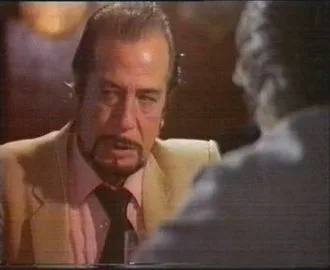
Hüseyin Peyda (1919/Şanlıurfa – 1990/İstanbul) was an actor known for his authoritarian roles such as "master" and "mafia boss" in Yeşilçam for many years. Peyda, who played supporting characters in many productions he shot with Cüneyt Arkın, was also remembered for his role as "Imam Hüseyin" in the 1975 movie "Father's Son".
In addition to his artistic life, he is also known as a filmmaker who directs his earnings to his own projects. He started his university education in the philosophy department of Istanbul University Faculty of Letters, but left it in the third year and tried to deal with commerce; These attempts were not very successful.
Later, he published the magazine "Türkyolu" with Niyazi Ahmet Banoğlu, and after the magazine was closed, he also worked as a women's hairdresser for a while. Peyda, who entered the film world through Sezer Sezin, wrote scripts under the name "Hüseyin Kazasfil" and founded the company "Önder Film"; Unfortunately, the company went bankrupt over time.
In the early stages of his career, he stated that he struggled with the negative image of cinema in the eyes of society, due to his origins from deep-rooted families in Urfa: "My relatives did not allow me to use our surname; cinema was a bad business at that time, and if we were Eastern people, we had to stay away from it completely." He lost one of his eyes as a result of ultraviolet lights damaging his eyes during the shooting of "Yedikule Dungeons" with Hülya Koçyiğit in 1973, but this incident brought him the Best Actor award at the 14th Antalya Film Festival for his performance in "Black Sheet Bride".
Peyda, who died of lung cancer at Haydarpaşa Numune Hospital on July 30, 1990, was buried in Zincirlikuyu Cemetery. He also received the Best Supporting Actor award at the 1977 Golden Orange Film Festival for his supporting role in the movie "Black Veiled Bride".
Hüseyin Peyda was born on January 27, 1920 in Şanlıurfa, Ottoman Empire. He died on July 30, 1990.
In 1946, he entered the philosophy department of Istanbul University, Faculty of Letters. However, he left the department in the third year and entered business life, but he was not successful. He once published a magazine called Türkyolu together with Niyazi Ahmet Banoğlu. With the collapse of the magazine, he withdrew from this sector.
He also worked as a women's hairdresser for a while. One day, he meets Sezer Sezin and steps into Yeşilçam through him. He later founded a film company. He wrote scripts and shot films under the name Hüseyin Kazasfil. He creates various productions with Önder Film. However, over time, Önder Film company went bankrupt.
In a statement, Peyda explains her early years as follows: "I saw a future in the cinema. But there was a problem. I belonged to one of the well-established families of Urfa. My relatives did not allow me to use our surname. At that time, cinema was a bad business in the eyes of our society. If you are an Eastern person, you should stay away from it completely."
Productions in which he took part
He took part in a total of 141 productions; 12 of the most well-known are listed.
- Politics Square (1994) — Self(archive footage)
- Establishment Osmancık (1988)
- Little Agha (1984)
- Deathstroke (1986)
- That Woman (1966)
- It's Different, Aghas' Wedding (1990)
- Ordeal (1980)
- If They Kill the Snake (1981) — Dursun
- Derbeder (1978) — Mahmut
- Street Brawler (1986) — Doctor
- Kubilay (1952) — Mustafa Kubilay
- My Rose (1987)
Production and imprint information was taken from TMDB.