















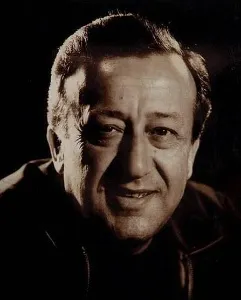
Ulvi Uraz is a theater and cinema artist who was born in Ankara on February 13, 1921 and died in Istanbul on May 25, 1974. Immediately after graduating from Ankara State Conservatory Theater Department in 1943, he took the stage in Shakespeare's play "Julius Caesar" at Tatbikat Stage, and in 1948 he attracted attention with the character of "Beybaba" in Ahmet Kutsi Tecer's play "Köşebaşı".
During his graduation years, he played an important role in the training of young talents by working both on stage and as a conservatory teacher.
Ulvi, who was sent to France by the state with her husband, pianist Selçuk Uraz, in 1953, was arrested on their return on the grounds that they were members of the Communist Party of Turkey, and was sentenced to 5 years in prison and 1 year and 8 months in exile. After her release, she returned to the stage in André Roussin's play "Nina" at the Dormen Theater in 1958 and won the İlhan İskender Award for this performance.
Then he joined Istanbul City Theaters and took on the role of Polonius in "Hamlet" directed by Muhsin Ertuğrul.
Uraz, who founded the group he called "Friendly Players" in 1961, appeared on the stage with plays such as Haldun Taner's "Man of the Day" and Eugène Marin Labiche's "Don't Ask for Money from Me", and the group was later named "Ulvi Uraz Theatre". In 1965, he received the İlhan İskender Award for the second time with the character "Vicdani" in Haldun Taner's play "Gözlerim Kaparım Vazifemi Yaparım", and in the same period, he also took part in works such as Oktay Rifat's "Zabit Fatma'nın Kuzusu" and Rıfat Ilgaz's "Habam Class".
In addition to his theater career, he also left his mark in the world of cinema. Uraz, who won the fair award of Izmir Municipality for his performance in the 1960 movie "Denize İnen Sokak", received the Best Supporting Actor award for his role in the movie "Tomorrow is Ours" at the 1964 Antalya Golden Orange Film Festival. He also took part in films such as "She-Wolf", "Tomorrow is Ours" and "Murtaza".
Ulvi Uraz died on May 25, 1974 and his grave is in Aşiyan Cemetery. After her death, her husband Selçuk Uraz continued to keep her husband's artistic legacy alive by establishing the "Ulvi Uraz Theater Awards", which will be given every year to the best director and actor.