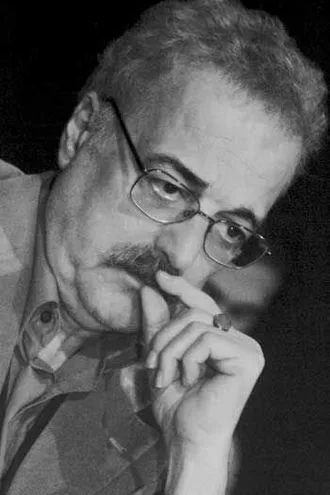
Ahmet Arslan (academic)
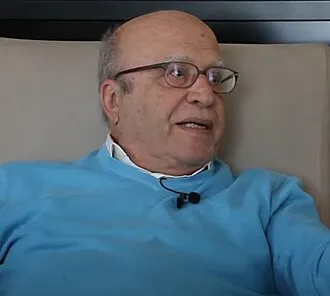
Childhood and education
He was born in Şanlıurfa in 1944. His father was a greengrocer and his mother was a housewife. Eight of the twelve siblings died at various ages. He spent his childhood in the Arab Square neighborhood. He was interested in cinema, books and football in his childhood.
He completed his primary education at 11 Nisan Kurtuluş Primary School. After finishing primary school, he started working with his father. He was enrolled in secondary school after fifth grade teacher Lâtif Soyok, who came to his father's shop one day to shop and saw Arslan working there, insisted on his father that Arslan continue school.
He completed his secondary education at Şanlıurfa High School in 1961. He said that he once fell off a donkey and broke his left arm, and then, after the treatment of a woman who performed a dislocation, his elbow bone fused incorrectly and therefore his left arm became disabled. He stated that he heard his parents silently talking to each other about this incident, that he would not be able to work because he injured his arm, so studying was the only option.
After graduating from high school, he took the recruitment exams for the departments of Ankara University Faculty of Languages, History-Geography and Istanbul University Faculty of Letters. He chose Ankara Law among the few departments he was successful in. After attending this department for a while, he enrolled in the philosophy department of the same university.
In 1972, under the supervision of Mübahat Türker Küyel, he received his doctorate degree with his thesis titled İbn'i Kemal's (Kemal Paşa-zade) Haşiya ala tahafut al-falasifa. He did his military service as a reserve officer in Diyarbakır between 1973-74.
Career
Arslan worked at Ankara University and Ege University. His academic research areas are Ancient Greek philosophy, Islamic philosophy and theology.
Philosophical works and views
Tanıl Bora stated that Ahmet Arslan produced an enormous corpus on the entire history of religious thought, and stated that Ege University's Department of Philosophy was also interested in "looking at Islam from philosophy" in line with Arslan's world of thought, and described this as the opposite of the approach of Ankara Faculty of Theology.
Among those influenced by Arslan are his student Zerrin Kurtoğlu and her book Political Horizon of Islamic Thought. In his philosophical essays, Arslan dealt with the subject of tolerance by making a reading of Islam compatible with fundamental rights and freedoms; He stated that even religious law was "man-made" and "rational" and argued that there was a possibility of modernization in religious interpretation.
He rejects the view regarding Islamic philosophy that the main function of Islamic philosophers is to reconvey ancient thought to the West and that Islamic philosophy does not represent an important moment in the development of universal philosophy and does not have original views. In this context, he does not agree with the opinion of orientalists such as T. J. de Boer.
Celâl Şengör describes Arslan's book series titled History of Ancient Philosophy as follows: "So I will say, 'Oh, it is the best book in Türkiye', it is not like that. This is one of the best books I have read in the world!" he praised.
private life
Arslan has a wife named Berin, a son named Çağrı and a daughter named Senem. He speaks German, Arabic, French and English. He has been on the agenda many times due to his discourses on criticism of Islam. Ahmet Arslan declared that he is not an atheist, but that he can be described as a "ate".
works
- Books
- Haşiye Ala't-Tehafut Analysis, 1987
- Kemalpaşazâde's Tehâfüt Hâşiyesi, 1987
- Introduction to Philosophy, 1994
- Islam, Democracy and Turkey, 1999
- On Islamic Philosophy, 1999 [A compilation of some of his articles on Islamic philosophy]
- Ibn Khaldun, 2002
- Philosophy, 2004 [High school philosophy textbook]
- History of Ancient Philosophy 1: Pre-Socratic Greek Philosophy, 2006
- History of Ancient Philosophy 2: From Sophists to Plato, 2006
- History of Ancient Philosophy 3: Aristotle, 2007
- History of Ancient Philosophy 4: Hellenistic Period Philosophy: Epicureans Stoics Skeptics, 2008
- History of Ancient Philosophy 5: Plotinus, Platonism and Early Christian Philosophy, 2010
- Translations
- Introduction to Philosophy, John Herman Randall - Justus Buchler, 1981
- Metaphysics, Aristotle, 1982
- Aristotle, David Ross, 1996
- Humor in Early Islam, Franz Rosenthal, 1997
- The Ideal State, Fârâbî, 1997
- The History of Materialism and Critique of Its Current Meaning, Friedrich Albert Lange, 1998
- Census of Sciences, Fârâbî, 1999
- Gaining Happiness, Fârâbî, 1999
- History of Islamic Philosophy Volume 2: From the Death of Averroes to the Present Day, Henry Corbin, 2000
- Thinking Through Philosophy, Chris Horner - Emrys Westacott, 2001
- Edessa (Urfa) Holy City, Judah Benzion Segal, 2002
- Allah's New Martyrs: Suicide Bombers, Farhad Khosrokhavar, 2006 (with T. Duman)
- Islamic Humanism, Lenn E. Goodman, 2006
- The Working Class in Purgatory: France on the Edge of Revolution - June 36, Jacques Danos - Marcel Gibelin, 2013
- Muslim Site: Social and Political Life, Louis Gardet, 2014
- Introduction to Islamic Theology, Louis Gardet - Georges Anawati, 2015
- The Incomplete State: The Problem of Law in Arab Countries, Ali Mezghani, 2015
- Pope and Mussolini: XI. The Secret History of Pius and the Rise of Fascism in Europe, David I. Kertzer, 2018
- Interviews
- Thinking of a Lifetime: Nehir Interview with Ahmet Arslan, 2016 (with D. Özkan and B. Kalkan)
- One on One Science: The First Age, 2020 (with F. Altaylı and C. Şengör)
- One on One Science: What is religion?, 2023 (with F. Altaylı)
- One on One Science: Evrim, 2023 (with F. Altaylı and C. Şengör)
- One on One Science: Enlightenment, 2023 (with F. Altaylı and C. Şengör)
- Head to Head Science: Ionian School, 2023 (with F. Altaylı and C. Şengör)
📚 Source: Wikipedia