
















Antalya Travel Guide: Kaleiçi, Beaches, Ancient Cities and Getting Around
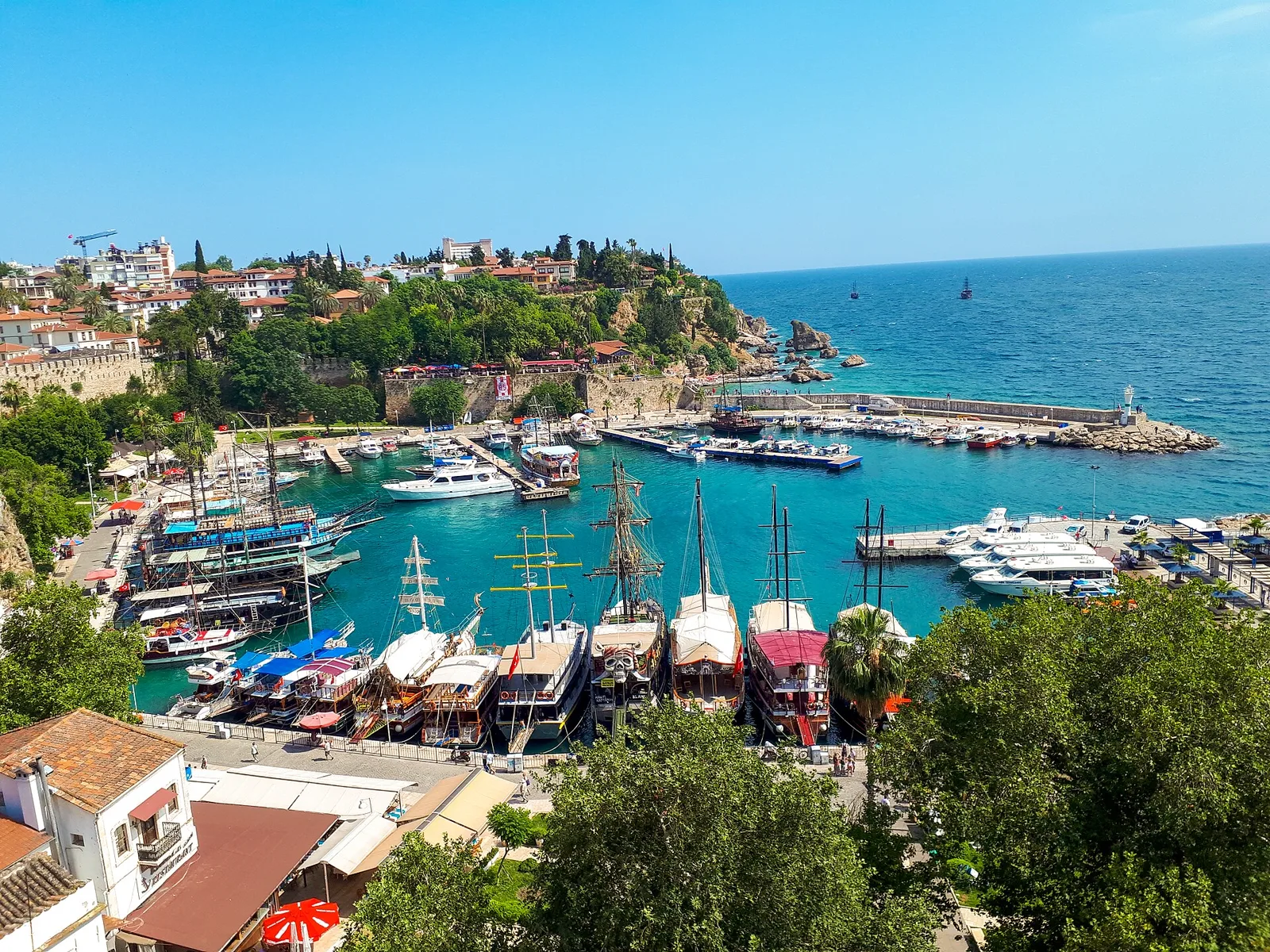
Airport tram into the centre, where to stay, the old town and Roman harbour, Düden waterfalls, Aspendos and Perge, local food and the best months to visit.
Antalya is more than the all-inclusive resorts it is known for abroad. The walled old town of Kaleiçi looks over a Roman harbour, waterfalls drop straight into the sea at the city's edge, two long beaches sit on either side of the centre, and one of the best-preserved ancient theatres in the world is an hour away. That combination makes it a genuine city-and-culture destination, not only a beach one. This guide covers getting in from the airport, where to stay, what to see and which months are comfortable.
Getting to Antalya
Antalya Airport (AYT) is one of the busiest in Turkey, with direct flights from Istanbul, Ankara and much of Europe; the hop from Istanbul takes about an hour.
-
Recipes
Ingredient lists, step-by-step method, time and servings. Browse by category from soups to desserts, or search for what you need.
See recipes → -
How-to guides
From phone settings to paperwork, account security to everyday problems: numbered steps with an estimated time for each guide.
See the guides → -
Software archive
Browsers, security tools, office and media software. Every entry says what it does, which version it is and where to download it.
Browse software → -
Voice and video chat
Group video rooms, one-to-one voice calls and live streaming. Runs in the browser — no plugin, no app, nothing to install.
Enter the rooms →
For public transport into town, the AntRay tram, line T1A, runs from in front of International Terminal 1 through the EXPO area and the bus station to the centre. Get off at one of the central stops and walk into Kaleiçi. City transport uses the Antalyakart. If you are arriving at another terminal or carrying a lot of luggage, a taxi or a pre-booked transfer is simpler.
Where to stay
Kaleiçi — boutique hotels and guesthouses inside the old walls, within walking distance of the harbour, the restaurants and Hadrian's Gate — is the choice if you want atmosphere. Konyaaltı, west of the centre, balances city and sea. Lara, to the east, is the sandy, family-resort side and the closest to the airport. If you plan day trips to the ancient cities, staying towards the eastern exits saves time.
What to see
Kaleiçi and the old harbour
The heart of the city: narrow lanes, restored Ottoman houses and a Roman-era harbour where boats now moor. Boat tours leave from the harbour and run along the coast, giving you the Lower Düden waterfall from the sea.
Hadrian's Gate and the Fluted Minaret
The three-arched gate was built into the city wall to mark the visit of the emperor Hadrian and is now the symbolic entrance to Kaleiçi. The Yivli Minare (Fluted Minaret), from the Seljuk period, is the city's most recognisable silhouette.
Düden waterfalls
There are two. Upper Düden, north of the city, sits in a park with picnic grounds. Lower Düden, on the Lara road, falls from the cliffs straight into the Mediterranean and can be seen from the shore or from a boat.
Konyaaltı and Lara beaches
Konyaaltı is a long pebble beach with the Bey Mountains rising behind it, close enough to the centre for an afternoon swim. Lara, to the east, is fine sand and large hotels.
Aspendos, Perge and Termessos
Aspendos, in Serik east of the city, has a 2nd-century AD theatre that is among the best preserved anywhere. Perge, in Aksu, is quieter but no less impressive, with its stadium and colonnaded street. Termessos, high in the Taurus Mountains, is the one you climb to — ruins scattered through forest, with the views that come with the altitude.
A note on the Antalya Museum
The museum building that housed the region's archaeological collection was closed in July 2025 as structurally unsafe in an earthquake and demolished. A new building is going up on the same site; check the Ministry of Culture and Tourism for the opening date before you plan a visit around it.
What to eat
The local plate is piyaz — a white bean salad made here with tahini — usually eaten with şiş köfte. Hibeş, a tahini meze with cumin and chilli, comes to the table alongside. The region grows citrus, so orange and bitter-orange jams and desserts are everywhere, and the coast means fresh fish.
When to go
Summers are very hot; in July and August, walking the city or an archaeological site at midday is punishing. For a mix of sea and sightseeing, April to June and September to October are the comfortable months — the sea is warm well into autumn. Winters are mild and wet, fine for the old town and the ruins, less so for the beach.
Three days in Antalya
Day 1: Kaleiçi on foot — Hadrian's Gate, the lanes, the old harbour — then a boat tour past Lower Düden and dinner by the harbour.
Day 2: Aspendos in the morning, Perge in the afternoon, back for a swim at Konyaaltı.
Day 3: Termessos and the mountain views, or a slower day between Upper Düden and Lara beach.