














Istanbul Travel Guide: Old City, Bosphorus, Transport and a 3-Day Route
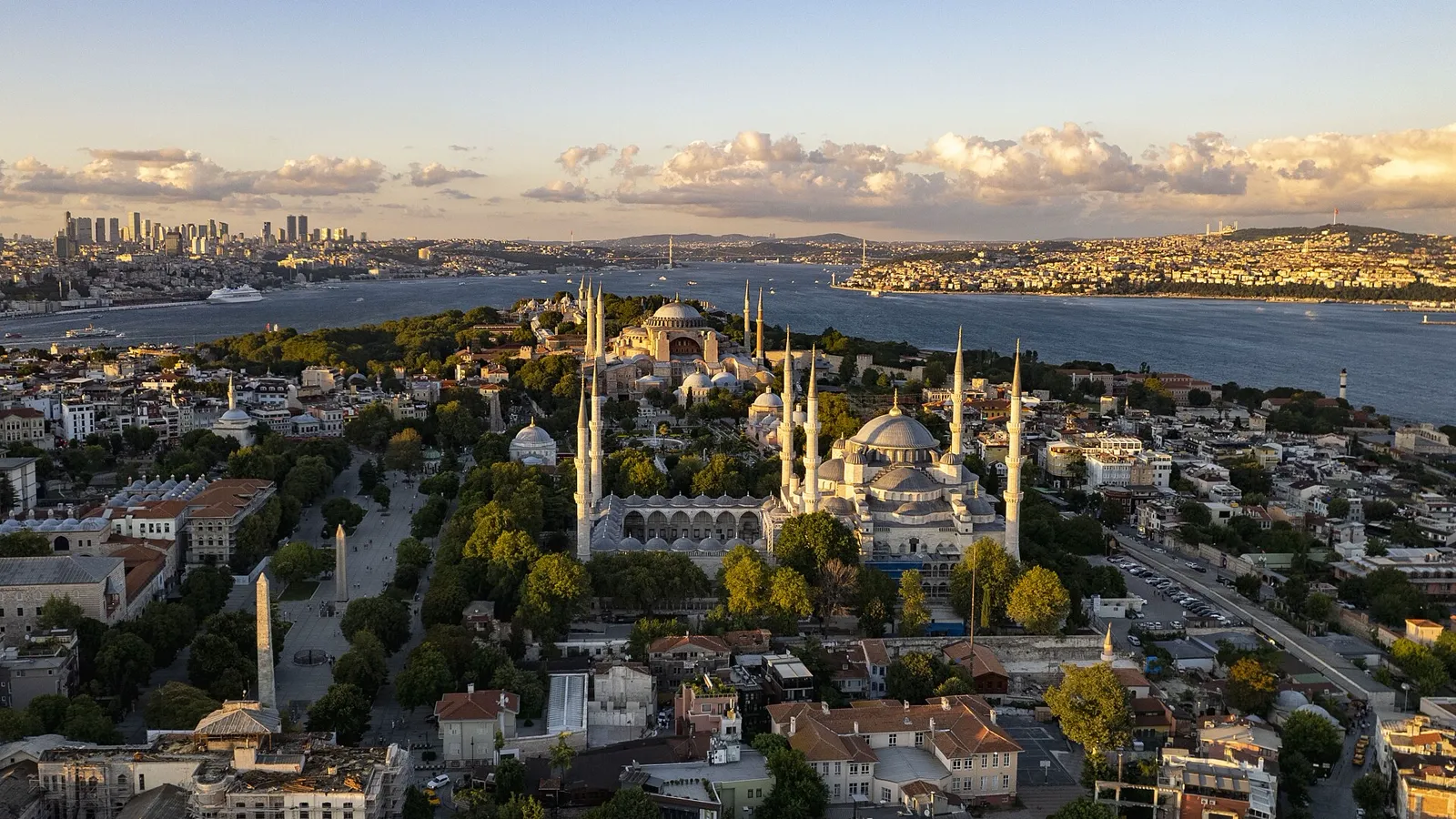
How to get in from both airports, where to stay, Hagia Sophia, Topkapı, the Bosphorus ferries, Kadıköy, street food and a three-day route for a first visit.
Istanbul is the only city that sits on two continents, and it wears both the Byzantine and Ottoman capitals on its surface: domes on the historic peninsula, ferries crossing the Bosphorus every few minutes, the steep lanes of Beyoğlu, the market streets of Kadıköy. Three days is enough for a first visit if you plan around the water rather than fighting the traffic. This guide covers getting in from both airports, where to base yourself, what to see and eat, and a three-day route.
Getting to Istanbul
The city has two large airports. Istanbul Airport (IST) is on the European side, north of the city near the Black Sea. Sabiha Gökçen (SAW) is on the Asian side, out towards Pendik. Which one you fly into matters more than people expect: crossing the city at the wrong hour can cost you two hours, so pick the airport on the side where you will sleep.
-
Recipes
Ingredient lists, step-by-step method, time and servings. Browse by category from soups to desserts, or search for what you need.
See recipes → -
How-to guides
From phone settings to paperwork, account security to everyday problems: numbered steps with an estimated time for each guide.
See the guides → -
Software archive
Browsers, security tools, office and media software. Every entry says what it does, which version it is and where to download it.
Browse software → -
Voice and video chat
Group video rooms, one-to-one voice calls and live streaming. Runs in the browser — no plugin, no app, nothing to install.
Enter the rooms →
From Istanbul Airport, the M11 metro is the practical rail link. It runs to Gayrettepe, where you change to the M2 for Taksim and Şişhane. The line also passes through Kağıthane and, with the stage that opened in summer 2026, reaches Halkalı, where it meets Marmaray. HAVAİST buses serve Taksim, Beşiktaş, 4. Levent and other points, and city buses run to several districts.
From Sabiha Gökçen, the M4 metro goes straight to Kadıköy in about an hour with no change. For the European side, change at Ayrılık Çeşmesi to Marmaray, which runs under the Bosphorus to Sirkeci and Yenikapı.
One card covers everything. Buy an İstanbulkart at any station machine and use it on the metro, tram, Marmaray, buses and ferries; a single card can be topped up and shared between two people on most services. Ferries cost roughly the same as a metro ride, which makes the most scenic transport in the city also the cheapest.
Where to stay
Sultanahmet is the obvious first-visit base: Hagia Sophia, Topkapı Palace and the Basilica Cistern are within walking distance and the T1 tram passes the door. For cafés and nightlife with easy access to both sides, Karaköy, Galata and Beyoğlu strike the best balance. Kadıköy, on the Asian side, gives you a more local Istanbul — a proper market, a seafront, and a ferry ride to Eminönü or Karaköy as part of your morning. Beşiktaş is a practical alternative right on the Bosphorus with its own ferry pier.
What to see
Hagia Sophia and Sultanahmet Square
Built in its present form in the 6th century under Justinian, Hagia Sophia is one of the most important buildings in architectural history. It functions as a mosque today, and a major restoration is under way under the supervision of a ministry commission — work platforms stand under the main dome and the eastern semi-dome, so parts of the interior may be closed when you visit. Across the square, the Blue Mosque, the Obelisk and the Serpent Column on the old Hippodrome ground make an easy half-day on foot.
Topkapı Palace
Home and seat of government for Ottoman sultans for centuries. The courtyards, the Harem, the sacred relics and the treasury deserve at least a few hours. After a long restoration, the private chambers of Ahmed I and Ahmed III in the Harem are open again. The palace closes one day a week, so check the official site before you go.
Basilica Cistern
A Byzantine underground reservoir whose hundreds of columns look like a submerged forest, best known for the two Medusa heads used as column bases. Management passed from the Istanbul municipality to the Directorate General of Foundations in 2026; it reopened after a short closure during the handover, and visiting arrangements may change again.
Süleymaniye, the Grand Bazaar and the Spice Bazaar
Mimar Sinan's mosque for Süleyman the Magnificent has the best terrace view over the Golden Horn in the old city. Walk downhill from there through the covered streets and old hans of the Grand Bazaar, and on to the Spice Bazaar at Eminönü.
Galata Tower and İstiklal Avenue
The Genoese-era tower above Karaköy is run as a museum by the Ministry of Culture and Tourism. From the lanes around it you can walk up to Şişhane and along İstiklal Avenue — nostalgic tram, side streets, passages — to Taksim Square.
The Bosphorus, Dolmabahçe and the Maiden's Tower
The easiest way to understand Istanbul is to look at it from the water. Tour boats leave Eminönü for the full strait, but an ordinary commuter ferry — Eminönü to Kadıköy, Beşiktaş to Üsküdar — gives you the same waterfront mansions, bridges and palaces for the price of a metro ticket. Dolmabahçe Palace in Beşiktaş served as the administrative centre in the late Ottoman period. The Maiden's Tower off Üsküdar is reached by boat and occasionally closes for events, so check announcements first.
Kadıköy and Moda
The heart of the Asian side: a market known for its fishmongers and delicatessens, second-hand bookshops, and streets full of cafés. Walk from the market down to Moda and watch the sunset from the shore.
What to eat
Start the day with simit and tea, or a spread-out Turkish breakfast. On the waterfront at Eminönü and Karaköy, balık ekmek (grilled fish in bread); in the side streets, midye dolma (stuffed mussels); late at night, kokoreç. Neighbourhood esnaf lokantası restaurants serve home-style stews at lunch prices, and the Bosphorus shore is where you eat fish and meze. For something sweet: baklava, künefe, rice pudding and Turkish delight — plus salep and boza in winter, yoghurt at Kanlıca and a loaded baked potato (kumpir) at Ortaköy.
When to go
Summers are hot and humid, winters cool, wet and occasionally snowy. The best walking weather is April to June and September to November; the parks are full of tulips in April. In July and August, plan museums for early morning — both the heat and the crowds peak. Winter is quieter, and the city has enough covered ground (bazaars, museums, hammams) to fill a rainy day.
Three days in Istanbul
Day 1 — the historic peninsula. Hagia Sophia, the Blue Mosque and the Hippodrome in the morning, Topkapı Palace after lunch, the Basilica Cistern late afternoon, dinner in Sultanahmet or down at Eminönü.
Day 2 — Golden Horn and Beyoğlu. Süleymaniye, then the Grand Bazaar and the Spice Bazaar, a ferry or the Galata Bridge across to Karaköy, Galata Tower, and İstiklal Avenue up to Taksim in the evening.
Day 3 — the water and the Asian side. A Bosphorus ferry in the morning, Dolmabahçe Palace, then cross to Kadıköy for the market and walk to Moda for sunset.
Practical notes
Many nationalities need an e-Visa or are visa-exempt for short stays; check your own country's rules before booking, since the conditions change. Tap payment works almost everywhere, but keep small cash for street food and the market. Mosques are active places of worship: dress modestly, remove your shoes, and avoid visiting during prayer times. Tap water is chlorinated and safe for washing, but most people drink bottled.