















İzmir Travel Guide: Kordon, Kemeraltı, Ephesus and Getting Around
Airport train into the centre, where to stay, Konak and the bazaar, the Historical Elevator, day trips to Ephesus and Çeşme, boyoz and kumru, and the best months.
İzmir is Turkey's third-largest city but carries itself like a much smaller one: the bay is always in view, the pace is slower than Istanbul's, and most of what you want to see is walkable. The Kordon waterfront, the covered market at Kemeraltı, the ruins of ancient Smyrna, and day trips to Ephesus, Şirince and Çeşme within an hour make it both a city break and a base for the Aegean coast.
Getting to İzmir
İzmir Adnan Menderes Airport (ADB) has direct flights from Istanbul, Ankara and many European cities; the flight from Istanbul takes about an hour.
-
Recipes
Ingredient lists, step-by-step method, time and servings. Browse by category from soups to desserts, or search for what you need.
See recipes → -
How-to guides
From phone settings to paperwork, account security to everyday problems: numbered steps with an estimated time for each guide.
See the guides → -
Software archive
Browsers, security tools, office and media software. Every entry says what it does, which version it is and where to download it.
Browse software → -
Voice and video chat
Group video rooms, one-to-one voice calls and live streaming. Runs in the browser — no plugin, no app, nothing to install.
Enter the rooms →
The easiest way into town is the İZBAN commuter train — the station is a few minutes' walk from the terminal and reaches Alsancak in roughly half an hour, with a change at Halkapınar for the metro and tram. Havaş buses run to the centre according to flight times, and city buses cover the hours when İZBAN does not run. Public transport uses the İzmirim Kart.
Where to stay
Alsancak is the easiest first choice: walking distance to the Kordon, the restaurants and the nightlife. Konak and Basmane are cheaper and closer to Kemeraltı and the train stations. Karşıyaka, across the bay, is quieter and connected by ferry — a ride worth taking for its own sake. If you plan day trips to Ephesus or Çeşme, staying near the bus station saves time.
What to see
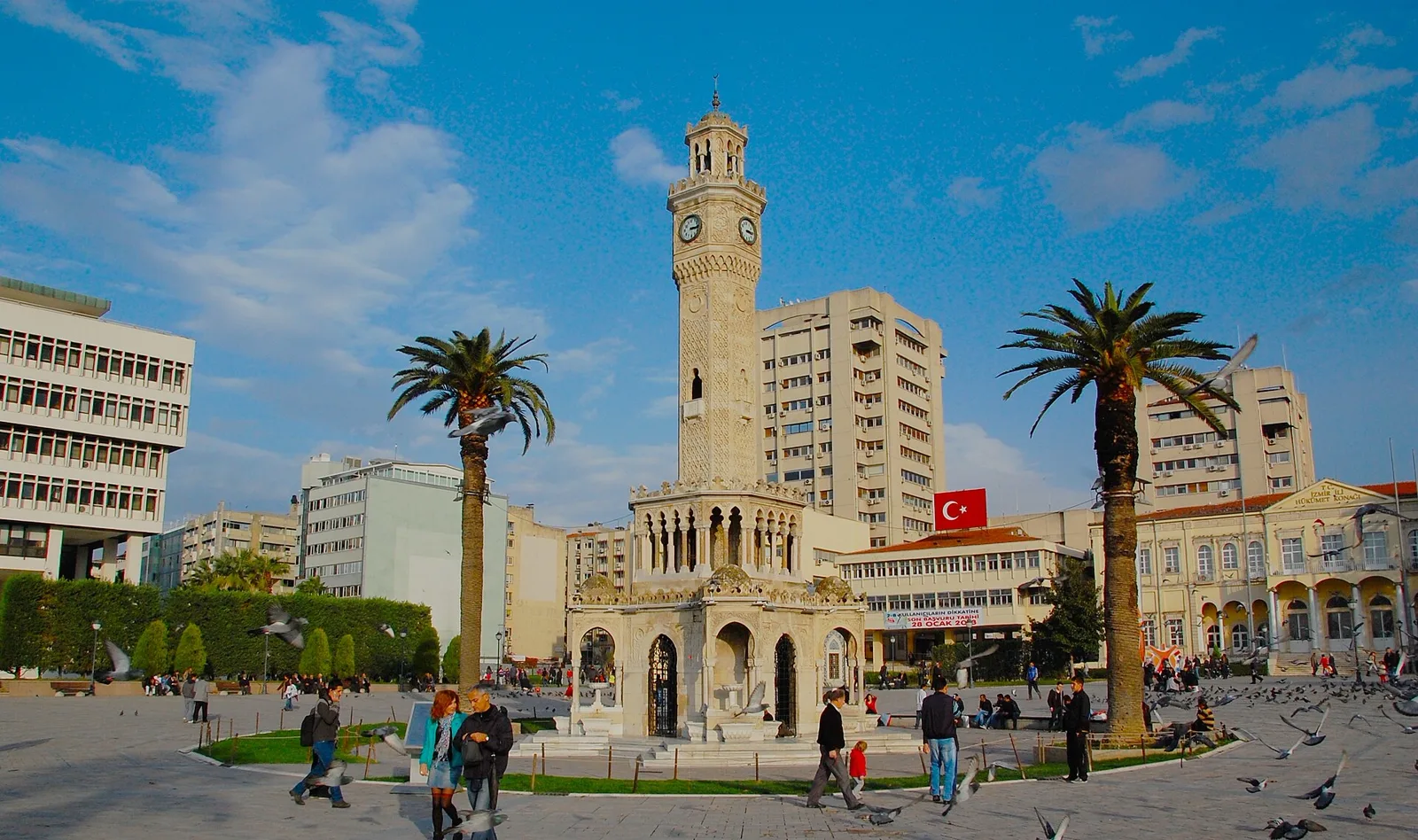
Konak Square and the Clock Tower
The city's symbol was built in 1901 for the 25th anniversary of Sultan Abdülhamid II's accession. With the small tiled mosque beside it and the sea at the edge of the square, it is the natural place to start.
Kemeraltı Bazaar
The historic market runs inland from Konak: old hans, a cluster of synagogues, mosques and narrow lanes. Have coffee in the courtyard of Kızlarağası Han, walk Havra Street past the food stalls, and try lokma and şambali — both are İzmir habits more than desserts.
The Kordon and Alsancak
The waterfront promenade from Konak to Alsancak is where the city gathers at sunset. Sit on the grass, watch the ferries cross the bay, then finish in the side streets of Alsancak.
The Historical Elevator and Dario Moreno Street
Built in 1907 by Nesim Levi to connect two streets separated by a steep slope, the elevator still runs and the terrace at the top gives one of the best views of the bay. Next to it, Dario Moreno Street climbs past coloured houses — named after the singer who grew up here.
Smyrna Agora and Kadifekale
Just above Kemeraltı lie the remains of the Roman marketplace of ancient Smyrna. Further up, the fortress of Kadifekale on Mount Pagos gives the widest view over the city and the gulf.
Day trips
Ephesus, one of the best-preserved classical cities in the Mediterranean, is about an hour south near Selçuk, with the Temple of Artemis and the House of the Virgin Mary nearby. Şirince, a hill village known for its fruit wines, sits just above it. West of the city, Çeşme and Alaçatı offer beaches, stone houses and some of the best windsurfing in the country.
What to eat
Breakfast is serious here: boyoz, a pastry brought by Sephardic Jews to İzmir, eaten with a hard-boiled egg. Later, kumru (a sesame-bread sandwich from Çeşme), gevrek — the local name for simit — and midye dolma from street carts. Aegean cooking leans on wild greens and olive oil, and the fish restaurants along the coast serve meze that deserve their own meal.
When to go
April to June and September to October are the best months: warm, walkable, and the sea is still swimmable in autumn. July and August are hot and crowded on the coast. Winters are mild and rainy — fine for the market, the museums and the bazaar, less so for the beaches.
Three days in İzmir
Day 1: Konak, Kemeraltı, Smyrna Agora, up to Kadifekale, then the Kordon at sunset.
Day 2: Ephesus and Şirince as a full-day trip from Selçuk.
Day 3: The Historical Elevator and Karataş in the morning, ferry to Karşıyaka, or head west to Çeşme for the beach.