
















Pamukkale Travel Guide: Travertines, Hierapolis and Practical Tips
How to reach Pamukkale from Denizli airport or by train, where to stay, walking the terraces barefoot, Hierapolis and the Antique Pool, Laodicea, local food and the best months.
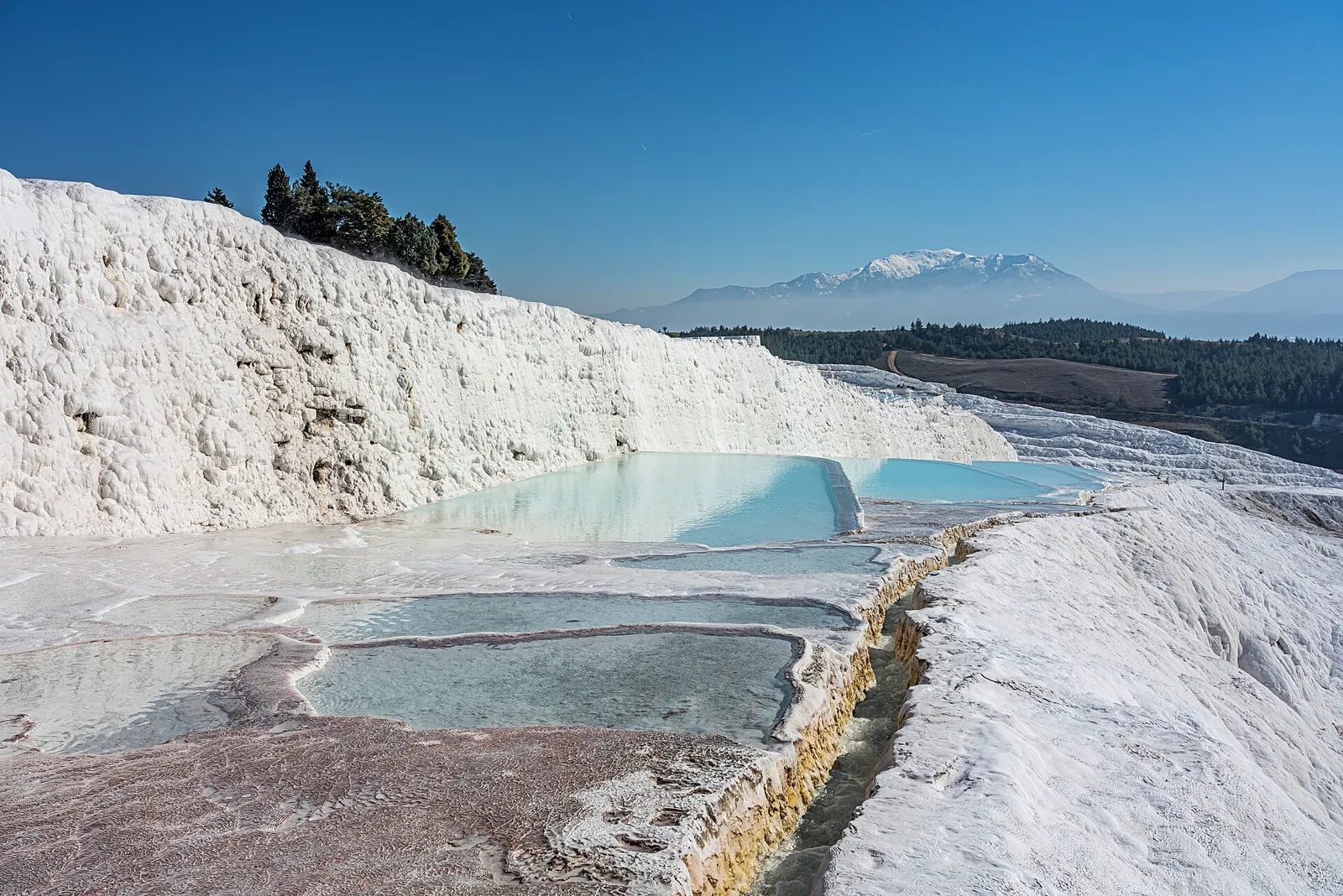
Pamukkale — "cotton castle" in Turkish — is a hillside of white terraces formed over millennia by calcium-rich thermal water flowing down the slope and leaving limestone behind. Directly above the terraces lie the ruins of Hierapolis, a significant Roman city. Few places put nature and antiquity this close together, which is why Pamukkale–Hierapolis entered the UNESCO World Heritage List in 1988. With Laodicea, the red waters of Karahayıt and Kaklık Cave nearby, two or three days fill easily.
Getting to Pamukkale
The regional airport is Denizli Çardak (DNZ), about 65 km from Denizli city centre; flights from Istanbul take roughly an hour. Municipal airport shuttles run according to flight times to the bus station and city centre — about an hour to Pamukkale. Some services continue to Pamukkale and Karahayıt, so check the current route before you land. From Denizli bus station, minibuses leave for Pamukkale and Karahayıt frequently and take 20–30 minutes.
-
Recipes
Ingredient lists, step-by-step method, time and servings. Browse by category from soups to desserts, or search for what you need.
See recipes → -
How-to guides
From phone settings to paperwork, account security to everyday problems: numbered steps with an estimated time for each guide.
See the guides → -
Software archive
Browsers, security tools, office and media software. Every entry says what it does, which version it is and where to download it.
Browse software → -
Voice and video chat
Group video rooms, one-to-one voice calls and live streaming. Runs in the browser — no plugin, no app, nothing to install.
Enter the rooms →
By land: direct coaches from Istanbul take about 10–12 hours. The train is a pleasant alternative — regional services run several times a day between İzmir Basmane and Denizli in about five hours, and the Pamukkale Express connects Eskişehir with Denizli, so you can take a high-speed train from Istanbul or Ankara to Eskişehir and change. From Denizli station, continue by minibus.
Where to stay
Pamukkale village is within walking distance of the terraces — the practical choice if you want to be there at opening time or at sunset. Karahayıt, just north, is a quieter spa town known for its red, iron-rich water and thermal hotels. Denizli city centre gives you more restaurants and transport, is close to Laodicea, and is a short minibus ride from the terraces.
What to see
The travertines
The white steps and shallow pools are calcium carbonate left by the thermal water. To protect them, you may walk only on the marked path and only barefoot — shoes come off at the entrance. The surface is slippery in places and rough in others, so take it slowly. How much water is in each pool varies, because the flow is rotated between terraces; do not expect every basin to be full.
Hierapolis
The "sacred city" was built right above the terraces. Walking the site you pass the large theatre, bath complexes, the gymnasium, a wide agora and one of the largest ancient necropolises in Anatolia. The site is big and shade is scarce — water, hat and sunscreen are not optional in summer.
The Antique Pool
Inside Hierapolis, the pool popularly called Cleopatra's Pool lets you swim in warm mineral water among column drums and marble fragments that fell in during earthquakes. It has a separate entrance fee, so bring a swimsuit if you plan on it.
The Tomb of Saint Philip
On the upper part of the site is the tomb and sacred precinct attributed to Philip the Apostle. The path climbs behind the theatre and gives you the widest view over the whole city.
Hierapolis Archaeology Museum
Housed since 1984 in one of the great Roman bath buildings, with statues, sarcophagi and reliefs from the excavations — and welcome shade in the middle of the day.
Laodicea
About 6 km away, Laodicea is one of the major ancient cities of the region: theatres, baths, temples and colonnaded streets over a wide site. It draws far fewer visitors than Hierapolis, which makes it the calmer half of the day.
Karahayıt and Kaklık Cave
Karahayıt, just north of Pamukkale, is known for the red and orange deposits left by its iron-rich water. Kaklık Cave, in Honaz, is called "the underground Pamukkale" for its travertine formations, stalactites and turquoise pools.
What to eat
The signature dish is Denizli kebabı, lamb cooked slowly in a wood-fired oven. Look also for tirit, kuyu kebabı (pit-roasted lamb), yen böreği made with thin yufka pastry, stuffed vine leaves served raw-style (çiğ dolma), and semolina halva with ice cream for dessert. Being close to the Aegean, olive-oil vegetable dishes are everywhere.
When to go
Summers are hot and dry, winters mild and wet. Because the white surface reflects the sun and Hierapolis offers little shade, midday in July and August is exhausting. April–June and September–October are the comfortable months. Visiting at opening time or in the last two hours before closing gives you both softer light and fewer people; the terraces at sunset are the photograph everyone comes for.
Two days around Pamukkale
Day 1: Terraces early in the morning, Hierapolis and the theatre, the museum during the hottest hours, a swim in the Antique Pool, back to the terraces for sunset.
Day 2: Laodicea in the morning, Kaklık Cave or the thermal pools at Karahayıt in the afternoon.