
















UNESCO World Heritage Sites in Turkey: All 22, Region by Region
Turkey's 22 World Heritage sites as of September 2026 — 20 cultural and 2 mixed — from Istanbul and Ephesus to Göbekli Tepe and Sardis, with route suggestions.
Turkey's entries on the UNESCO World Heritage List cover more than ten thousand years of Anatolian history. As of September 2026 there are 22 inscribed sites: 20 cultural and 2 mixed (both cultural and natural). There is no purely natural site on the list. This guide runs through all of them by region and suggests how to combine them into a route.
How the list works
The 1972 World Heritage Convention protects places of "outstanding universal value". Turkey ratified it in 1983, its first sites were inscribed in 1985, and the most recent addition is Sardis, added in 2025. Inscription does not mean a site is fully open — parts may close for excavation or restoration, and opening hours and fees change, so check the Ministry of Culture and Tourism before planning a day around one.
-
Recipes
Ingredient lists, step-by-step method, time and servings. Browse by category from soups to desserts, or search for what you need.
See recipes → -
How-to guides
From phone settings to paperwork, account security to everyday problems: numbered steps with an estimated time for each guide.
See the guides → -
Software archive
Browsers, security tools, office and media software. Every entry says what it does, which version it is and where to download it.
Browse software → -
Voice and video chat
Group video rooms, one-to-one voice calls and live streaming. Runs in the browser — no plugin, no app, nothing to install.
Enter the rooms →
Marmara and Thrace
Historic Areas of Istanbul (1985)
Sultanahmet, Süleymaniye, Zeyrek and the land walls — Hagia Sophia, Topkapı Palace and the Blue Mosque are inside this area.
Selimiye Mosque and its Social Complex, Edirne (2011)
The mosque Mimar Sinan called his masterwork, with its madrasas and market buildings; the high point of Ottoman architecture.
Bursa and Cumalıkızık: the Birth of the Ottoman Empire (2014)
The complexes, bazaar and hans of the first Ottoman capital, together with the village of Cumalıkızık on the slope of Uludağ.
Troy (1998)
Near Çanakkale, a mound with layers of settlement spanning four thousand years and the site of Homer's epics. The modern Troy Museum next door makes sense of what you see on the ground.
Aegean
Ephesus (2015)
Near Selçuk in İzmir province: the Library of Celsus, the remains of the Temple of Artemis and the House of the Virgin Mary.
Pergamon and its Multi-Layered Cultural Landscape (2014)
Capital of the Hellenistic Attalid kingdom — the acropolis on the hill, the Asclepion healing centre and the Red Basilica below.
Aphrodisias (2017)
In Karacasu, Aydın, famous for its marble sculpture workshops and the ancient quarries beside the city.
Hierapolis–Pamukkale (1988, mixed)
The white travertine terraces and the Roman city above them, protected together. The terrace surface is fragile — follow the marked path and the barefoot rule.
Sardis and the Lydian Tumuli of Bin Tepe (2025)
In Salihli, Manisa: the Lydian capital and the monumental burial mounds nearby. Turkey's newest inscription.
Mediterranean
Xanthos–Letoon (1988)
On the Antalya–Muğla border, the principal city of the Lycian League and its sanctuary, important for inscriptions in the Lycian language and for monumental tombs. Easy to reach on a day trip from Kaş, Kalkan or Fethiye, usually combined with Patara.
Central Anatolia
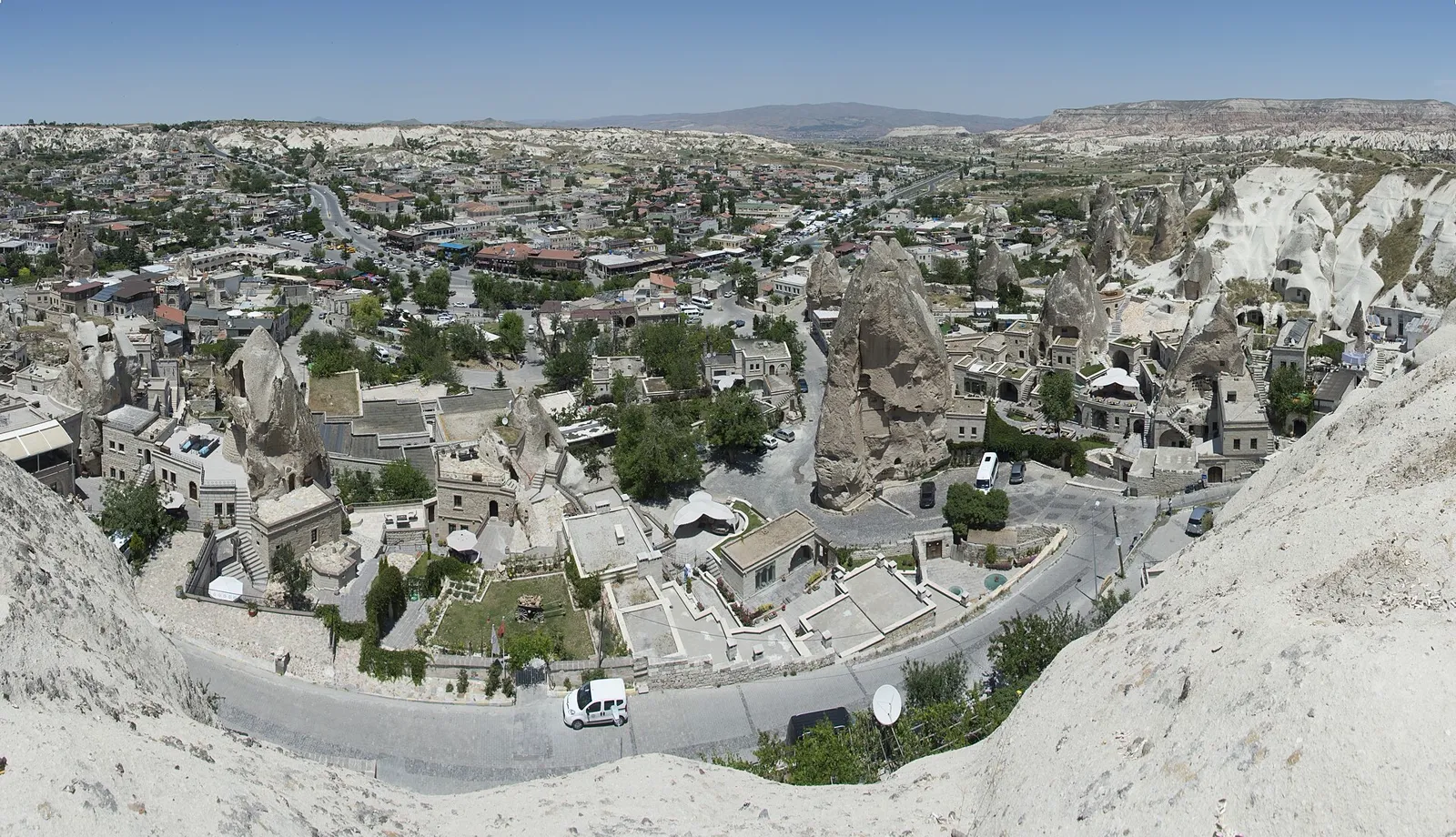
Göreme National Park and the Rock Sites of Cappadocia (1985, mixed)
Fairy chimneys, rock-cut churches and underground cities across Nevşehir and Kayseri.
Hattusha: the Hittite Capital (1986)
At Boğazkale in Çorum — the Lion Gate and the nearby rock sanctuary of Yazılıkaya are part of the site.
Çatalhöyük Neolithic Site (2012)
In Konya province, one of the oldest known settled communities in the world.
Gordion (2023)
Capital of Phrygia at Polatlı near Ankara, with its monumental burial mounds — a comfortable day trip from the capital.
Medieval Wooden Hypostyle Mosques of Anatolia (2023)
Turkey's first serial inscription: the great mosques of Afyonkarahisar and Sivrihisar, the Ahi Şerafettin (Arslanhane) Mosque in Ankara, Eşrefoğlu Mosque in Beyşehir and Mahmut Bey Mosque in Kastamonu.
Eastern and Southeastern Anatolia
Great Mosque and Hospital of Divriği (1985)
A 13th-century Mengujekid complex in Sivas province, known for the extraordinary carving of its stone portals.
Nemrut Dağ (1987)
The tomb sanctuary of the Commagene king Antiochus I in Adıyaman, ringed by colossal statues; visited at sunrise and sunset.
Diyarbakır Fortress and Hevsel Gardens (2015)
The basalt walls and citadel above the Tigris, with the river-fed gardens below.
Archaeological Site of Ani (2016)
On the Armenian border in Kars — a walled medieval city with churches, a mosque and ruins from several dynasties.
Göbekli Tepe (2018)
In Şanlıurfa: monumental pillared enclosures built by hunter-gatherers, which rewrote assumptions about prehistory.
Arslantepe Mound (2021)
In Malatya, a settlement mound carrying traces of early state organisation.
Black Sea
City of Safranbolu (1994)
In Karabük, a well-preserved Ottoman town of timber mansions, a covered market and a caravanserai. Staying in one of the restored houses is the point of a visit; the town is also a Cittaslow member.
Planning a route
Turkey also has a long Tentative List of candidate sites; those are not World Heritage yet. Grouping by region saves days: Cappadocia with Hattusha and Çatalhöyük makes a central Anatolian loop, while Ephesus, Pergamon, Aphrodisias, Pamukkale and Sardis line up along an Aegean route. For open-air sites, go early — summer middays are punishing and shade is rare. Bring water, a hat and proper shoes; at Hattusha, Göbekli Tepe and Ephesus a guide or audio guide makes the difference between stones and a story.