
















Turkey's UNESCO Gastronomy Cities: Gaziantep, Hatay and Afyonkarahisar
What the UNESCO Creative Cities gastronomy title means, Turkey's three gastronomy cities, what to eat in each, and practical notes including the situation in Hatay.
UNESCO's Creative Cities Network brings together cities that treat creativity as part of their development, and gastronomy is one of its branches. Turkey has fewer entries in that branch than most visitors assume — three — but each deserves a trip of its own. Here is the current list, what to eat in each city, and how to combine them.
What the network is
Founded in 2004, the network covers eight fields: literature, film, music, crafts and folk art, gastronomy, design, media arts and architecture. According to the Turkish National Commission for UNESCO, 408 cities worldwide were members as of 2025. The title is not a restaurant award or a "tastiest city" ranking — it means the city has made specific commitments to protect and share its food culture.
-
Recipes
Ingredient lists, step-by-step method, time and servings. Browse by category from soups to desserts, or search for what you need.
See recipes → -
How-to guides
From phone settings to paperwork, account security to everyday problems: numbered steps with an estimated time for each guide.
See the guides → -
Software archive
Browsers, security tools, office and media software. Every entry says what it does, which version it is and where to download it.
Browse software → -
Voice and video chat
Group video rooms, one-to-one voice calls and live streaming. Runs in the browser — no plugin, no app, nothing to install.
Enter the rooms →
Turkey's gastronomy cities
Turkey has nine cities in the network overall, three of them in gastronomy. As of September 2026:
- Gaziantep — joined 2015
- Hatay — joined 2017
- Afyonkarahisar — joined 2019
The other six are in different fields: Istanbul (design), Kütahya and Bursa (crafts and folk art), Kırşehir and Şanlıurfa (music), and Kahramanmaraş (literature, joined 2025). Adana was nominated in the gastronomy field for the 2025 round, but Kahramanmaraş was Turkey's only new entry that year. The list changes, so check the national commission for the current picture.
Gaziantep: pistachios and baklava
Turkey's first gastronomy city. UNESCO's own profile notes that cooking sits at the centre of the city's cultural identity and is one of the main drivers of its economy. Pistachios come first here — the city even holds a festival built around them.
What to eat
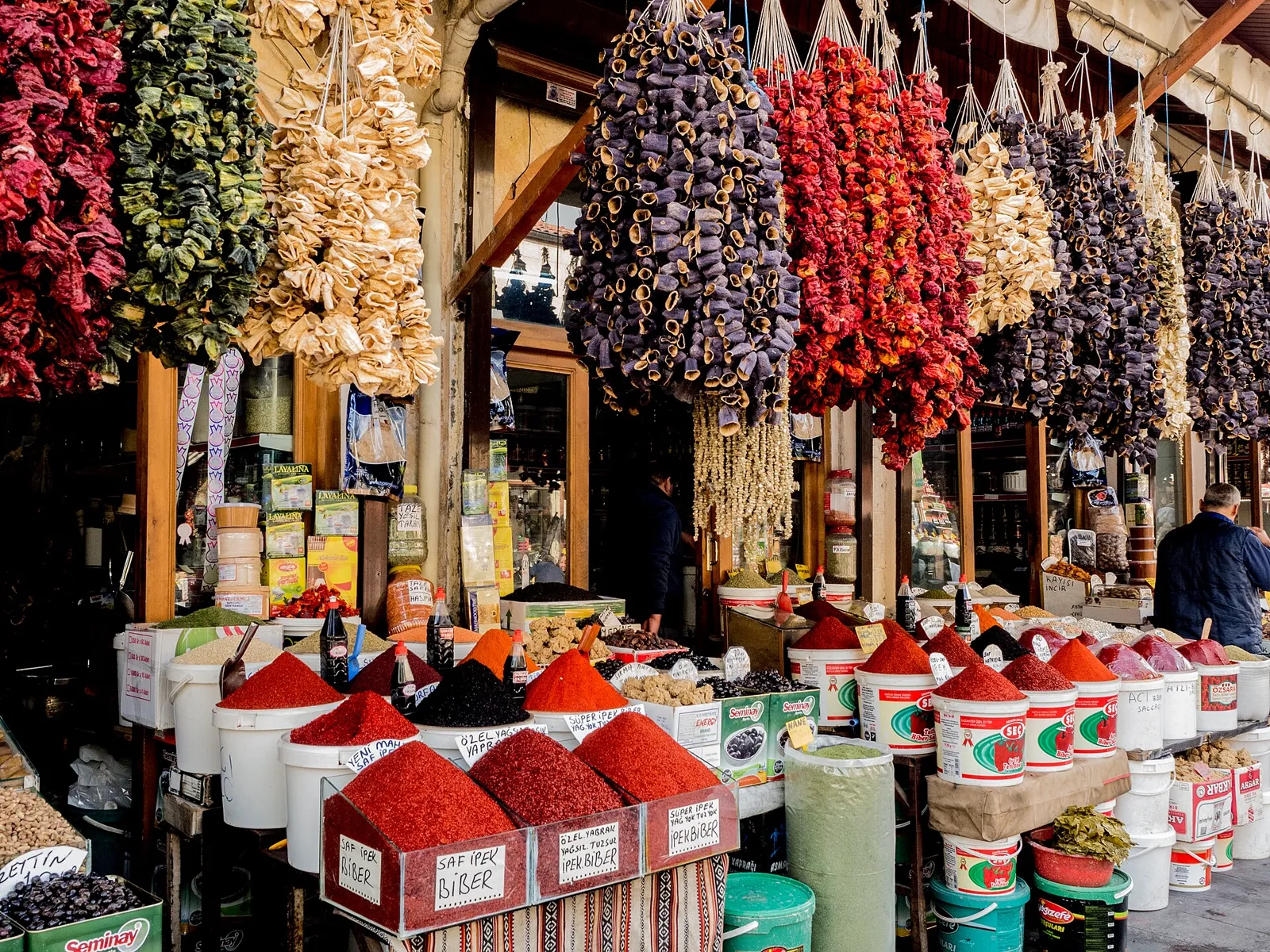
Antep baklava was the first Turkish product to receive EU geographical indication status, in 2013. For breakfast, katmer with pistachio and clotted cream, or the spiced lamb soup beyran eaten early in the morning. Then yuvalama, ali nazik, Antep-style lahmacun and the kebabs. Take home dried aubergines and peppers, isot pepper flakes, spices and pistachios.
Where to look
The historic bazaars around the castle — coppersmiths, spice sellers, the old hans — are both the shopping and the eating route. The city's culinary museum is worth an hour if you want the background.
Hatay: the table of many civilisations
Hatay joined in 2017. UNESCO's profile describes it as the Silk Road's opening to the Mediterranean, a centre of the spice trade for centuries, with a kitchen fed by Middle Eastern, Anatolian and Mediterranean traditions; the Hatay Künefe Festival is listed among its events.
What to eat
Künefe — hot, stringy cheese under shredded pastry — is the emblem. Among meze: hummus, muhammara, zahter (thyme) salad and the spiced cheese sürk. Main dishes include oruk, tepsi kebabı and kağıt kebabı baked in paper. Pomegranate molasses, bay-laurel soap and zahter are what people carry home.
Know before you go
The February 2023 earthquakes hit Hatay hard, especially the historic centre of Antakya. Many old market streets and buildings were damaged, some businesses moved to other districts, and reconstruction continues. Check that the places you plan to visit are open, and confirm accommodation, before you travel.
Afyonkarahisar: clotted cream, Turkish delight and sucuk
Afyonkarahisar joined in 2019. UNESCO's profile highlights its marble and thermal springs alongside its food — particularly Turkish delight and clotted cream — and notes that strong livestock farming makes cured meats central to the local kitchen.
What to eat
Afyon kaymağı (clotted cream) with honey or ekmek kadayıfı for breakfast, eggs with sucuk, sucuk döner, and lokum to finish. Poppy-seed pastries are the other local thread.
Combine it
The city sits where the roads from Istanbul, Ankara, İzmir and Antalya cross, so it pairs easily with a night at a thermal hotel or a day in the Phrygian Valley. Walk up to the castle for the view, then buy delight and cream in the market.
Not on the list, but worth the detour
Several Turkish cities with serious food cultures are not in the network: Adana for kebabs and şalgam, Diyarbakır for its breakfast and liver kebabs, Şanlıurfa for its own Urfa style. If you are travelling the southeast, the distances between Gaziantep, Hatay and Adana are short enough to do all three by road.
Practical notes
- Breakfast and lunch matter more than dinner in these cities — katmer and beyran can sell out early in the morning.
- If you are buying a product with geographical indication status, you can check its registration on the Turkish Patent and Trademark Office portal.
- Portions are large and meze arrive without being ordered; plan one main meal a day, not two.