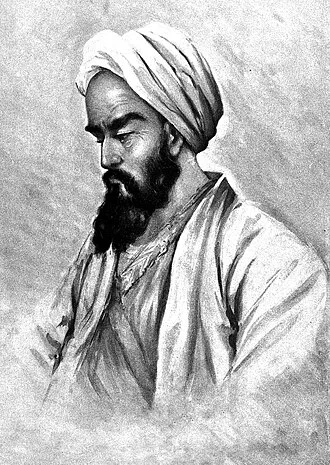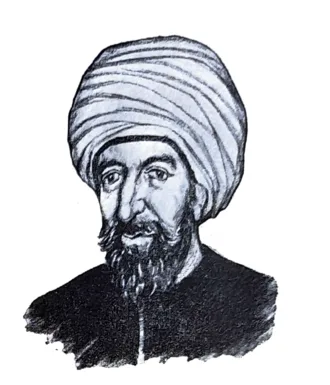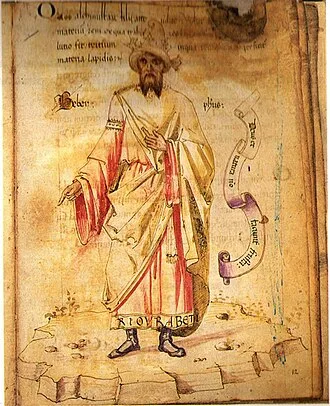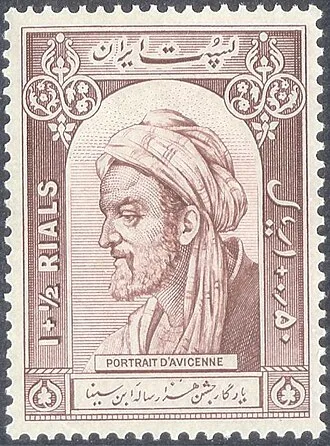
Often described as the father of early modern medicine, Avicenna's most famous works are The Book of Healing, a philosophical and scientific encyclopedia, and The Canon of Medicine, a medical encyclopedia that became a standard medical text at many medieval European universities and remained in use as late as 1650.
Besides philosophy and medicine, Avicenna's corpus includes writings on astronomy, alchemy, geography and geology, psychology, Islamic theology, logic, mathematics, physics, and works of poetry. His philosophy was of the Peripatetic school derived from Aristotelianism, of which he is considered among the greatest proponents within the Muslim world.
Avicenna wrote most of his philosophical and scientific works in Arabic but also wrote several key works in Persian; his poetry was written in both languages. Of the 450 works he is believed to have written, around 240 have survived, including 150 on philosophy and 40 on medicine.
Avicenna is also known for his unique methodological approach to his works. He combines a unique blend of empirical observation, philosophical reasoning, and logical analysis, in order to conduct his analysis and reach his conclusions. This is especially the case in his medical works, namely The Canon of Medicine.
Name
Avicenna is a Latinized version of the Arabic patronym ibn Sīnā (ابن سينا), indicating that he is the descendant of a line of men going back to one named Sina. Specifically, Avicenna was the great-great-grandson of a Sina. His full formal Arabic name is Abū ʿAlī al-Ḥusayn bin ʿAbdallāh bin al-Ḥasan bin ʿAlī bin Sīnā al-Balkhī al-Bukhārī (أبو علي الحسين بن عبد الله بن الحسن بن علي بن سينا البلخي البخاري).
Historical context
Avicenna created an extensive corpus of works during what is commonly known as the Islamic Golden Age, in which the translations of Byzantine, Greco-Roman, Persian, and Indian texts were studied extensively. Greco-Roman (Middle Platonic, Neoplatonic, and Aristotelian) texts translated by the Kindi school were commented on, redacted and developed substantially by Islamic intellectuals, who also built upon Persian and Indian mathematical systems, astronomy, algebra, trigonometry and medicine.
The Samanid Empire in the eastern part of Persia, Greater Khorasan, and Central Asia, as well as the Buyid dynasty in the western part of Persia and Iraq, provided a thriving atmosphere for scholarly and cultural development. Under the Samanids, Bukhara rivaled Baghdad for cultural capital of the Muslim world. There, Avicenna had access to the great libraries of Balkh, Khwarazm, Gorgan, Rey, Isfahan and Hamadan.
Various texts (such as the 'Ahd with Bahmanyar) show that Avicenna debated philosophical points with the greatest scholars of the time. Nizami Aruzi described how before ibn Sina left Khwarazm, he had met al-Biruni (a scientist and astronomer), Abu Nasr Mansur (a renowned mathematician), Abu Sahl 'Isa ibn Yahya al-Masihi (a respected philosopher) and ibn al-Khammar (a great physician).
The study of the Quran and the Hadith also thrived, and Islamic philosophy, fiqh "jurisprudence", and kalam "speculative theology" were all further developed by ibn Sina and his opponents at this time.
Biography
Early life and education
Avicenna was born in c. 980 in the village of Afshana in Transoxiana to a Persian family. The village was near the Samanid capital of Bukhara, which was his mother's hometown. His father Abd Allah was a native of the city of Balkh in Bactria. An official of the Samanid bureaucracy, the father had served as the governor of a village of the royal estate of Harmaytan near Bukhara during the reign of Nuh II (r. 976–997).
Avicenna also had a younger brother. A few years later, the family settled in Bukhara, a center of learning, which attracted many scholars. It was there that Avicenna was educated, which early on was seemingly administered by his father.
Although both Avicenna's father and brother had converted to Isma'ilism, he himself did not follow the faith. He was instead a Hanafi Sunni, the same school followed by the Samanids. Avicenna's parents recognized his brilliance from a very young age and hired tutors in Arabic language and Islamic knowledge to set him on the path towards intellectual thinking.
Avicenna was first schooled in the Quran and literature, and by the age of 10, he had memorized the entire Quran. He was later sent by his father to an Indian greengrocer, who taught him arithmetic. Afterwards, he was schooled in fiqh by the Hanafi jurist Ismail al-Zahid. Sometime later, his father invited the physician and philosopher al-Natili to their house to educate ibn Sina.
Together, they studied the Isagoge of Porphyry (died 305) and possibly the Categories of Aristotle (died 322 BCE) as well. After Avicenna had read the Almagest of Ptolemy (died 170) and Euclid's Elements, al-Natili told him to continue his research independently. By the time Avicenna was 18, he was well-educated in Greek sciences.
Although ibn Sina mentions only al-Natili as his teacher in his autobiography, he most likely had other teachers as well, such as the physicians Qumri and Abu Sahl 'Isa ibn Yahya al-Masihi.
Career
In Bukhara and Gurganj
At the age of 17, Avicenna was made a physician of Nuh II. By the time Avicenna was at least 21 years old, his father died. He was subsequently given an administrative post, possibly succeeding his father as the governor of Harmaytan. Avicenna later moved to Gurganj, the capital of Khwarazm, which he reports that he did due to "necessity".
The date he went to the place is uncertain, as he reports that he served the Khwarazmshah, the ruler of Khwarazm, the Ma'munid ruler Abu al-Hasan Ali. The latter ruled from 997 to 1009, which indicates that Avicenna moved sometime during that period.
He may have moved in 999, the year in which the Samanid Empire fell after the Kara-Khanid Khanate captured Bukhara and imprisoned the Samanid emir Abd al-Malik II. Due to his high position and strong connection with the Samanids, ibn Sina may have found himself in an unfavorable position after the fall of his suzerain.
It was through the minister of Gurganj, Abu'l-Husayn as-Sahi, a patron of Greek sciences, that Avicenna entered into the service of Abu al-Hasan Ali. Under the Ma'munids, Gurganj became a centre of learning, attracting many prominent figures, such as ibn Sina and his former teacher Abu Sahl al-Masihi, the mathematician Abu Nasr Mansur, the physician ibn al-Khammar, and the philologist al-Tha'alibi.
In Gorgan
Avicenna later moved due to "necessity" once more (in 1012), this time to the west. There he travelled through the Khurasani cities of Nasa, Abivard, Tus, Samangan and Jajarm. He was planning to visit the ruler of the city of Gorgan, the Ziyarid Qabus (r. 977–981, 997–1012), a cultivated patron of writing, whose court attracted many distinguished poets and scholars.
However, when Avicenna eventually arrived, he discovered that the ruler had been dead since the winter of 1013. Avicenna then left Gorgan for Dihistan, but returned after becoming ill. There he met Abu 'Ubayd al-Juzjani (died 1070) who became his pupil and companion. Avicenna stayed briefly in Gorgan, reportedly serving Qabus's son and successor Manuchihr (r. 1012–1031) and resided in the house of a patron.
In Ray and Hamadan
In c. 1014, Avicenna went to the city of Ray, where he entered into the service of the Buyid amir Majd al-Dawla (r. 997–1029) and his mother Sayyida Shirin, the de facto ruler of the realm.
There he served as the physician at the court, treating Majd al-Dawla, who was suffering from melancholia. Avicenna reportedly later served as the "business manager" of Sayyida Shirin in Qazvin and Hamadan, though details regarding this tenure are unclear. During this period, Avicenna finished writing The Canon of Medicine and started writing his The Book of Healing.
In 1015, during Avicenna's stay in Hamadan, he participated in a public debate, as was customary for newly arrived scholars in western Iran at that time. The purpose of the debate was to examine one's reputation against a prominent resident. The person whom Avicenna debated against was Abu'l-Qasim al-Kirmani, a member of the school of philosophers of Baghdad.
The debate became heated, resulting in ibn Sina accusing Abu'l-Qasim of lack of basic knowledge in logic, while Abu'l-Qasim accused ibn Sina of rudeness and impoliteness.
After the debate, Avicenna sent a letter to the Baghdad Peripatetics, asking if Abu'l-Qasim's claim that he shared the same opinion as them was true. Abu'l-Qasim later retaliated by writing a letter to an unknown person in which he made accusations so serious that ibn Sina wrote to Abu Sa'd, the deputy of Majd al-Dawla, to investigate the matter.
The accusation made towards Avicenna may have been the same as he had received earlier, in which he was accused by the people of Hamadan of copying the stylistic structures of the Quran in his Sermons on Divine Unity. The seriousness of this charge, in the words of the historian Peter Adamson, "cannot be underestimated in the larger Muslim culture".
Not long afterwards, Avicenna shifted his allegiance to the rising Buyid amir Shams al-Dawla, the younger brother of Majd al-Dawla, which Adamson suggests was due to Abu'l-Qasim also working under Sayyida Shirin. Avicenna had been called upon by Shams al-Dawla to treat him, but after the latter's campaign in the same year against his former ally, the Annazid ruler Abu Shawk (r. 1010–1046), he forced Avicenna to become his vizier.
Although Avicenna would sometimes clash with Shams al-Dawla's troops, he remained vizier until the latter died of colic in 1021. Avicenna was asked to stay as vizier by Shams al-Dawla's son and successor Sama' al-Dawla (r. 1021–1023), but he instead went into hiding with his patron, Abu Ghalib al-Attar, to wait for better opportunities to emerge.
It was during this period that Avicenna was secretly in contact with Ala al-Dawla Muhammad (r. 1008–1041), the Kakuyid ruler of Isfahan and uncle of Sayyida Shirin.
It was during his stay at Attar's home that Avicenna completed The Book of Healing, writing 50 pages a day. The Buyid court in Hamadan, particularly the Kurdish vizier Taj al-Mulk, suspected Avicenna of correspondence with Ala al-Dawla, and as a result, had the house of Attar ransacked and ibn Sina imprisoned in the fortress of Fardajan, outside Hamadan.
Juzjani blames one of ibn Sina's informers for his capture. He was imprisoned for four months until Ala al-Dawla captured Hamadan, ending Sama al-Dawla's reign.
In Isfahan
Avicenna was subsequently released, and went to Isfahan, where he was well received by Ala al-Dawla. In the words of Juzjani, the Kakuyid ruler gave Avicenna "the respect and esteem which someone like him deserved". Adamson also says that Avicenna's service under Ala al-Dawla "proved to be the most stable period of his life".
Avicenna served as the advisor, if not vizier of Ala al-Dawla, accompanying him in many of his military expeditions and travels. Avicenna dedicated two Persian works to him, a philosophical treatise named Danish-nama-yi Ala'i ("Book of Science for Ala"), and a medical treatise about the pulse.
During the brief occupation of Isfahan by the Ghaznavids in January 1030, Avicenna and Ala al-Dawla relocated to the southwestern Iranian region of Khuzistan, where they stayed until the death of the Ghaznavid ruler Mahmud (r. 998–1030), which occurred two months later.
It was seemingly when Avicenna returned to Isfahan that he started writing his Pointers and Reminders. In 1037, while Avicenna was accompanying Ala al-Dawla to a battle near Isfahan, he contracted a severe colic, having suffered from colic throughout his life. He died shortly afterwards in Hamadan, where he was buried.
Philosophy
Avicenna wrote extensively on early Islamic philosophy, especially the subjects logic, ethics and metaphysics, including treatises named Logic and Metaphysics. Most of his works were written in Arabic, then the language of science in the Muslim world, and some in Early New Persian. Of linguistic significance even to this day are a few books that he wrote in Persian, particularly the Danishnama.
Avicenna's commentaries on Aristotle often criticized the philosopher, encouraging a lively debate in the spirit of ijtihad.
Avicenna's Neoplatonic scheme of emanations became fundamental in kalam in the 12th century.
The Book of Healing became available in Europe in a partial Latin translation some fifty years after its composition under the title Sufficientia, and some authors have identified a "Latin Avicennism" as flourishing for some time paralleling the more influential Latin Averroism, but it was suppressed by the Parisian decrees of 1210 and 1215.
Avicenna's psychology and theory of knowledge influenced the theologian William of Auvergne and Albertus Magnus, while his metaphysics influenced the thought of Thomas Aquinas.
Metaphysical doctrine
Early Islamic philosophy and Islamic metaphysics, imbued as it is with kalam, distinguishes between essence and existence more clearly than Aristotelianism. Whereas existence is the domain of the contingent and the accidental, essence endures within a being beyond the accidental. The philosophy of Avicenna, particularly that part relating to metaphysics, owes much to al-Farabi.
The search for a definitive Islamic philosophy separate from Occasionalism can be seen in what is left of his work.
Following al-Farabi's lead, Avicenna initiated a full-fledged inquiry into the question of being, in which he distinguished between essence (Arabic: ماهية, māhiya) and existence (Arabic: وجود, wujūd).
He argued that the fact of existence cannot be inferred from or accounted for by the essence of existing things, and that form and matter by themselves cannot interact and originate the movement of the universe or the progressive actualization of existing things. Existence must, therefore, be due to an agent-cause that necessitates, imparts, gives, or adds existence to an essence.
To do so, the cause must be an existing thing and coexist with its effect. This is known as the concept of the "efficient cause." According to Avicenna, the efficient cause or efficient agent is defined as that which gives being to something distinct from itself. God is used as a modeling agent for this philosophy. The efficient cause "gives being to another and is simultaneous with its effect."
Impossibility, contingency, necessity
Avicenna's consideration of the essence-attributes question may be elucidated in terms of his ontological analysis of the modalities of being; namely impossibility, contingency and necessity. Avicenna argued that the impossible being is that which cannot exist, while the contingent in itself (mumkin bi-dhatihi) has the potentiality to be or not to be without entailing a contradiction.
When actualized, the contingent becomes a 'necessary existent due to what is other than itself' (wajib al-wujud bi-ghayrihi). Thus, contingency-in-itself is potential beingness that could eventually be actualized by an external cause other than itself. The metaphysical structures of necessity and contingency are different.
Necessary being due to itself (wajib al-wujud bi-dhatihi) is true in itself, while the contingent being is 'false in itself' and 'true due to something else other than itself'. The necessary is the source of its own being without borrowed existence. It is what always exists.
Differentia
The Necessary exists 'due-to-Its-Self', and has no quiddity/essence other than existence. Furthermore, It is 'One' (wahid ahad) since there cannot be more than one 'Necessary-Existent-due-to-Itself' without differentia (fasl) to distinguish them from each other. Yet, to require differentia entails that they exist 'due-to-themselves' as well as 'due to what is other than themselves'; and this is contradictory.
If no differentia distinguishes them from each other, then, in no sense are these 'Existents' not the same. Avicenna adds that the 'Necessary-Existent-due-to-Itself' has no genus (jins), nor a definition (hadd), nor a counterpart (nadd), nor an opposite (did), and is detached (bari) from matter (madda), quality (kayf), quantity (kam), place (ayn), situation (wad) and time (waqt).
Reception
Avicenna's theology on metaphysical issues (ilāhiyyāt) has been criticized by some Islamic scholars, among them al-Ghazali, ibn Taymiyya, and ibn Qayyim al-Jawziyya.[page needed] While discussing the views of the theists among the Greek philosophers, namely Socrates, Plato and Aristotle in Al-Munqidh min ad-Dalal "Deliverance from Error", al-Ghazali noted:
[the Greek philosophers] must be taxed with unbelief, as must their partisans among the Muslim philosophers, such as Avicenna and al-Farabi and their likes. None, however, of the Muslim philosophers engaged so much in transmitting Aristotle's lore as did the two men just mentioned. [...] The sum of what we regard as the authentic philosophy of Aristotle, as transmitted by al-Farabi and Avicenna, can be reduced to three parts: a part which must be branded as unbelief; a part which must be stigmatized as innovation; and a part which need not be repudiated at all.
Argument for God's existence
Avicenna made an argument for the existence of God which would be known as the "Proof of the Truthful" (burhān al-ṣiddīqīn). Avicenna argued that there must be a Proof of the Truthful, an entity that cannot not exist and through a series of arguments, he identified it with God in Islam. Present-day historian of philosophy Peter Adamson called this argument one of the most influential medieval arguments for God's existence, and Avicenna's biggest contribution to the history of philosophy.
Al-Biruni correspondence
Correspondence between ibn Sina with his student Ahmad ibn ʿAli al-Maʿsumi and al-Biruni has survived in which they debated Aristotelian natural philosophy and the Peripatetic school. al-Biruni began by asking eighteen questions, ten of which were criticisms of Aristotle's On the Heavens.
Theology
Ibn Sina was a devout Muslim and sought to reconcile rational philosophy with Islamic theology. He aimed to prove the existence of God and His creation of the world scientifically and through reason and logic. His views on Islamic theology and philosophy were enormously influential, forming part of the core of the curriculum at Islamic religious schools until the 19th century.
Avicenna wrote several short treatises dealing with Islamic theology. These included treatises on the prophets and messengers in Islam, whom he viewed as "inspired philosophers", and also on various scientific and philosophical interpretations of the Quran, such as how Quranic cosmology corresponds to his philosophical system.
In general, these treatises linked his philosophical writings to Islamic religious ideas; for example, the body's afterlife.
There are occasional brief hints and allusions in his longer works, however, that Avicenna considered philosophy as the only sensible way to distinguish real prophecy from illusion. He did not state this more clearly because of the political implications of such a theory if prophecy could be questioned, and also because most of the time he was writing shorter works which concentrated on explaining his theories on philosophy and theology clearly, without digressing to consider epistemological matters which could only be properly considered by other philosophers.
Later interpretations of Avicenna's philosophy split into three different schools; those (such as al-Tusi) who continued to apply his philosophy as a system to interpret later political events and scientific advances; those (such as al-Razi) who considered Avicenna's theological works in isolation from his wider philosophical concerns; and those (such as al-Ghazali) who selectively used parts of his philosophy to support their own attempts to gain greater spiritual insights through a variety of mystical means. It was the theological interpretation championed by those such as al-Razi which eventually came to predominate in the madrasahs.
Avicenna memorized the Quran by the age of ten, and as an adult, wrote five treatises commenting on surahs of the Quran. One of these texts included the Proof of Prophecies, in which he comments on several Quranic verses and holds the Quran in high esteem. Avicenna argued that the Islamic prophets should be considered higher than philosophers.