As a political domain, it successively constituted a province of the Umayyad Caliphate, initiated by the Caliph al-Walid I (711–750); the Emirate of Córdoba (c. 750–929); the Caliphate of Córdoba (929–1031); the first taifa kingdoms (1009–1110); the Almoravid Empire (1085–1145); the second taifa period (1140–1203); the Almohad Caliphate (1147–1238); the third taifa period (1232–1287); and ultimately the Nasrid Emirate of Granada (1238–1492).
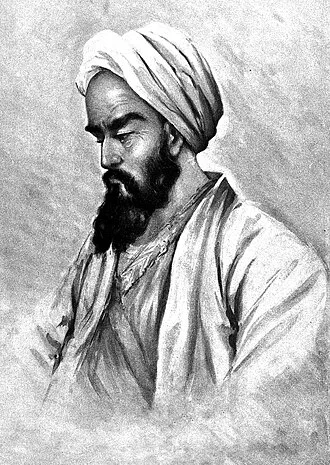
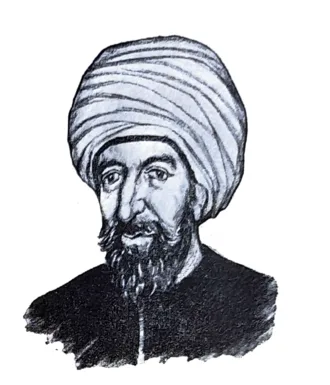
Under the Caliphate of Córdoba, the city of Córdoba became one of the leading cultural and economic centres of the Mediterranean Basin, Europe, and the Islamic world. Achievements that advanced Islamic and Western science came from al-Andalus, including major advances in trigonometry (Jabir ibn Aflah), astronomy (al-Zarqali), surgery (al-Zahrawi), pharmacology (Ibn Zuhr), and agronomy (Ibn Bassal and Abu'l-Khayr al-Ishbili).
Al-Andalus became a conduit for cultural and scientific exchange between the Islamic and Christian worlds.
For much of its history, al-Andalus existed in conflict with Christian kingdoms to the north. After the fall of the Umayyad Caliphate of Cordoba by 1031, al-Andalus was fragmented into taifa states and principalities, some of which (such as the Taifa of Toledo, the Taifa of Zaragoza, the Taifa of Seville and the Taifa of Badajoz) reached considerable territorial extent.
After the Christian capture of Toledo in 1085, the Almoravid empire intervened and repelled attacks on the region, then brought al-Andalus under direct Almoravid rule. For the next century and a half, al-Andalus became a province of the Muslim empires of the Almoravids and their successors, the Almohads, both based in Marrakesh.
Ultimately, the northern Christian kingdoms overpowered the Muslim states to the south. In the 13th century, most of the south quickly fell under Christian rule, with Gharb al-Andalus, the Guadalquivir Valley and Eastern al-Andalus falling to Portuguese, Castilian, and Aragonese conquests. This left the Emirate of Granada as the remaining Muslim state on the Iberian Peninsula, which became a tributary state of the Crown of Castile, before surrendering in 1492 to the Catholic Monarchs.
Etymology
The toponym al-Andalus is first attested by inscriptions on coins minted in 716 by the new Muslim government of Iberia. These coins, called dinars, were inscribed in both Latin and Arabic. The etymology of the name al-Andalus has traditionally been derived from the name of the Vandals (vándalos in Spanish, vândalos in Portuguese).
Since the 1980s, several alternative etymologies have challenged this tradition. In 1986, Joaquín Vallvé proposed that al-Andalus was a corruption of the name Atlantis. Heinz Halm in 1989 derived the name from a Gothic term, *landahlauts, and in 2002, Georg Bossong suggested its derivation from a pre-Roman substrate.
History
Province of the Umayyad Caliphate
During the caliphate of the Umayyad Caliph Al-Walid I, the commander Tariq ibn-Ziyad led an army of 7,000 that landed at Gibraltar on 30 April 711, ostensibly to intervene in a Visigothic civil war. After a decisive victory over King Roderic at the Battle of Guadalete on 19 July 711, Tariq, accompanied by his mawla, governor Musa ibn Nusayr of Ifriqiya, brought most of the Visigothic Kingdom under Muslim rule in a seven-year campaign. They crossed the Pyrenees and occupied Visigothic Septimania in southern France.[citation needed]
Most of the Iberian peninsula became part of the expanding Umayyad Empire, under the name of al-Andalus. It was organised as a province subordinate to Ifriqiya, so, for the first few decades, the governors of al-Andalus were appointed by the emir of Kairouan, rather than the Caliph in Damascus. The regional capital was set at Córdoba, and the first influx of Muslim settlers was widely distributed.[citation needed]
Following the Muslim conquest of Spain, al-Andalus, then at its greatest extent, was divided into five administrative units, corresponding very roughly to: modern Andalusia; Castile and León; Navarre, Aragon, and Catalonia; Portugal and Galicia; and the Languedoc-Roussillon area of Occitania.
The small army Tariq led in the initial conquest consisted mostly of Berbers, while Musa's largely Arab force of over 12,000 soldiers was accompanied by a group of mawālī (Arabic, موالي), that is, non-Arab Muslims, who were clients of the Arabs. The Berber soldiers accompanying Tariq were garrisoned in the centre and the north of the peninsula, as well as in the Pyrenees, while the Berber colonists who followed settled in all parts of the country – north, east, south and west.
Visigothic lords who agreed to recognise Muslim suzerainty were allowed to retain their fiefs (notably, in Murcia, Galicia, and the Ebro valley). Resistant Visigoths took refuge in the Cantabrian highlands, where they carved out a rump state, the Kingdom of Asturias.
In the 720s, the al-Andalus governors launched several sa'ifa raids into Aquitaine but were decisively defeated by Duke Odo the Great of Aquitaine at the Battle of Toulouse (721). However, after crushing Odo's Berber ally Uthman ibn Naissa in the eastern Pyrenees, Abdul Rahman Al Ghafiqi led an expedition north across the western Pyrenees and defeated the Aquitanian duke, who in turn appealed to the Frankish leader Charles Martel for assistance, offering to place himself under Carolingian sovereignty.
At the Battle of Poitiers in 732, the al-Andalus raiding army was defeated by Charles Martel and Al Ghafiqi was killed. In 734, the Andalusi launched raids to the east, capturing Avignon and Arles, and overran much of Provence. In 737, they travelled up the Rhône valley, reaching as far north as Burgundy. Charles Martel of the Franks, with the assistance of Liutprand of the Lombards, invaded Burgundy and Provence and expelled the raiders by 739.
In 740, a Berber Revolt erupted in the Maghreb (North Africa). To put down the rebellion, the Umayyad Caliph Hisham dispatched a large Arab army, composed of regiments (Junds) from Bilad Ash-Sham, to North Africa. This Umayyad army was defeated by the Berber rebels at the Battle of Bagdoura (in Morocco). Heartened by the victories of their North African brethren, the Berbers of al-Andalus quickly raised their own revolt.
Berber garrisons in the north of the Iberian Peninsula mutinied, deposed their Arab commanders, and organised a large rebel army to march against the strongholds of Toledo, Córdoba, and Algeciras.
In 741, Balj bin Bishr led a detachment of some 10,000 Arab troops across the straits. The Arab governor of al-Andalus, joined by this force, was victorious over the Berber rebels in a series of battles in 742. A dispute erupted between the Syrian commanders and the Andalusi, the so-called "original Arabs" of the earlier contingents.
The Syrians defeated them at the hard-fought Battle of Aqua Portora in August 742 but were too few to impose themselves on the province.
The quarrel was settled in 743 when Abū l-Khaṭṭār al-Ḥusām, the new governor of al-Andalus, assigned the Syrians to regimental fiefs across al-Andalus – the Damascus jund was established in Elvira (Granada), the Jordan jund in Rayyu (Málaga and Archidona), the Jund Filastin (Palestine) in Medina-Sidonia and Jerez, the Emesa (Hims) jund in Seville and Niebla, and the Qinnasrin jund in Jaén.
The Egypt jund was divided between Beja (Alentejo) in the west and Tudmir (Murcia) in the east. The arrival of the Syrians substantially increased the Arab element in the Iberian peninsula and helped strengthen the Muslim hold on the south. However, at the same time, unwilling to be governed, the Syrian junds carried on an existence of autonomous feudal anarchy, severely destabilising the authority of the governor of al-Andalus.
A second significant consequence of the revolt was the expansion of the Kingdom of the Asturias, hitherto confined to enclaves in the Cantabrian highlands. After the rebellious Berber garrisons evacuated the northern frontier fortresses, the Christian king Alfonso I of Asturias set about immediately seizing the empty forts for himself, quickly adding the northwestern provinces of Galicia and León to his fledgling kingdom.
The Asturians evacuated the Christian populations from the towns and villages of the Galician-Leonese lowlands, creating an empty buffer zone in the Douro River valley (the "Desert of the Duero"). This newly emptied frontier remained roughly in place for the next few centuries as the boundary between the Christian north and the Islamic south.
On the Muslim side of the frontier, al-Andalus had three large march territories (thaghr, pl. thughūr): the Lower March (capital at Mérida and Badajoz, featuring a population primarily of Berber and Muwallad stock), the Middle March (centred at Toledo, primarily muwallad), and the Upper March (centred at Zaragoza, with a more intricate ethnic mix and a more substantial population of Arab stock as well as maintaining more complex relations with its Carolingian and Navarrese neighbours).
These disturbances and disorder also allowed the Franks, now under the leadership of Pepin the Short, to invade the strategic strip of Septimania in 752, hoping to deprive al-Andalus of an easy launching pad for raids into Francia. After a lengthy siege, the last Arab stronghold, the citadel of Narbonne, finally fell to the Franks in 759. Al-Andalus was sealed off at the Pyrenees.
The third consequence of the Berber revolt was the collapse of the authority of the Damascus Caliphate over the western provinces. With the Umayyad Caliphs distracted by the challenge of the Abbasids in the east, the western provinces of the Maghreb and al-Andalus spun out of their control. From around 745, the Fihrids, an illustrious local Arab clan descended from Oqba ibn Nafi al-Fihri, seized power in the western provinces and ruled them almost as a private family empire of their own – Abd al-Rahman ibn Habib al-Fihri in Ifriqiya and Yūsuf al-Fihri in al-Andalus.
The Fihrids welcomed the fall of the Umayyads in the east, in 750, and sought to reach an understanding with the Abbasids, hoping they might be allowed to continue their autonomous existence. But when the Abbasids rejected the offer and demanded submission, the Fihrids declared independence and, probably out of spite, invited the deposed remnants of the Umayyad clan to take refuge in their dominions.
It was a fateful decision that they soon regretted, for the Umayyads, the sons and grandsons of caliphs, had a more legitimate claim to rule than the Fihrids themselves. Rebellious-minded local lords, disenchanted with the autocratic rule of the Fihrids, conspired with the arriving Umayyad exiles.[citation needed]
Umayyad Emirate of Córdoba
Establishment
In 755, the exiled Umayyad prince Abd al-Rahman I (also called al-Dākhil, the 'Immigrant') arrived on the coast of Spain. He had fled the Abbasids, who had overthrown the Umayyads in Damascus and were slaughtering members of that family, and then he spent four years in exile in North Africa, assessing the political situation in al-Andalus across the Straits of Gibraltar, before he landed at Almuñécar.
News of his arrival spread across al-Andalus, and when word reached its governor, Yūsuf al-Fihri, he was not pleased. During this time, Abd al-Rahman and his supporters quickly conquered Málaga and then Seville, finally besieging the capital of al-Andalus, Córdoba. Abd al-Rahman's army was exhausted after their conquest, meanwhile Governor Yūsuf al-Fihri had returned from quashing another rebellion with his army.
The siege of Córdoba began, and noticing the starving state of Abd al-Rahman's army, al-Fihri began throwing lavish feasts every day as the siege went on, to tempt Abd al Rahman's supporters to defect to his side. However, Abd al-Rahman persisted, even rejecting a truce that would have allowed Abd al-Rahman to marry al-Fihri's daughter.
After decisively defeating Yūsuf al-Fihri's army, Abd al-Rahman was able to conquer Córdoba, where he proclaimed himself emir in 756. The rest of al-Andalus was easily conquered, and Abd al-Rahman soon had control of all of al-Andalus.
Rule
Abd al Rahman's rule was stable in the years after his conquest – he built major public works, most famously the Mosque of Córdoba, and helped urbanise the emirate while defending it from invaders, including the quashing of numerous rebellions, and decisively repelling the invasion by Charlemagne (which would later inspire the epic, Chanson de Roland).
By far the most important of these invasions was the attempted reconquest by the Abbasid Caliphate. In 763 Caliph Al-Mansur of the Abbasids installed al-Ala ibn-Mugith as governor of Africa (whose title gave him dominion over the province of al-Andalus). He planned to invade and destroy the Emirate of Córdoba, so in response Abd al Rahman fortified himself within the fortress of Carmona with a tenth as many soldiers as al-Ala ibn-Mugith.
After a long siege, it appeared that Abd al Rahman would be defeated, but in a last stand Abd al Rahman with his outnumbered forces opened the gates of the fortress and charged at the resting Abbasid army, and decisively defeated them. After being sent the embalmed head of al-Ala ibn-Mugith, it is said Al Mansur exclaimed "Praise be to God who has put the sea between me and this devil!"
Abd al Rahman I died in 788 after a lengthy and prosperous reign. He was succeeded by his son, Hisham I, who secured power by exiling his brother who had tried to rebel against him. Hisham enjoyed a stable reign of eight years and was succeeded by his son Al-Hakam I. The next few decades were relatively uneventful, with only occasional minor rebellions, and saw the rise of the emirate.
In 822 Al Hakam died and was succeeded by Abd al-Rahman II, the first great emir of Córdoba. He rose to power with no opposition and sought to reform the emirate. He quickly reorganised the bureaucracy to be more efficient and built many mosques across the emirate. During his reign science and art flourished, as many scholars fled the Abbasid caliphate due to the disastrous Fourth Fitna.
The scholar Abbas ibn Firnas made an attempt to fly, though accounts vary on his success. In 852 Abd al Rahman II died, leaving behind him a powerful and well-established state that had become one of the most powerful in the Mediterranean.
Abd al Rahman was succeeded by Muhammad I of Córdoba, who according to legend had to wear women's clothing to sneak into the imperial palace and be crowned, since he was not the heir apparent. His reign marked a decline in the emirate, which was ended by Abd al-Rahman III. Muhammad's reign was marked by multiple rebellions, which were dealt with poorly and weakened the emirate, most disastrously following the rebellion of Umar ibn Hafsun.
When Muhammad died, he was succeeded by emir Abdullah ibn Muhammad al-Umawi whose power barely reached outside of the city of Córdoba. As Ibn Hafsun ravaged the south, Abdullah did almost nothing, and slowly became more and more isolated, barely speaking to anyone. Abdullah purged his administration of his brothers, which lessened the bureaucracy's loyalty towards him.
Around this time several local Arab lords began to revolt, including one Kurayb ibn Khaldun, who was able to conquer Seville. Some loyalists tried to quell the rebellion, but without proper material support, their efforts were in vain.
He declared that the next emir would be his grandson Abd al-Rahman III, ignoring the claims of his four living children. Abdullah died in 912, and the throne passed to Abd al Rahman III. Through force of arms and diplomacy, he put down the rebellions that had disrupted his grandfather's reign, obliterating Ibn Hafsun and hunting down his sons.
After this he led several sieges against the Christians, sacking the city of Pamplona, and restoring some prestige to the emirate. Meanwhile, across the sea the Fatimids had risen up in force, ousted the Abbasid government in North Africa, and declared themselves a caliphate. Inspired by this action, Abd al Rahman joined the rebellion and declared himself caliph in 929.
For nearly 100 years under the Córdoban Umayyad period, from the 9th century to the 10th, al-Andalus also extended its presence from Fraxinetum into the Alps with a series of organised raids.
Umayyad Caliphate of Córdoba
The period of the Caliphate is seen as the golden age of al-Andalus. Córdoba under the Caliphate, with a population of more than half a million, eventually overtook Constantinople as the largest and most prosperous city in the world. Al-Andalus became a centre for the arts, medicine, science, music, literature and philosophy.
The work of its most important philosophers and scientists, such as Abulcasis and Averroes, had a major influence on the intellectual life of medieval Europe. Muslims and non-Muslims often came from abroad to study at the libraries and universities of al-Andalus, and after the reconquest of Toledo, several translation institutions such as the Toledo School of Translators were established for translating books and texts from Arabic into Latin.
The most noted figures in this were Gerard of Cremona and Michael Scot, who took these works to Italy. The transmission of ideas significantly affected the formation of the European Renaissance.
The Caliphate of Córdoba also had extensive trade with other parts of the Mediterranean, including Christian parts. Trade goods included luxury items (silk, ceramics, gold), essential foodstuffs (grain, olive oil, wine), and containers (such as ceramics for storing perishables). In the tenth century, Amalfitans were already trading Fatimid and Byzantine silks in Córdoba.
Later references to Amalfitan merchants were sometimes used to emphasise the previous golden age of Córdoba. Fatimid Egypt was a supplier of many luxury goods, including elephant tusks, and raw or carved crystals. The Fatimids were traditionally thought to be the only supplier of such goods, and control over these trade routes would be a cause for conflict between the Umayyads and Fatimids.
Taifas period
The Caliphate of Córdoba effectively collapsed during a ruinous civil war between 1009 and 1013, although it was not finally abolished until 1031 when al-Andalus broke up into a number of mostly independent mini-states and principalities called taifas. In 1013, invading Berbers sacked Córdoba, massacring its inhabitants, pillaging the city, and burning the palace complex to the ground.
The largest of the taifas to emerge were Badajoz (Batalyaws), Toledo (Ṭulayṭulah), Zaragoza (Saraqusta), and Granada (Ġarnāṭah). After 1031, the taifas were generally too weak to defend themselves against repeated raids and demands for tribute from the Christian states to the north and west, which were known to the Muslims as "the Galician nations", and which had spread from their initial strongholds in Galicia, Asturias, Cantabria, the Basque country, and the Carolingian Marca Hispanica to become the Kingdoms of Navarre, León, Portugal, Castile and Aragon, and the County of Barcelona.
During the eleventh century several centres of power existed among the taifas, and the political situation shifted rapidly. Before the rise of the Almoravids from Africa or the Christians from the north, the Abbadid-ruled Taifa of Seville succeeded in conquering a dozen lesser kingdoms, becoming the most powerful and renowned of the taifas, such that it could have laid claim to be the true heir to the Caliphate of Córdoba.
The taifas were vulnerable and divided but had immense wealth. During its prominence the Taifa of Seville produced technically complex lustreware and exerted significant influence on ceramic production across al-Andalus.