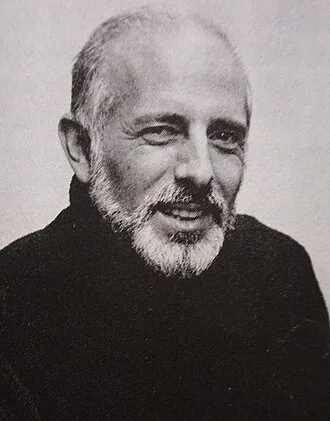
Harold Pinter
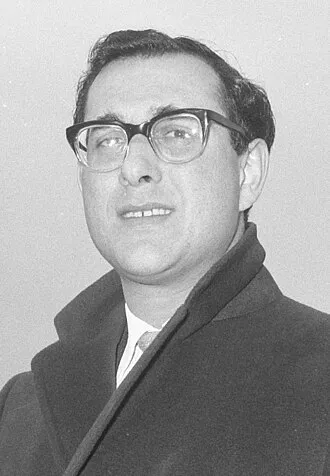
Pinter was born in Hackney, east London, and educated at Hackney Downs School. He was a sprinter and cricket player, acting in school plays and writing poetry. He attended the Royal Academy of Dramatic Art but did not complete the course. He was fined for refusing national service as a conscientious objector. Subsequently, he continued training at the Central School of Speech and Drama and worked in repertory theatre in Ireland and England.
In 1956 he married actress Vivien Merchant and had a son, Daniel, born in 1958. He left Merchant in 1975 and married author Lady Antonia Fraser in 1980.
Pinter's career as a playwright began with a production of The Room in 1957. His second play, The Birthday Party, closed after eight performances but was enthusiastically reviewed by critic Harold Hobson. His early works were described by critics as "comedy of menace". Later plays such as No Man's Land (1975) and Betrayal (1978) became known as "memory plays".
He appeared as an actor in productions of his own work on radio and film, and directed nearly 50 productions for stage, theatre and screen. Pinter received over 50 awards, prizes and other honours, including the Nobel Prize in Literature in 2005 and the French Légion d'honneur in 2007.
Despite frail health after being diagnosed with oesophageal cancer in December 2001, Pinter continued to act on stage and screen, last performing the title role of Samuel Beckett's one-act monologue Krapp's Last Tape, for the 50th anniversary season of the Royal Court Theatre, in October 2006. He died from liver cancer on 24 December 2008.
Biography
Early life and education
Pinter was born on 10 October 1930, in Hackney, east London, the only child of British Jewish parents of Eastern European descent. His father, Hyman "Jack" Pinter was a ladies' tailor, and his mother, Frances (née Moskowitz) was a housewife. Hackney Council lists H. Pinter an A.R.P. Warden as a Master Taylor in a protected occupation, and assigned to Clapton's Post 14.
Pinter believed an aunt's erroneous view that the family was Sephardic and had fled the Spanish Inquisition; thus, for his early poems, Pinter used the pseudonym Pinta and at other times used variations such as da Pinto. Later research by Lady Antonia Fraser, Pinter's second wife, revealed the legend to be apocryphal; three of Pinter's grandparents came from Poland and the fourth from Odesa, so the family was Ashkenazic.
Pinter's family home in London is described by his official biographer Michael Billington as "a solid, red-brick, three-storey villa just off the noisy, bustling, traffic-ridden thoroughfare of the Lower Clapton Road". In 1940 and 1941, after the Blitz, Pinter was evacuated from their house in London to Cornwall and Reading.
Billington states that the "life-and-death intensity of daily experience" before and during the Blitz left Pinter with profound memories "of loneliness, bewilderment, separation and loss: themes that are in all his works."
Pinter discovered his social potential as a student at Hackney Downs School, a London grammar school, between 1944 and 1948. "Partly through the school and partly through the social life of Hackney Boys' Club ... he formed an almost sacerdotal belief in the power of male friendship. The friends he made in those days – most particularly Henry Woolf, Michael (Mick) Goldstein and Morris (Moishe) Wernick – have always been a vital part of the emotional texture of his life." A major influence on Pinter was his inspirational English teacher Joseph Brearley, who directed him in school plays and with whom he took long walks, talking about literature.
According to Billington, under Brearley's instruction, "Pinter shone at English, wrote for the school magazine and discovered a gift for acting." In 1947 and 1948, he played Romeo and Macbeth in productions directed by Brearley.
At the age of 12, Pinter began writing poetry, and in spring 1947, his poetry was first published in the Hackney Downs School Magazine. In 1950 his poetry was first published outside the school magazine, in Poetry London, some of it under the pseudonym "Harold Pinta".
Pinter was an atheist.
Sport and friendship
Pinter enjoyed running and broke the Hackney Downs School sprinting record. He was a cricket enthusiast, taking his bat with him when evacuated during the Blitz. In 1971, he told Mel Gussow: "one of my main obsessions in life is the game of cricket—I play and watch and read about it all the time." He was chairman of the Gaieties Cricket Club, a supporter of Yorkshire Cricket Club, and devoted a section of his official website to the sport.
One wall of his study was dominated by a portrait of himself as a young man playing cricket, which was described by Sarah Lyall, writing in The New York Times: "The painted Mr. Pinter, poised to swing his bat, has a wicked glint in his eye; testosterone all but flies off the canvas." Pinter approved of the "urban and exacting idea of cricket as a bold theatre of aggression." After his death, several of his school contemporaries recalled his achievements in sports, especially cricket and running. The BBC Radio 4 memorial tribute included an essay on Pinter and cricket.
Other interests that Pinter mentioned to interviewers are family, love and sex, drinking, writing, and reading. According to Billington, "If the notion of male loyalty, competitive rivalry and fear of betrayal forms a constant thread in Pinter's work from The Dwarfs onwards, its origins can be found in his teenage Hackney years.
Pinter adores women, enjoys flirting with them, and worships their resilience and strength. But, in his early work especially, they are often seen as disruptive influences on some pure and Platonic ideal of male friendship: one of the most crucial of all Pinter's lost Edens."
Early theatrical training and stage experience
Beginning in late 1948, Pinter attended the Royal Academy of Dramatic Art for two terms, but hating the school, missed most of his classes, feigned a nervous breakdown, and dropped out in 1949. In 1948 he was called up for National Service. He was initially refused registration as a conscientious objector, leading to his twice being prosecuted, and fined, for refusing to accept a medical examination, before his CO registration was ultimately agreed.
He had a small part in the Christmas pantomime Dick Whittington and His Cat at the Chesterfield Hippodrome in 1949 to 1950. From January to July 1951, he attended the Central School of Speech and Drama.
From 1951 to 1952, he toured Ireland with the Anew McMaster repertory company, playing over a dozen roles. In 1952, he began acting in regional English repertory productions; from 1953 to 1954, he worked for the Donald Wolfit Company, at the King's Theatre, Hammersmith, performing eight roles. From 1954 until 1959, Pinter acted under the stage name David Baron.
In all, Pinter played over 20 roles under that name. To supplement his income from acting, Pinter worked as a waiter, a postman, a bouncer, and a snow-clearer, meanwhile, according to Mark Batty, "harbouring ambitions as a poet and writer." In October 1989 Pinter recalled: "I was in English rep as an actor for about 12 years.
My favourite roles were undoubtedly the sinister ones. They're something to get your teeth into." During that period, he also performed occasional roles in his own and others' works for radio, TV, and film, as he continued to do throughout his career.
Marriages and family life
From 1956 until 1980, Pinter was married to Vivien Merchant, an actress whom he met on tour, perhaps best known for her performance in the 1966 film Alfie. Their son Daniel was born in 1958. Through the early 1970s, Merchant appeared in many of Pinter's works, including The Homecoming on stage (1965) and screen (1973), but the marriage was turbulent.
For seven years, from 1962 to 1969, Pinter was engaged in a clandestine affair with BBC-TV presenter and journalist Joan Bakewell, which inspired his 1978 play Betrayal, and also throughout that period and beyond he had an affair with an American socialite, whom he nicknamed "Cleopatra". This relationship was another secret he kept from both his wife and Bakewell.
Initially, Betrayal was thought to be a response to his later affair with historian Antonia Fraser, the wife of Hugh Fraser, and Pinter's "marital crack-up".
Pinter and Merchant had both met Antonia Fraser in 1969, when all three worked together on a National Gallery programme about Mary, Queen of Scots; several years later, on 8–9 January 1975, Pinter and Fraser became romantically involved. That meeting initiated their five-year extramarital love affair. After hiding the relationship from Merchant for two and a half months, on 21 March 1975, Pinter finally told her "I've met somebody".
After that, "Life in Hanover Terrace gradually became impossible", and Pinter moved out of their house on 28 April 1975, five days after the première of No Man's Land.
In mid-August 1977, after Pinter and Fraser had spent two years living in borrowed and rented quarters, they moved into her former family home in Holland Park, where Pinter began writing Betrayal. He reworked it later, while on holiday at the Grand Hotel in Eastbourne, in early January 1978. After the Frasers' divorce had become final in 1977 and the Pinters' in 1980, Pinter married Fraser on 27 November 1980.
Because of a two-week delay in Merchant's signing the divorce papers, however, the reception had to precede the actual ceremony, originally scheduled to occur on his 50th birthday. Vivien Merchant died of acute alcoholism in the first week of October 1982, at the age of 53. Billington writes that Pinter "did everything possible to support" her and regretted that he ultimately became estranged from their son, Daniel, after their separation, Pinter's remarriage, and Merchant's death.
A reclusive gifted musician and writer, Daniel changed his surname from Pinter to Brand, the maiden name of his maternal grandmother, before Pinter and Fraser became romantically involved; while according to Fraser, his father could not understand it, she says that she could: "Pinter is such a distinctive name that he must have got tired of being asked, 'Any relation?'" Michael Billington wrote that Pinter saw Daniel's name change as "a largely pragmatic move on Daniel's part designed to keep the press ... at bay." Fraser told Billington that Daniel "was very nice to me at a time when it would have been only too easy for him to have turned on me ... simply because he had been the sole focus of his father's love and now manifestly wasn't." Still unreconciled at the time of his father's death, Daniel Brand did not attend Pinter's funeral.
Billington observes that "The break-up with Vivien and the new life with Antonia was to have a profound effect on Pinter's personality and his work," though he adds that Fraser herself did not claim to have influence over Pinter or his writing. In her own contemporaneous diary entry dated 15 January 1993, Fraser described herself more as Pinter's literary midwife.
Indeed, she told Billington that "other people [such as Peggy Ashcroft, among others] had a shaping influence on [Pinter's] politics" and attributed changes in his writing and political views to a change from "an unhappy, complicated personal life ... to a happy, uncomplicated personal life", so that "a side of Harold which had always been there was somehow released. I think you can see that in his work after No Man's Land [1975], which was a very bleak play."
Pinter was content in his second marriage and enjoyed family life with his six adult stepchildren and 17 step-grandchildren. Even after battling cancer for several years, he considered himself "a very lucky man in every respect". Sarah Lyall notes in her 2007 interview with Pinter in The New York Times that his "latest work, a slim pamphlet called 'Six Poems for A.', comprises poems written over 32 years, with "A" of course being Lady Antonia.
The first of the poems was written in Paris, where she and Mr. Pinter traveled soon after they met. More than three decades later the two are rarely apart, and Mr. Pinter turns soft, even cozy, when he talks about his wife." In that interview Pinter "acknowledged that his plays—full of infidelity, cruelty, inhumanity, the lot—seem at odds with his domestic contentment. 'How can you write a happy play?' he said. 'Drama is about conflict and degrees of perturbation, disarray.
I've never been able to write a happy play, but I've been able to enjoy a happy life.'" After his death, Fraser told The Guardian: "He was a great man, and it was a privilege to live with him for over 33 years. He will never be forgotten."
Civic activities and political activism
In 1948–49, when he was 18, Pinter opposed the politics of the Cold War, leading to his decision to become a conscientious objector and to refuse to comply with National Service in the British military. However, he told interviewers that, if he had been old enough at the time, he would have fought against the Nazis in World War II.
He seemed to express ambivalence, both indifference and hostility, towards political structures and politicians in his Fall 1966 Paris Review interview conducted by Lawrence M. Bensky. Yet, he had been an early member of the Campaign for Nuclear Disarmament and also had supported the British Anti-Apartheid Movement (1959–1994), participating in British artists' refusal to permit professional productions of their work in South Africa in 1963 and in subsequent related campaigns.
In "A Play and Its Politics", a 1985 interview with Nicholas Hern, Pinter described his earlier plays retrospectively from the perspective of the politics of power and the dynamics of oppression.
In his last 25 years, Pinter increasingly focused his essays, interviews and public appearances directly on political issues. He was an officer in International PEN, travelling with American playwright Arthur Miller to Turkey in 1985 on a mission co-sponsored with a Helsinki Watch committee to investigate and protest against the torture of imprisoned writers.
There he met victims of political oppression and their families. Pinter's experiences in Turkey and his knowledge of the Turkish suppression of the Kurdish language inspired his 1988 play Mountain Language. He was also an active member of the Cuba Solidarity Campaign, an organisation that "campaigns in the UK against the US blockade of Cuba".
In 2001, Pinter joined the International Committee to Defend Slobodan Milošević (ICDSM), which appealed for a fair trial and for the freedom of Slobodan Milošević, signing a related "Artists' Appeal for Milošević" in 2004.
Pinter strongly opposed the 1991 Gulf War, the 1999 NATO bombing campaign in FR Yugoslavia during the Kosovo War, the United States' 2001 War in Afghanistan, and the 2003 Invasion of Iraq. Among his provocative political statements, Pinter called Prime Minister Tony Blair a "deluded idiot" and compared the administration of President George W.
Bush to Nazi Germany. He stated that the United States "was charging towards world domination while the American public and Britain's 'mass-murdering' prime minister sat back and watched." He was very active in the antiwar movement in the United Kingdom, speaking at rallies held by the Stop the War Coalition and frequently criticising American aggression, as when he asked rhetorically, in his acceptance speech for the Wilfred Owen Award for Poetry on 18 March 2007: "What would Wilfred Owen make of the invasion of Iraq?
A bandit act, an act of blatant state terrorism, demonstrating absolute contempt for the conception of international law."
Pinter earned a reputation for being pugnacious, enigmatic, taciturn, terse, prickly, explosive and forbidding. Pinter's blunt political statements, and the award of the Nobel Prize in Literature, elicited strong criticism and even, at times, provoked ridicule and personal attacks. The historian Geoffrey Alderman, author of the official history of Hackney Downs School, expressed his own "Jewish View" of Harold Pinter: "Whatever his merit as a writer, actor and director, on an ethical plane Harold Pinter seems to me to have been intensely flawed, and his moral compass deeply fractured." David Edgar, writing in The Guardian, defended Pinter against what he termed Pinter's "being berated by the belligerati" like Johann Hari, who felt that he did not "deserve" to win the Nobel Prize.
Later Pinter continued to campaign against the Iraq War and on behalf of other political causes that he supported.
Pinter signed the mission statement of Jews for Justice for Palestinians in 2005 and its full-page advertisement, "What Is Israel Doing? A Call by Jews in Britain", published in The Times on 6 July 2006, and he was a patron of the Palestine Festival of Literature. In April 2008, Pinter signed the statement "We're not celebrating Israel's anniversary".
The statement noted: "We cannot celebrate the birthday of a state founded on terrorism, massacres and the dispossession of another people from their land.", "We will celebrate when Arab and Jew live as equals in a peaceful Middle East".
Career
As actor
Pinter's acting career spanned over 50 years and, although he often played villains, included a wide range of roles on stage and in radio, film, and television. In addition to roles in radio and television adaptations of his own plays and dramatic sketches, early in his screenwriting career he made several cameo appearances in films based on his own screenplays; for example, as a society man in The Servant (1963) and as Mr.
Bell in Accident (1967), both directed by Joseph Losey; and as a bookshop customer in his later film Turtle Diary (1985), starring Michael Gambon, Glenda Jackson, and Ben Kingsley.
Pinter's notable film and television roles included the lawyer Saul Abrahams opposite Peter O'Toole in Rogue Male, BBC TV's 1976 adaptation of Geoffrey Household's 1939 novel, and a drunk Irish journalist in Langrishe, Go Down (starring Judi Dench and Jeremy Irons) distributed on BBC Two in 1978 and released in movie theatres in 2002.
Pinter's later film roles included the criminal Sam Ross in Mojo (1997), written and directed by Jez Butterworth, based on Butterworth's play of the same name; Sir Thomas Bertram (his most substantial feature-film role) in Mansfield Park (1998), a character that Pinter described as "a very civilised man ... a man of great sensibility but in fact, he's upholding and sustaining a totally brutal system [the slave trade] from which he derives his money"; and Uncle Benny, opposite Pierce Brosnan and Geoffrey Rush, in The Tailor of Panama (2001).
In television films, he played Mr. Bearing, the father of ovarian cancer patient Vivian Bearing, played by Emma Thompson in Mike Nichols's HBO film of the Pulitzer Prize-winning play Wit (2001); and the Director opposite John Gielgud (Gielgud's last role) and Rebecca Pidgeon in Catastrophe, by Samuel Beckett, directed by David Mamet as part of Beckett on Film (2001).
As director
Pinter began to direct more frequently during the 1970s, becoming an associate director of the National Theatre (NT) in 1973. He directed almost 50 productions of his own and others' plays for stage, film, and television, including 10 productions of works by Simon Gray: the stage and/or film premières of Butley (stage, 1971; film, 1974), Otherwise Engaged (1975), The Rear Column (stage, 1978; TV, 1980), Close of Play (NT, 1979), Quartermaine's Terms (1981), Life Support (1997), The Late Middle Classes (1999), and The Old Masters (2004).
Several of those productions starred Alan Bates (1934–2003), who originated the stage and screen roles of not only Butley but also Mick in Pinter's first major commercial success, The Caretaker (stage, 1960; film, 1964); and in Pinter's double-bill produced at the Lyric Hammersmith in 1984, he played Nicolas in One for the Road and the cab driver in Victoria Station.
Among over 35 plays that Pinter directed were Next of Kin (1974), by John Hopkins; Blithe Spirit (1976), by Noël Coward; The Innocents (1976), by William Archibald; Circe and Bravo (1986), by Donald Freed; Taking Sides (1995), by Ronald Harwood; and Twelve Angry Men (1996), by Reginald Rose.