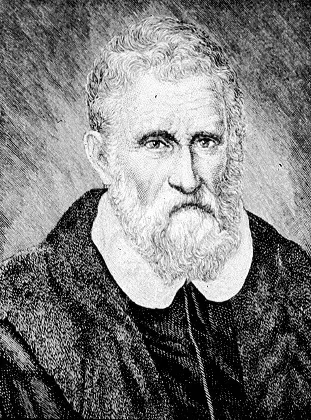
Born in Venice, Marco learned the mercantile trade from his father and his uncle, Niccolò and Maffeo, who travelled through Asia and met Kublai Khan. In 1269, they returned to Venice to meet Marco for the first time. The three of them embarked on an epic journey to Asia, exploring many places along the Silk Road until they reached "Cathay".
They were received by the royal court of Kublai Khan, who was impressed by Marco's intelligence and humility. Marco was appointed to serve as Kublai's foreign emissary, and he was sent on many diplomatic missions throughout the empire and Southeast Asia, visiting present-day Myanmar, India, Indonesia, Sri Lanka, and Vietnam.
As part of this appointment, Marco also travelled extensively inside China, living in the emperor's lands for 17 years and seeing many things previously unknown to Europeans.
Around 1291, the Polos offered to accompany the Mongol princess Kököchin to Persia; they arrived there around 1293. After leaving the princess, they travelled overland to Constantinople and then to Venice, returning home after 24 years. At this time, Venice was at war with Genoa. Marco joined the war effort on behalf of Venice and was captured by the Genoese.
While imprisoned, he dictated stories of his travels to Rustichello da Pisa, a cellmate. He was released in 1299, became a wealthy merchant, married, and had three children. He died in 1324 and was buried in the church of San Lorenzo in Venice.
Though he was not the first European to reach China, Marco Polo was the first to leave a detailed chronicle of his experience. His account provided the Europeans with a clear picture of the East's geography and ethnic customs, and it included the first Western record of porcelain, gunpowder, paper money, and some Asian plants and exotic animals.
His narrative inspired Christopher Columbus and many other travellers. There is substantial literature based on Polo's writings; he also influenced European cartography, leading to the introduction of the Catalan Atlas and the Fra Mauro map.
Life
Family origin
Marco Polo was born around 1254 in Venice, but the exact date and place of birth are archivally unknown. The Travels of Marco Polo contains some basic information concerning Marco Polo's Venetian family and his birth in Venice; the book states that Marco's father, the travelling merchant Niccolò Polo, returned to visit his family in his hometown of Venice around 1269 and there found out that his wife, whom he had left pregnant, had died and left a 15-year-old son named Marco.
In contrast to the general consensus, there are theories suggesting that Marco Polo's birthplace was the island of Korčula or Constantinople but such hypotheses failed to gain acceptance among most scholars and have been countered by other studies.
Nickname Milione
He was nicknamed Milione during his lifetime (which in Italian literally means 'Million'). The Italian title of his book was Il Libro di Marco Polo soprannominato Milione, which means "The Book of Marco Polo, nicknamed 'Milione'".
According to the 15th-century humanist Giovanni Battista Ramusio, his fellow citizens awarded him this nickname when he came back to Venice because he kept on saying that Kublai Khan's wealth was counted in millions. More precisely, he was nicknamed Messer Marco Milioni (Mr Marco Millions).
However, since his father Niccolò was also nicknamed Milione, 19th-century philologist Luigi Foscolo Benedetto was persuaded that Milione was a shortened version of Emilione, and that this nickname was used to distinguish Niccolò's and Marco's branch from other Polo families.
Early life and Asian travel
His father, Niccolò Polo, a merchant, traded with the Near East, becoming wealthy and achieving great prestige. Niccolò and his brother Maffeo set off on a trading voyage before Marco's birth. In 1260, Niccolò and Maffeo, while residing in Constantinople, then the capital of the Latin Empire, foresaw a political change; they liquidated their assets into jewels and moved away.
According to The Travels of Marco Polo, they passed through much of Asia, and met with Kublai Khan, a Mongol ruler and founder of the Yuan dynasty.
Almost nothing is known about the childhood of Marco Polo until he was fifteen years old, except that he probably spent part of his childhood in Venice. Meanwhile, Marco Polo's mother died, and an aunt and uncle raised him. He received a good education, learning mercantile subjects including foreign currency, appraising, and the handling of cargo ships; he learned little or no Latin. His father later married Floradise Polo (née Trevisan).
In 1269, Niccolò and Maffeo returned to their families in Venice, meeting young Marco for the first time. In 1271, during the rule of Doge Lorenzo Tiepolo, Marco Polo (at seventeen years of age), his father, and his uncle set off for Asia on the series of adventures that Marco later documented in his book.
They sailed to Acre and later rode on their camels to the Persian port Hormuz. During the first stages of the journey, they stayed for a few months in Acre and were able to speak with Archdeacon Tedaldo Visconti of Piacenza. The Polo family, on that occasion, had expressed their regret at the long lack of a pope, because on their previous trip to China they had received a letter from Kublai Khan to the Pope, and had thus had to leave for China disappointed.
During the trip, they received news that after 33 months of vacation, the Conclave had elected the new Pope and that he was exactly the archdeacon of Acre. The three of them hurried to return to the Holy Land, where the new Pope entrusted them with letters for the "Great Khan", inviting him to send his emissaries to Rome.
To give more weight to this mission, he sent with the Polos, as his legates, two Dominican fathers, Guglielmo of Tripoli and Nicola of Piacenza.
They continued overland until they arrived at Kublai Khan's palace in Shangdu, China, then known as Cathay. By this time, Marco was 21 years old. Impressed by Marco's intelligence and humility, Kublai appointed him to serve as his foreign emissary to India and Myanmar. He was sent on many diplomatic missions throughout his empire and in Southeast Asia, such as in present-day Indonesia, Sri Lanka and Vietnam, and entertained the Khan with stories and observations about the lands he saw.
As part of this appointment, Marco travelled extensively inside China, living in the emperor's lands for 17 years.
Kublai initially refused several times to let the Polos return to Europe, as he appreciated their company and they became useful to him. Around 1291, he granted permission, entrusting the Polos with his last duty: accompany the Mongol princess Kököchin, who was to become the consort of Arghun Khan, in Persia. When the Polos arrived to Persia, they learned that Arghun Khan died, and Kököchin eventually became a wife of his son Ghazan.
After leaving the princess, the Polos travelled overland to Constantinople. They later decided to return to their home.
They returned to Venice in 1295, after 24 years, with many riches and treasures. They had travelled almost 15,000 miles (24,000 km).
Genoese captivity and later life
Marco Polo returned to Venice in 1295 with his fortune converted into gemstones. At this time, Venice was at war with the Republic of Genoa. Polo armed a galley equipped with a trebuchet to join the war. He was probably caught by Genoese in a skirmish in 1296, off the Anatolian coast between Adana and the Gulf of Alexandretta (and not during the Battle of Curzola (September 1298), off the Dalmatian coast, a claim which is due to a later tradition (16th century) recorded by Giovanni Battista Ramusio).
He spent several months of his imprisonment dictating a detailed account of his travels to a fellow inmate, Rustichello da Pisa, who incorporated tales of his own as well as other collected anecdotes and current affairs from China. The book soon spread throughout Europe in manuscript form, and became known as The Travels of Marco Polo (Italian title: Il Milione, lit. "The Million", deriving from Polo's nickname "Milione".
Original title in Franco-Italian: Livres des Merveilles du Monde). It depicts the Polos' journeys throughout Asia, giving Europeans their first comprehensive look into the inner workings of the Far East, including China, India, and Japan.
Polo was finally released from captivity in August 1299, and returned home to Venice, where his father and uncle in the meantime had purchased a large palazzo in the zone named contrada San Giovanni Crisostomo (Corte del Milion). For such a venture, the Polo family probably invested profits from trading, and even many gemstones they brought from the East.
The company continued its activities and Marco soon became a wealthy merchant. Marco and his uncle Maffeo financed other expeditions, but likely never left Venetian provinces, nor returned to the Silk Road and Asia. Sometime before 1300, his father Niccolò died. In 1300, he married Donata Badoèr, the daughter of Vitale Badoèr, a merchant.
They had three daughters, Fantina (married Marco Bragadin), Bellela (married Bertuccio Querini), and Moreta. In 2022, it was found that Polo first had a daughter named Agnese (b. 1295/1299 – d. 1319) from a partnership or marriage which ended before 1300.
Pietro d'Abano, a philosopher, doctor and astrologer based in Padua, reports having spoken with Marco Polo about what he had observed in the vault of the sky during his travels. Marco told him that during his return trip to the South China Sea, he had spotted what he describes in a drawing as a star "shaped like a sack" (in Latin: ut sacco) with a big tail (magna habens caudam); most likely a comet.
Astronomers agree that there were no comets sighted in Europe at the end of the 13th century, but there are records about a comet sighted in China and Indonesia in 1293. This circumstance does not appear in Polo's book of travels. Peter D'Abano kept the drawing in his volume Conciliator Differentiarum, quæ inter Philosophos et Medicos Versantur.
Marco Polo gave Pietro other astronomical observations he made in the Southern Hemisphere, and also a description of the Sumatran rhinoceros, which are collected in the Conciliator.
In 1305, he is mentioned in a Venetian document among local sea captains regarding the payment of taxes. His relation with a certain Marco Polo, who in 1300 was mentioned in relation to riots against the aristocratic government, and who escaped the death penalty, who was also mentioned in relation to riots from 1310 led by Bajamonte Tiepolo and Marco Querini, among whose rebels were Jacobello and Francesco Polo from another family branch, is unclear.
Polo is clearly mentioned again after 1305 in Maffeo's testament from 1309 to 1310, in a 1319 document according to which he became owner of some estates of his deceased father, and in 1321, when he bought part of the family property of his wife Donata.
Death
In 1323, Polo was confined to bed due to illness. On 8 January 1324, despite physicians' efforts to treat him, Polo was on his deathbed. To write and certify the will, his family requested Giovanni Giustiniani, a priest of San Procolo. His wife, Donata, and his three daughters were appointed by him as co-executrices. The Church was entitled by law to a portion of his estate; he approved of this and ordered that a further sum be paid to the convent of San Lorenzo, the place where he wished to be buried.
He also set free Peter, a Tartar servant, who may have accompanied him from Asia, and to whom Polo bequeathed 100 lire of Venetian denari.
He divided up the rest of his assets, including several properties, among individuals, religious institutions, and every guild and fraternity to which he belonged. He also wrote off multiple debts, including 300 lire that his sister-in-law owed him, and others for the convent of San Giovanni, San Paolo of the Order of Preachers, and a cleric named Friar Benvenuto. He ordered 220 soldi be paid to Giovanni Giustiniani for his work as a notary and his prayers.
The will was not signed by Polo, but it was validated by the then-relevant "signum manus" rule, by which the testator had only to touch the document to make it legally valid. Due to the Venetian law stating that the day ends at sunset, the exact date of Marco Polo's death cannot be determined, but according to some scholars it was between the sunsets of 8 and 9 January 1324.
Biblioteca Marciana, which holds the original copy of his testament, dates the testament on 9 January 1324, and it gives the date of his death at some time in June 1324.
The Travels of Marco Polo
An authoritative version of Marco Polo's book does not and cannot exist, for the early manuscripts differ significantly, and the reconstruction of the original text is a matter of textual criticism. A total of about 150 copies in various languages are known to exist. Before the availability of printing press, errors were frequently made during copying and translating, so there are many differences between the various copies.
Polo related his memoirs orally to Rustichello da Pisa while both were prisoners of the Genova Republic. Rustichello wrote Devisement du Monde in Franco-Venetian. The idea probably was to create a handbook for merchants, essentially a text on weights, measures and distances.
The oldest surviving manuscript is in Old French heavily flavoured with Italian; According to the Italian scholar Luigi Foscolo Benedetto, this "F" text is the basic original text, which he corrected by comparing it with the somewhat more detailed Italian of Giovanni Battista Ramusio, together with a Latin manuscript in the Biblioteca Ambrosiana.
Other early important sources are "R" (Ramusio's Italian translation first printed in 1559), and "Z" (a 15th-century Latin manuscript kept at Toledo, Spain). Another Old French Polo manuscript, dating to around 1350, is held by the National Library of Sweden.
One of the early manuscripts Iter Marci Pauli Veneti was a translation into Latin made by the Dominican brother Francesco Pipino in 1302, just a few years after Marco's return to Venice. Since Latin was then the most widespread and authoritative language of culture, it is suggested that Rustichello's text was translated into Latin for a precise will of the Dominican Order, and this helped to promote the book on a European scale.
The first English translation is the Elizabethan version by John Frampton published in 1579, The Most Noble and Famous Travels of Marco Polo, based on Santaella's Castilian translation of 1503 (the first version in that language).
The published editions of Polo's book rely on single manuscripts, blend multiple versions together, or add notes to clarify, for example in the English translation by Henry Yule. The 1938 English translation by A. C. Moule and Paul Pelliot is based on a Latin manuscript found in the library of the Cathedral of Toledo in 1932, and is 50% longer than other versions.
The popular translation published by Penguin Books in 1958 by R. E. Latham works several texts together to make a readable whole. Sharon Kinoshita's 2016 version takes as its source the Franco-Italian "F" manuscript, and invites readers to "focus on the text as the product of a larger European (and Eurasian) literary and commercial culture", rather than questions of veracity of the account.
Narrative
The book opens with a preface describing his father and uncle travelling to Bolghar where Prince Berke Khan lived. A year later, they went to Ukek and continued to Bukhara. There, an envoy from the Levant invited them to meet Kublai Khan, who had never met Europeans. In 1266, they reached the seat of Kublai Khan at Dadu, present-day Beijing, China.
Kublai received the brothers with hospitality and asked them many questions regarding the European legal and political system. He also inquired about the Pope and Church in Rome. After the brothers answered the questions he tasked them with delivering a letter to the Pope, requesting 100 Christians acquainted with the Seven Arts (grammar, rhetoric, logic, geometry, arithmetic, music, and astronomy).
Kublai Khan requested also that an envoy bring him back oil of the lamp in Jerusalem. The long sede vacante between the death of Pope Clement IV in 1268 and the election of his successor delayed the Polos in fulfilling Kublai's request. They followed the suggestion of Theobald Visconti, then papal legate for the realm of Egypt, and returned to Venice in 1269 or 1270 to await the nomination of the new Pope, which allowed Marco to see his father for the first time, at the age of fifteen or sixteen.
In 1271, Niccolò, Maffeo, and Marco Polo embarked on their voyage to fulfil Kublai's request. They sailed to Acre, and then rode on camels to the Persian port of Hormuz. The Polos wanted to sail straight into China, but the ships there were not seaworthy, so they continued overland through the Silk Road, until reaching Kublai's summer palace in Shangdu, near present-day Zhangjiakou.
In one instance during their trip, the Polos joined a caravan of travelling merchants whom they crossed paths with. Unfortunately, the party was soon attacked by bandits, who used the cover of a sandstorm to ambush them. The Polos managed to fight and escape through a nearby town, but many members of the caravan were killed or enslaved.
Three and a half years after leaving Venice, when Marco was about 21 years old, the Polos were welcomed by Kublai into his palace. The exact date of their arrival is unknown, but scholars estimate it to be between 1271 and 1275. On reaching the Yuan court, the Polos presented the sacred oil from Jerusalem and the papal letters to their patron.
Marco knew four languages, and the family had accumulated a great deal of knowledge and experience that was useful to Kublai. It is possible that he became a government official; he wrote about many imperial visits to China's southern and eastern provinces, the far south and Myanmar. They were highly respected and sought after in the Mongolian court, and so Kublai Khan decided to decline the Polos' requests to leave China.
They became worried about returning home safely, believing that if Kublai died, his enemies might turn against them because of their close involvement with the ruler. In 1292, Kublai's great-nephew, then ruler of Persia, sent representatives to China in search of a potential wife, and they asked the Polos to accompany them, so they were permitted to return to Persia with the wedding party – which left that same year from Zaitun in southern China on a fleet of 14 junks.
The party sailed to the port of Singapore, travelled north to Sumatra, and around the southern tip of India, eventually crossing the Arabian Sea to Hormuz. The two-year voyage was perilous – of the six hundred people (not including the crew) in the convoy, only eighteen had survived (including all three Polos).
The Polos left the wedding party after reaching Hormuz and travelled overland to the port of Trebizond on the Black Sea, the present-day Trabzon.
Role of Rustichello
The British scholar Ronald Latham has pointed out that The Book of Marvels was a collaboration written in 1298–1299 between Polo and a professional writer of romances, Rustichello of Pisa. It is believed that Polo related his memoirs orally to Rustichello da Pisa while both were prisoners of the Genova Republic.
Rustichello wrote Devisement du Monde in Franco-Venetian language, which was a literary-only language widespread in northern Italy between the subalpine belt and the lower Po between the 13th and 15th centuries.
Latham also argued that Rustichello may have glamorised Polo's accounts, and added fantastic and romantic elements that made the book a bestseller. The Italian scholar Luigi Foscolo Benedetto had previously demonstrated that the book was written in the same "leisurely, conversational style" that characterised Rustichello's other works, and that some passages in the book were taken verbatim or with minimal modifications from other writings by Rustichello.
For example, the opening introduction in The Book of Marvels to "emperors and kings, dukes and marquises" was lifted straight out of an Arthurian romance Rustichello had written several years earlier, and the account of the second meeting between Polo and Kublai Khan at the latter's court is almost the same as that of the arrival of Tristan at the court of King Arthur at Camelot in that same book.
Latham believed that many elements of the book, such as legends of the Middle East and mentions of exotic marvels, might have been the work of Rustichello, who was giving what medieval European readers expected to find in a travel book.
Role of the Dominican Order
Apparently, from the very beginning, Marco's story aroused contrasting reactions, as it was received by some with a certain disbelief. The Dominican father Francesco Pipino was the author of a translation into Latin in 1302, just a few years after Marco's return to Venice. Francesco Pipino solemnly affirmed the truthfulness of the book and defined Marco as a "prudent, honoured and faithful man".
In his writings, the Dominican brother Jacopo d'Acqui explains why his contemporaries were sceptical about the content of the book. He also relates that before dying, Marco Polo insisted that "he had told only a half of the things he had seen".
According to some recent research of the Italian scholar Antonio Montefusco, the very close relationship that Marco Polo cultivated with members of the Dominican Order in Venice suggests that local fathers collaborated with him for a Latin version of the book, which means that Rustichello's text was translated into Latin at the precise will of the Order.
Since Dominican fathers had among their missions that of evangelising foreign peoples (cf. the role of Dominican missionaries in China and in the Indies),[ambiguous] it is reasonable to think that they considered Marco's book as a trustworthy piece of information for missions in the East.
The diplomatic communications between Pope Innocent IV and Pope Gregory X with the Mongols were probably another reason for this endorsement. At the time, there was open discussion of a possible Christian-Mongol alliance with an anti-Islamic function. A Mongol delegate was solemnly baptised at the Second Council of Lyon. At the council, Pope Gregory X promulgated a new crusade to start in 1278 in liaison with the Mongols.
Authenticity and veracity
Since its publication, some have viewed the book with skepticism. Some in the Middle Ages regarded the book simply as a romance or fable, due largely to the sharp difference of its descriptions of a sophisticated civilisation in China to other early accounts by Giovanni da Pian del Carpine and William of Rubruck, who portrayed the Mongols as 'barbarians' who appeared to belong to 'some other world'.
Doubts have also been raised in later centuries about Marco Polo's narrative of his travels in China, for example for his failure to mention the Great Wall of China, and in particular the difficulties in identifying many of the place names he used (the great majority, however, have since been identified). Many have questioned whether he had visited the places he mentioned in his itinerary, whether he had appropriated the accounts of his father and uncle or other travellers, and some doubted whether he even reached China, or that if he did, perhaps never went beyond Khanbaliq (Beijing).