Alp Arslan
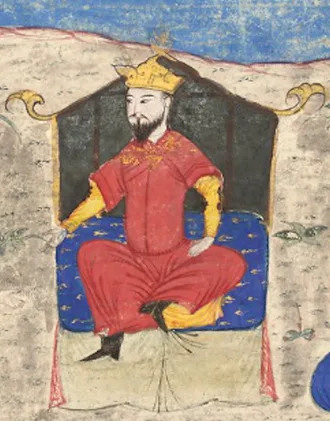
Alp Arslan greatly expanded Seljuk territories and consolidated his power, defeating rivals to the south, east, and northwest.
Birth and early life
Zahir al-Din Nishapuri, al-Husaini al-Yazidi, Mirkhvand, Khvandamir and Hasan-i Yazdi record Alp Arslan's date of birth as January 10, 1030 while Bundari, Ibn Khallikan and Ibn al-Adim record it as 1032-1033. The 12th century historian Ibn al-Athir also records the date as 1032-1033 but mentions January 20, 1029 as an alternative account.
The literature generally accepts the alternative date of January 20, 1029 provided by Ibn al-Athir because the 1032-1033 timeline does not chronologically align with the known facts of Alp Arslan's life. Alp Arslan grew up under the harsh conditions of the empire's foundation period as the son of Khorasan Malik Chaghri Beg who was one of the founders of the Great Seljuk Empire and the nephew of the Seljuk Sultan Tughril I.
Following the Battle of Dandanaqan, Alp Arslan entered the service of Tughril at a young age during the Council of Merv. During his approximately three years in this duty Alp Arslan succeeded in becoming a respected figure whose counsel was heeded even in important and complex empire affairs.
Campaigns and battles
Alp Arslan accompanied his uncle Tughril on campaigns in the south against the Fatimids, while his father Chaghri remained in Khorasan. Upon Alp Arslan's return to Khorasan, he began his work in administration at his father's suggestion. While there, his father introduced him to Nizam al-Mulk, one of the most eminent statesmen in early Muslim history and Alp Arslan's future vizier.
Defense of Tokharistan (1043–44)
After the Khwarazm campaign he undertook alongside Tughril, Chaghri Beg launched another expedition against the Ghaznavids. He besieged the city of Herat, which had fallen out of Musa Yabghu's control following a Ghaznavid attack. However, he fell ill after a while and was forced to lift the siege. Meanwhile, although the Ghaznavid army under the command of Sultan Mawdud launched another offensive and achieved some success, they were routed by the Seljuk army commanded by Malik Ertash, and the Seljuks captured Herat through a counterattack.
Another the Ghaznavid army under the command of Sultan Mawdud attack was repelled by Malik Alp Arslan, who was stationed in Balkh. Due to his illness, Chaghri Beg was unable to command the battles against the Ghaznavids. Therefore, he appointed his son, Alp Arslan, in his place. Taking action, Alp Arslan defeated the Ghaznavids.
Later, the Seljuk army, which launched an attack under the command of Alp Arslan and Chaghri Beg, captured the cities of Termez, Kubadhiyan, Vakhsh, Kunduz (Valvalic), held by the Ghaznavids, and other Tokharistan lands held by the Ghaznavids.
First Campaign against the Kara-Khanids
Ghaznavid Sultan Mawdud attacked Seljuk territories in 1043-44 and returned to his country defeated in the struggle he had started. After this defeat, he decided to attack the Seljuks once again. This time, instead of attacking alone, he began searching for allies for his campaign against the Seljuks. To this end, he proposed an alliance to the Kara-Khanid ruler Arslan Khan (Ibrahim ibn Nasr) and the Buyid Emir Abu Kalijar.
These two rulers accepted Ghaznavid Sultan Mawdud's alliance offer and mobilized their armies in 1048-49. The Seljuks, meanwhile, were occupied with defense preparations against the enemy armies. Chaghri Beg was at the head of these defense preparations. The army that had departed from Ghazni was forced to turn back due to Sultan Mawdud falling ill.
Taking advantage of this allied attack, the Seljuk governor of Khwarezm rebelled. Chaghri Beg had to launch a campaign to Khwarezm; he arrived in Urgench and suppressed the rebellion. The Kipchaks, who were supporters of the Ghaznavids, also took advantage of this situation and attacked Khwarezm. Upon the Kipchaks attack on Khwarezm, Chaghri Beg dispatched an army against them.
The Seljuk army sent by Chaghri Beg fought the Kipchak army commanded by Haşaka near Urgench and defeated the Kipchaks. Another allied army, the Buyids, suffered heavy losses on the desert route they had taken. Thus, the Ghaznavids and the Buyids returned to their lands without entering into any struggle with the Seljuks.
Unaware of the events that had befallen the Buyids and Ghaznavids, Arslan Khan entered Seljuk territory with his army and occupied Termez. Having conquered Termez, Arslan Khan turned his route toward Balkh and marched forth. Upon receiving the news that Arslan Khan had attacked Seljuk lands, Alp Arslan marched against Arslan Khan with his army.
Alp Arslan emerged victorious in the battle that took place between the two armies. Arslan Khan, on the other hand, crossed the Amu Darya river and retreated to Bukhara. Later, Arslan Khan made a peace offer to Chaghri Beg, and as a result of this request, Chaghri Beg accepted the peace proposal. A peace treaty was signed between the two parties.
First Campaign in Fars
In 1050, Sultan Tughril launched a campaign against the Buyids. Isfahan, which belonged to the Buyids, was besieged, and military expeditions were organized against the Fars province, which was under Buyid rule. One of the Seljuk commanders who led a campaign into the Fars province was Malik Alp Arslan. Alp Arslan conducted this expedition in complete secrecy from everyone.
While his uncle, Sultan Tughril, was preoccupied with the siege of Isfahan, Alp Arslan secretly departed from the city of Merv in the Khorasan province and attacked the Buyid-controlled Fars province. Conquering a large part of the Fars province Alp Arslan also captured the Buyid city of Fasa located within this province, taking 3,000 prisoners.
Following these successes, Alp Arslan swiftly returned to Khorasan to avoid receiving any orders from his uncle, Sultan Tughril, who was completely unaware of his presence in the Fars province.
Defense of Khorasan (1053)
By the order of Sultan Abd al-Rashid, the Ghaznavid Emir Toghrul Bozan attacked Sistan, which was under Seljuk rule. Musa Yabghu, who was stationed in Sistan, was defeated by the Ghaznavid Emir Toghrul Bozan and abandoned Sistan, retreating to Herat. Having raised a new army in Herat, Musa Yabghu marched against the Ghaznavids occupying Sistan, accompanied by his son Böri (Kara Arslan) and his vizier Abu'l-Fazl.
Upon receiving news that Musa Yabghu was advancing on Sistan with a new army, the Ghaznavid Emir Toghrul Bozan abandoned the region and returned to Ghazni. Arriving in Ghazni, Emir Toghrul Bozan rebelled against Sultan Abd al-Rashid with the intention of usurping the throne. Successful in his rebellion, Emir Toghrul Bozan overthrew Sultan Abd ur-Rashid and seized power.
Reacting to this usurpation by Emir Toghrul, Kirghiz, one of the Ghaznavid commanders, killed Emir Toghrul and placed Farrukh-Zad from the Sabuktigin Dynasty on the throne in his stead. Taking advantage of the internal turmoil caused by this civil war within the Ghaznavid Empire, the Seljuks, under the leadership of Chaghri Beg, launched a campaign against the Ghaznavids and advanced as far as Bost.
Sultan Farrukh-Zad dispatched his commander Kirghiz against Chaghri Beg, who had reached Bost. In the battle that took place near Bost, Chaghri Beg was defeated and forced to retreat. Later, acting on Sultan Farrukh-Zad's orders commander Kirghiz attacked Seljuk territories, defeating the Seljuk army under the command of Atabeg Gul-Sarigh as well as other Seljuk forces he clashed with, and took their commanders captive.
Faced with this dire situation for the Seljuks, Malik Alp Arslan sought permission from his father, Chaghri Beg, to launch an attack on the Ghaznavids. Chaghri Beg responded favorably to his son Alp Arslan's request. Having obtained his father's permission, Alp Arslan marched against the Ghaznavids with his army. In the ensuing battle between the two sides, Alp Arslan routed the Ghaznavid forces commanded by Kirghiz.
Following this battle, a prisoner exchange took place between the two sides, and a peace treaty was signed.
Rebellion of Ibrahim Inal and the Battle of Rey (1059)
Following his Baghdad campaign in 1055, Sultan Tughril wanted to launch an expedition against the Buyid commander Arslan al-Basasiri. However, when Malik Resultegin, the brother of Qutalmish, rebelled, Sultan Tughril became occupied with suppressing the uprising. Resultegin was taken prisoner after the rebellion was crushed.
At the request of Caliph Al-Qa'im, Sultan Tughril pardoned him. After the suppression of Resultegin's rebellion, rumors spread that the Governor of Mosul, Malik Ibrahim Inal, was also planning to rebel. According to the news reaching Baghdad, Ibrahim Inal had left Mosul and headed to the Jibal region, and some Turkmens had followed him there.
As soon as Sultan Tughril, who was in Baghdad, received this news, he dispatched one of his commanders, Savtegin, to Malik Ibrahim Inal as an envoy bearing valuable gifts. Savtegin presented these gifts to Malik Ibrahim Inal and also conveyed the sultan's orders for him to come to Baghdad. Ibrahim Inal went to Baghdad following the sultan's orders, and Emir Aytekin, Emir Erdem, Emir Yaruktekin, and Hajib Boritekin were appointed to the military commands of Northern Iraq in his place.
Seizing the opportunity created by Ibrahim Inal's departure and the reduced number of troops in the region, the Buyid commander Arslan al-Basasiri attacked and captured Mosul. Upon hearing that Mosul had fallen to the Buyids, Sultan Tughril launched a second expedition against the city. However, when Arslan al-Basasiri learned of Sultan Tughril's approach, he inflicted damage on the city and abandoned it.
Determined to pursue Arslan al-Basasiri, Sultan Tughril continued his advance and reached as far as Nusaybin. When Sultan Tughril arrived in Nusaybin, Ibrahim Inal, having secured the backing of the Fatimids and Arslan al-Basasiri, marched with his troops to the city of Hamadan, which housed the Seljuk arsenals and treasuries.
Upon learning that Ibrahim Inal was heading to Hamadan, Sultan Tughril abandoned his pursuit of al-Basasiri and dispatched a portion of his troops to Baghdad to defend against a potential Buyid attack. He then mobilized with a small number of soldiers and reached Hamadan before Ibrahim Inal. Ibrahim Inal's army grew in size when his nephews, Mehmed and Ahmed (the sons of Malik Ertash), arrived with their troops to support him.
He clashed with Sultan Tughril near Hamadan and defeated him. Following his defeat, Sultan Tughril retreated to the fortress of Hamadan. In the wake of his victory, Ibrahim Inal laid siege to the fortress where Sultan Tughril had taken refuge. Finding himself in a dire situation, Sultan Tughril sent message to request aid from his wife Altun Jan Khatun and his Vizier al-Kunduri in Baghdad, as well as his brother Chaghri Beg in Khorasan.
The predicament facing Sultan Tughril and the news that Arslan al-Basasiri was marching on Baghdad with Fatimid support sparked chaos in the city. Although Vizier Al-Kunduri wanted to install Sultan Tughril's stepson Anushirvan as sultan, Altun Jan Khatun refused to allow it. She imprisoned her son Anushirvan and issued an arrest warrant for Vizier Al-Kunduri.
Altun Jan Khatun then set out for Hamadan with the soldiers stationed in Baghdad. Meanwhile, the Turkmens abandoned the siege of the fortress of Hamadan to loot the treasury. Seizing this opportunity, the besieged Sultan Tughril left the city and made his way to the capital, Rey. Sultan Tughril's forces were reinforced when his nephews Alp Arslan, Qavurt, and Yakuti arrived to support him.
Ibrahim Inal pursued Sultan Tughril and also arrived at Rey with his army. The two armies clashed near Rey on 3 August 1059 and the rebellious Malik Ibrahim Inal and his forces were decisively defeated. The defeated Ibrahim Inal, Ahmed, and Mehmed were personally taken prisoner by Malik Alp Arslan. Following the battle near Rey, Malik Alp Arslan handed his captives Ibrahim Inal, Mehmed, and Ahmed over to his uncle, Sultan Tughril.
Sultan Tughril did not pardon his rebellious brother Ibrahim Inal this time, as his final attempt at rebellion had caused a grave danger. He also refused to pardon Ahmed and Mehmed, and in accordance with old Turk traditions, he had all three of them strangled with a bowstring.
Second Campaign against the Kara-Khanids (1059)
In 1059, Chaghri Beg, the Seljuk Malik of Khorasan, died and was succeeded by his son, Alp Arslan. During his years as the Malik of Khorasan, he invaded Kara-Khanid territories and plundered many cities. Alp Arslan launched his first attack on Kara-Khanid lands in 1059. He conquered Khuttal and Chaghaniyan, which were under Kara-Khanid rule, and began organizing campaigns into Kara-Khanid territory via these two cities.
Struggling against Alp Arslan's attacks, the Kara-Khanid ruler Tamghach Khan Ibrahim sent an envoys to Baghdad in 1061. Through this envoys, he complained about Alp Arslan to the Abbasid Caliph Al-Qa'im bi-amri 'llāh in Baghdad. In response to Tamghach Khan's request, the Caliph could only grant him khilat and epithet.
However, the Caliph was unable to do anything to stop Alp Arslan. Additionally, Alp Arslan conquered Bukhara during one of his campaigns against the Kara-Khanids. Following the conquest of Bukhara, he had a fetihname (declaration of victory) written.
Campaign in Khuttal (1063)
After the death of Tughril I, Suleiman (the son of Chaghri Beg), who ascended to the throne, could not establish full dominance over the empire. Maliks such as Qutalmish, Alp Arslan, and Musa Yabghu did not recognize Suleiman as sultan. Alp Arslan and Qutalmish took action against Suleiman and initiated a struggle for the throne.
Qutalmish besieged Rey with an army of 50,000 to 90,000 men. Taking advantage of these internal conflicts, the emirs of Khuttal and Chaghaniyan rebelled, and Musa Yabghu occupied Herat, which was under Alp Arslan's rule. Before advancing westward for the throne, Alp Arslan set out to suppress these local emirs and Musa Yabghu's rebellions.
He first attacked Huttal, laying siege to Hulbuk Castle (also known as Cilan), where the Emir of Khuttal was stationed. This castle was situated on top of a mountain and was a heavily fortified stronghold. Initial attacks yielded no results. However, when Alp Arslan personally joined the battle, the soldiers began to fight with greater zeal, and the castle was captured.
Alp Arslan appointed one of his own men as the emir of the castle. Having suppressed the Huttal rebellion, Alp Arslan moved to crush the rebellion of his older uncle Musa Yabghu, who had occupied Herat and laid claim to the throne.
Battle of Herat (1063)
Following the death of Sultan Tughril in 1063, several rebellions broke out across the Seljuk territories. One of these was the rebellion of Musa Yabghu. Claiming a right to the throne, Musa Yabghu rebelled and captured the city of Herat which was under the dominion of Malik Alp Arslan. At that time, Alp Arslan was occupied with suppressing the rebellion of the Emir of Khuttal.
After putting down the Khuttal emir's uprising, he marched against Musa Yabghu. When Alp Arslan and his army arrived in Herat, Musa Yabghu also mobilized. Musa Yabghu marched with his army against the forces of Alp Arslan. A pitched battle that lasted day and night was fought between the two sides near Herat. Alp Arslan defeated Musa Yabghu's army and took Musa Yabghu prisoner.
He treated his captive great uncle, Musa Yabghu, with compassion and showed him respect. Additionally, in 1063, Malik Alp Arslan captured Zaranj, which was under the dominion of Musa Yabghu. In the following years, he put an end to Musa Yabghu's political dominance.
Campaign in Chaghaniyan
Suleiman, who ascended the throne after Sultan Tughril, could not establish full dominion over the country, and maliks such as Alp Arslan, Qutalmish, and Musa Yabghu refused to recognize him as sultan. In fact, Alp Arslan declared himself sultan and had the khutbah read in his name both in the territories he ruled and in other cities.
Qutalmish, meanwhile, raised an army of 50,000-90.000 troops and marched to wage war against Suleiman. Musa Yabghu, for his part, occupied Herat, which was under Alp Arslan's control. Taking advantage of the internal turmoil caused by these disruptive events unfolding across Seljuk lands, some emirs rebelled. One of these emirs was Emir Musa, the governor of Chaghaniyan.
Sultan Alp Arslan marched against this rebellious emir after first bringing Musa Yabghu into submission. Alp Arslan arrived before Chaghaniyan with his army and laid siege to this fortified stronghold. Situated in a mountainous region, Chaghaniyan was highly defensible thanks to its massive castle. Launching an assault, Alp Arslan captured Chaghaniyan.
The governor of Chaghaniyan, Emir Musa, was taken captive and executed by Alp Arslan's order. Having suppressed the Chaghaniyan rebellion, Alp Arslan set out from there toward Rey, the capital of the Great Seljuk Empire.
Battle of Damghan and Alp Arslan's accession to the throne
Before the death of Sultan Tughril, Qutalmish had rebelled. Qutalmish, who had made the Gerdkuh fortress near Damghan as his headquarters, was besieged there by Vizier Al-Kunduri. However, upon the death of Sultan Tughril, Al-Kunduri abandoned the siege and went to Rey. In Rey, al-Kunduri declared Chaghri Beg's son Suleiman as sultan and made great efforts to establish Suleiman's authority throughout the country.
He even sent an envoy to Malik Alp Arslan, to inform him of Sultan Tughril's death, delivering an ultimatum demanding that he accept Suleiman's authority. Alp Arslan ignored Al-Kunduri's threats, declared himself sultan, and mobilized to seize the throne. Meanwhile, Qutalmish went to the Turkmen tribes and gained their support.
With his troop numbers increased by the joining Turkmens, Qutalmish marched his army toward the Seljuk capital, Rey. Al-Kunduri, who engaged Qutalmish in battle near Rey, was defeated and fled back to the city. Following his victory, Qutalmish besieged Rey with his army to secure a decisive triumph. Left in a difficult position, Al-Kunduri and Suleiman sought support but failed to achieve any results.
As a last resort, Al-Kunduri asked Alp Arslan for help, deposed Suleiman, and declared Alp Arslan as sultan. Alp Arslan responded positively to Al-Kunduri's request. Having suppressed the rebellions in the eastern part of the Seljuk Empire, Alp Arslan turned his attention westward. Hearing of Alp Arslan's approach, Qutalmish lifted the siege and marched against him.
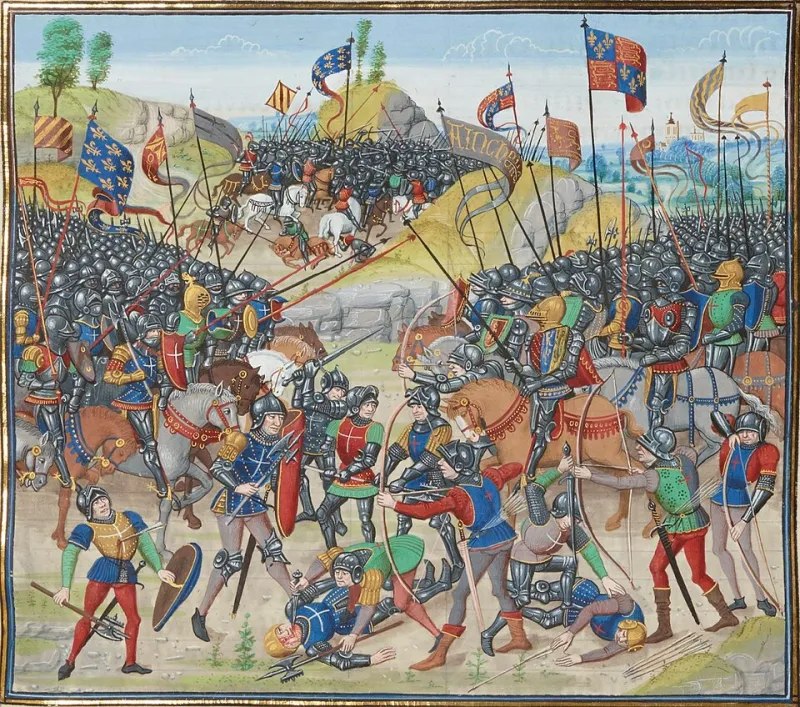
Upon arriving in Damghan, Qutalmish routed the advancing army commanded by Hajib Erdem, a supporter of Alp Arslan. He then proceeded to a place known as the Milh Valley in Damghan, where he had the water dams opened to turn the area into a swamp in order to prevent Alp Arslan's army from crossing. The reason Qutalmish did this was that he considered that specific day to be an inauspicious one for fighting.
Alp Arslan, on the other hand, arrived near the Milh Valley with his army of 20,000 men. There was no dry land left, making it seemingly impossible to enter the valley. Taking a risk, Alp Arslan entered the swamp with his army and successfully crossed it. Upon entering the valley, Alp Arslan marched upon Qutalmish. Qutalmish and his supporters experienced great shock when they saw that Alp Arslan and his army had breached the swamp.
The two armies engaged in battle in the Milh Valley. Alp Arslan had 20,000 soldiers, while Qutalmish had 50,000-90,000 soldiers. Despite having the numerical advantage, Qutalmish was defeated, and while trying to escape to the Girdkuh fortress to avoid capture, he fell from his horse and died. Qutalmish's remains were buried in a location near the tomb of Sultan Tughril.
Qutalmish's brother, Rasul Tegin, and one of his sons were taken prisoner. Having defeated his rivals, Alp Arslan went to Rey and ascended the Seljuk throne. His older brother, Malik Qavurt, who had also mobilized for the throne, returned to Kerman, where he was governor, upon learning that Alp Arslan had taken the throne.
📚 Source: Wikipedia