Most, if not all, cultures have attached importance to what they observed in the sky, and some—such as the Hindus, Chinese, and the Maya—developed elaborate systems for predicting terrestrial events from celestial observations. Western astrology, one of the oldest astrological systems still in use, can trace its roots to 19th–17th century BCE Mesopotamia, from where it spread to Ancient Greece, Rome, the Islamic world, and eventually Central and Western Europe.
Contemporary Western astrology is often associated with systems of horoscopes that purport to explain aspects of a person's personality and predict significant events in their lives based on the positions of celestial objects; the majority of professional astrologers rely on such systems.
Throughout its history, astrology has had its detractors, competitors and skeptics who opposed it for moral, religious, political, and empirical reasons. Nonetheless, prior to the Enlightenment, astrology was generally considered a scholarly tradition and was common in learned circles, often in close relation with astronomy, meteorology, medicine, and alchemy.
It was present in political circles and is mentioned in various works of literature, from Dante Alighieri and Geoffrey Chaucer to William Shakespeare, Lope de Vega, and Pedro Calderón de la Barca. During the Enlightenment, however, astrology lost its status as an area of legitimate scholarly pursuit.
Since the end of the 19th century and the wide-scale adoption of the scientific method, researchers have successfully challenged astrology on both theoretical and experimental grounds and have shown it to have no scientific validity or explanatory power. Astrology thus lost its academic and theoretical standing in the western world, and common belief in it largely declined, until a continuing resurgence starting in the 1960s.
Etymology
The word astrology comes from the early Latin word astrologia, which derives from the Greek ἀστρολογία—from ἄστρον astron ("star") and -λογία -logia, ("study of"—"account of the stars").
The word entered the English language via Latin and medieval French, and its use overlapped considerably with that of astronomy (derived from the Latin astronomia). By the 17th century, astronomy became established as the scientific term, with astrology referring to divinations and schemes for predicting human affairs.
History
Many cultures have attached importance to astronomical events, and the Indians, Chinese, and Maya developed elaborate systems for predicting terrestrial events from celestial observations. A form of astrology was practised in the Old Babylonian period of Mesopotamia, c. 1800 BCE. Vedāṅga Jyotiṣa is one of earliest known Hindu texts on astronomy and astrology (Jyotisha).
The text is dated between 1400 BCE to final centuries BCE by various scholars according to astronomical and linguistic evidences. Chinese astrology was elaborated in the Zhou dynasty (1046–256 BCE). Hellenistic astrology after 332 BCE mixed Babylonian astrology with Egyptian Decanic astrology in Alexandria, creating horoscopic astrology.
Alexander the Great's conquest of Asia allowed astrology to spread to Ancient Greece and Rome. In Rome, astrology was associated with "Chaldean wisdom". After the conquest of Alexandria in the 7th century, astrology was taken up by Islamic scholars, and Hellenistic texts were translated into Arabic and Persian. In the 12th century, Arabic texts were imported to Europe and translated into Latin.
Major astronomers including Tycho Brahe, Johannes Kepler and Galileo practised as court astrologers. Astrological references appear in literature in the works of poets such as Dante Alighieri and Geoffrey Chaucer, and of playwrights such as Christopher Marlowe and William Shakespeare.
Throughout most of its history, astrology was considered a scholarly tradition. It was accepted in political and academic contexts, and was connected with other studies, such as astronomy, alchemy, meteorology, and medicine. At the end of the 17th century, new scientific concepts in astronomy and physics (such as heliocentrism and Newtonian mechanics) called astrology into question.
Astrology thus lost its academic and theoretical standing, and common belief in astrology has largely declined.
Ancient world
Ancient applications
Astrology, in its broadest sense, is the search for meaning in the sky. Early evidence for humans making conscious attempts to measure, record, and predict seasonal changes by reference to astronomical cycles, appears as markings on bones and cave walls, which show that lunar cycles were being noted as early as 25,000 years ago.
This was a first step towards recording the Moon's influence upon tides and rivers, and towards organising a communal calendar. Farmers addressed agricultural needs with increasing knowledge of the constellations that appear in the different seasons—and used the rising of particular star-groups to herald annual floods or seasonal activities.
By the 3rd millennium BCE, civilisations had sophisticated awareness of celestial cycles, and may have oriented temples in alignment with heliacal risings of the stars.
Scattered evidence suggests that the oldest known astrological references are copies of texts made in the ancient world. The Venus tablet of Ammisaduqa is thought to have been compiled in Babylon around 1700 BCE. A scroll documenting an early use of electional astrology is doubtfully ascribed to the reign of the Sumerian ruler Gudea of Lagash (c. 2144 – 2124 BCE).
This describes how the gods revealed to him in a dream the constellations that would be most favourable for the planned construction of a temple. However, there is controversy about whether these were genuinely recorded at the time or merely ascribed to ancient rulers by posterity. The oldest undisputed evidence of the use of astrology as an integrated system of knowledge is therefore attributed to the records of the first dynasty of Babylon (1950–1651 BCE).
This astrology had some parallels with Hellenistic Greek (western) astrology, including the zodiac, a norming point near 9 degrees in Aries, the trine aspect, planetary exaltations, and the dodekatemoria (the twelve divisions of 30 degrees each). The Babylonians viewed celestial events as possible signs rather than as causes of physical events.
The system of Chinese astrology was elaborated during the Zhou dynasty (1046–256 BCE) and flourished during the Han dynasty (2nd century BCE to 2nd century CE), during which all the familiar elements of traditional Chinese culture – the Yin-Yang philosophy, theory of the five elements, Heaven and Earth, Confucian morality – were brought together to formalise the philosophical principles of Chinese medicine and divination, astrology, and alchemy.
The ancient Arabs that inhabited the Arabian Peninsula before the advent of Islam used to profess a widespread belief in fatalism (ḳadar) alongside a fearful consideration for the sky and the stars, which they held to be ultimately responsible for every phenomena that occurs on Earth and for the destiny of humankind. Accordingly, they shaped their entire lives in accordance with their interpretations of astral configurations and phenomena.
Ancient objections
The Hellenistic schools of philosophical scepticism criticized astrology, alongside all other beliefs. Criticism of astrology by academic sceptics such as Carneades, Cicero, and Favorinus; Pyrrhonists such as Sextus Empiricus; and neoplatonists such as Plotinus, has been preserved.
Carneades argued that belief in fate denies free will and morality; that people born at different times can all die in the same accident or battle; and that contrary to uniform influences from the stars, tribes and cultures are all different.
Cicero, in De Divinatione, levelled a critique of astrology that some modern philosophers consider to be the first working definition of pseudoscience and the answer to the demarcation problem. The philosopher of science Massimo Pigliucci, building on the work of the historian of science, Damian Fernandez-Beanato, argues that Cicero outlined a "convincing distinction between astrology and astronomy that remains valid in the twenty-first century." Cicero stated the twins objection (that with close birth times, personal outcomes can be very different), later developed by Augustine.
He argued that since the other planets are much more distant from the Earth than the Moon, they could have only very tiny influence compared to the Moon's. He also argued that if astrology explains everything about a person's fate, then it wrongly ignores the visible effect of inherited ability and parenting, changes in health worked by medicine, or the effects of the weather on people.
The historian Stefano Rapisarda notes that the text is formally "equally balanced between pro and contra, and no final or definite answer is given."
Favorinus argued that it was absurd to imagine that stars and planets would affect human bodies in the same way as they affect the tides, and equally absurd that small motions in the heavens cause large changes in people's fates.
Sextus Empiricus argued that it was absurd to link human attributes with myths about the signs of the zodiac, and wrote an entire book, Against the Astrologers (Πρὸς ἀστρολόγους, Pros astrologous), compiling arguments against astrology. Against the Astrologers was the fifth section of a larger work arguing against philosophical and scientific inquiry in general, Against the Professors (Πρὸς μαθηματικούς, Pros mathematikous).
Plotinus, a neoplatonist, had a lasting interest in astrology, including the question of how the world of humans could be affected by the stars, and (if so) whether astrology could predict events on Earth. He argued that since the fixed stars are much more distant than the planets, it is laughable to imagine the planets' effect on human affairs should depend on their position with respect to the zodiac.
He also argues that the interpretation of the Moon's conjunction with a planet as good when the moon is full, but bad when the moon is waning, is clearly wrong, as from the Moon's point of view, half of its surface is always in sunlight; and from the planet's point of view, waning should be better, as then the planet sees some light from the Moon, but when the Moon is full to us, it is dark, and therefore bad, on the side facing the planet in question.
Hellenistic Egypt
In 525 BCE, Egypt was conquered by the Persians. The 1st century BCE Egyptian Dendera Zodiac shares two signs – the Balance and the Scorpion – with Mesopotamian astrology.
With the occupation by Alexander the Great in 332 BCE, Egypt became Hellenistic. The city of Alexandria was founded by Alexander after the conquest, becoming the place where Babylonian astrology was mixed with Egyptian Decanic astrology to create Horoscopic astrology. This contained the Babylonian zodiac with its system of planetary exaltations, the triplicities of the signs and the importance of eclipses.
It used the Egyptian concept of dividing the zodiac into thirty-six decans of ten degrees each, with an emphasis on the rising decan, and the Greek system of planetary Gods, sign rulership and four elements. 2nd century BCE texts predict positions of planets in zodiac signs at the time of the rising of certain decans, particularly Sothis.
The astrologer and astronomer Ptolemy lived in Alexandria. Ptolemy's work the Tetrabiblos formed the basis of Western astrology, and, "...enjoyed almost the authority of a Bible among the astrological writers of a thousand years or more."
Greece and Rome
The conquest of Asia by Alexander the Great exposed the Greeks to ideas from Syria, Babylon, Persia and central Asia. Around 280 BCE, Berossus, a priest of Bel from Babylon, moved to the Greek island of Kos, teaching astrology and Babylonian culture. By the 1st century BCE, there were two varieties of astrology, one using horoscopes to describe the past, present and future; the other, theurgic, emphasising the soul's ascent to the stars. Greek influence played a crucial role in the transmission of astrological theory to Rome.
Satirist Lucian of Samasota wrote a satirical critique of the astrology in the Roman Empire. Modern scholars of the Second Sophistic consider this an early example of a rationalist polemic against "what the author considers a pseudoscience."
The first definite reference to astrology in Rome comes from the orator Cato, who in 160 BCE warned farm overseers against consulting with Chaldeans, who were described as Babylonian 'star-gazers'. Among both Greeks and Romans, Babylonia (also known as Chaldea) became so identified with astrology that 'Chaldean wisdom' became synonymous with divination using planets and stars.
The 2nd-century Roman poet and satirist Juvenal complains about the pervasive influence of Chaldeans, saying, "Still more trusted are the Chaldaeans; every word uttered by the astrologer they will believe has come from Hammon's fountain."
One of the first astrologers to bring Hermetic astrology to Rome was Thrasyllus, astrologer to the emperor Tiberius, the first emperor to have had a court astrologer, though his predecessor Augustus had used astrology to help legitimise his Imperial rights.
Medieval world
Hindu
The main texts upon which classical Indian astrology is based are early medieval compilations, notably the Bṛhat Parāśara Horāśāstra, and Sārāvalī by Kalyāṇavarma.
The Horāshastra is a composite work of 71 chapters, of which the first part (chapters 1–51) dates to the 7th to early 8th centuries and the second part (chapters 52–71) to the later 8th century. The Sārāvalī likewise dates to around 800 CE. English translations of these texts were published by N.N. Krishna Rau and V.B. Choudhari in 1963 and 1961, respectively.
Persian
Persian astrology combined Babylonian, Indian, and Greek knowledge. The Sasanian Empire, by establishing centres such as the Academy of Gondishapur, became a hub for the translation and compilation of astrological texts. Texts from Sanskrit and Greek were translated into Middle Persian (Pahlavi). Sasanian astrologers helped to develop concepts such as continuous historical astrology and the great conjunction cycles of Jupiter (Ohrmazd) and Saturn (Kewan), which were used to predict political events.
Astrological concepts derived from Middle Persian include hyleg, "the fountain of life", representing the human body in a natal chart; kadkhodah, from "kad" (house) and "khodah" (master), representing the soul; jan-bakhtar, the distributor of the soul or the giver of life; and firdaria, dividing a person's life into seven periods, each associated with one of the planets.
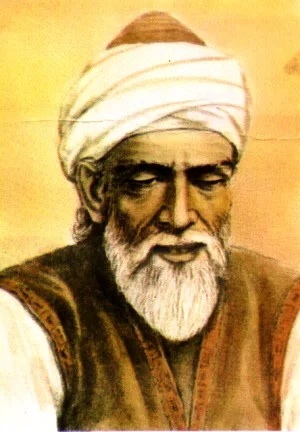
Sasanian astrology bridged the gap between ancient traditions and the Islamic era; texts were translated into Arabic and so reached Europe through Al-Andalus. The Persian scholar Al-Khwarizmi's Zīj al-Sindhind (c. 820 CE) laid the mathematical and computational foundations for later Islamic astrology. His computational methods enabled the accurate determination of planetary positions, the Ascendant, astrological houses, and other parameters essential for casting horoscopes.
Islamic
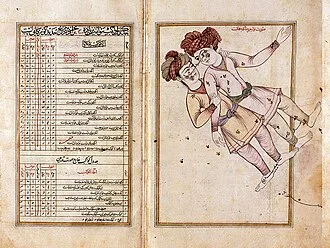
Astrology was taken up by Islamic scholars following the collapse of Alexandria to the Arabs in the 7th century, and the founding of the Abbasid empire in the 8th. The second Abbasid caliph, Al Mansur (754–775) founded the city of Baghdad to act as a centre of learning, and included in its design a library-translation centre known as Bayt al-Hikma 'House of Wisdom', which continued to receive development from his heirs and was to provide a major impetus for Arabic-Persian translations of Hellenistic astrological texts.
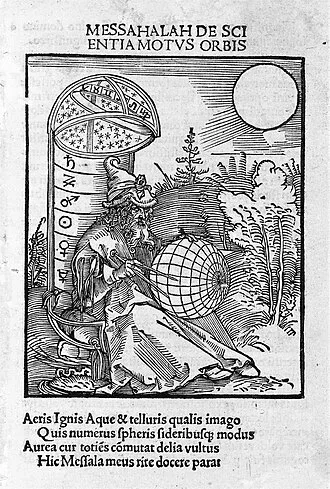
The early translators included Mashallah, who helped to elect the time for the foundation of Baghdad, and Sahl ibn Bishr, (a.k.a. Zael), whose texts were directly influential upon later European astrologers such as Guido Bonatti in the 13th century, and William Lilly in the 17th century. Knowledge of Arabic texts started to become imported into Europe during the Latin translations of the 12th century.
Jewish
Medieval Jewish astrology developed significantly in the Islamic world, where Jewish scholars studied, adapted, and debated astrological knowledge inherited from Greek and Arabic sources. While some, like Maimonides, famously rejected astrology as unscientific and theologically problematic, others, including Saadia Gaon, Sherira Gaon, and Hai Gaon, addressed astrological ideas in their commentaries and responsa.
Dunash ibn Tamim, active in Kairouan, incorporated astrology into biblical exegesis and authored a critical treatise on its principles. Astrological texts circulated widely among Jewish communities, as evidenced by hundreds of Hebrew and Judeo-Arabic fragments preserved in the Cairo Geniza, including horoscopes, almanacs, and medical or meteorological prognostications.
The most influential figure was Abraham Ibn Ezra (1089–1164), who was born in Tudela, in Al-Andalus, and later travelled extensively throughout the Mediterranean and Western Europe. His astrological corpus includes treatises on horoscopy (Sefer ha-She'elot), electional astrology (Sefer ha-Mivḥarim), medical astrology (Sefer ha-Me'orot), and introductions to theory (Reshit Ḥokhmah, Mishpeṭei ha-Mazalot).
His writings served as a bridge between Arabic and Latin astrological traditions and shaped Jewish and Christian astrology in medieval Europe.
Europe
In the seventh century, Isidore of Seville argued in his Etymologiae that astronomy described the movements of the heavens, while astrology had two parts: one was scientific, describing the movements of the Sun, the Moon and the stars, while the other, making predictions, was theologically erroneous.
The first astrological book published in Europe was the Liber Planetis et Mundi Climatibus ("Book of the Planets and Regions of the World"), which appeared between 1010 and 1027 AD, and may have been authored by Gerbert of Aurillac. Ptolemy's second century AD Tetrabiblos was translated into Latin by Plato of Tivoli in 1138.
The Dominican theologian Thomas Aquinas followed Aristotle in proposing that the stars ruled the imperfect 'sublunary' body, while attempting to reconcile astrology with Christianity by stating that God ruled the soul. The thirteenth century mathematician Campanus of Novara is said to have devised a system of astrological houses that divides the prime vertical into 'houses' of equal 30° arcs, though the system was used earlier in the East.
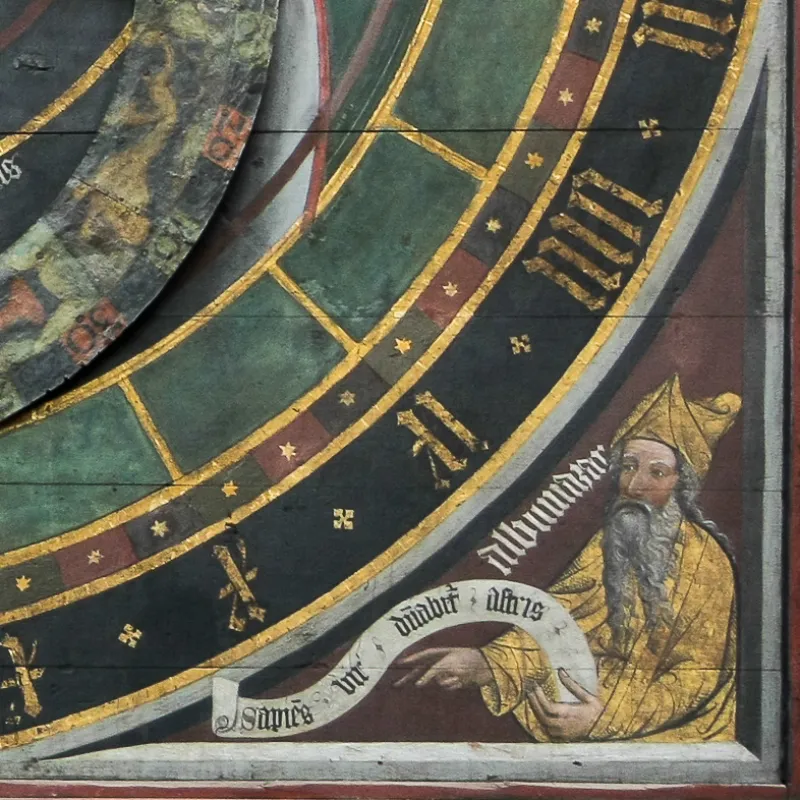
The thirteenth century astronomer Guido Bonatti wrote a textbook, the Liber Astronomicus, a copy of which King Henry VII of England owned at the end of the fifteenth century.
In Paradiso, the final part of the Divine Comedy, the Italian poet Dante Alighieri referred "in countless details" to the astrological planets, though he adapted traditional astrology to suit his Christian viewpoint, for example using astrological thinking in his prophecies of the reform of Christendom.
John Gower in the fourteenth century defined astrology as essentially limited to the making of predictions. The influence of the stars was in turn divided into natural astrology, with for example effects on tides and the growth of plants, and judicial astrology, with supposedly predictable effects on people. The fourteenth-century sceptic Nicole Oresme however included astronomy as a part of astrology in his Livre de divinacions.
Oresme argued that current approaches to prediction of events such as plagues, wars, and weather were inappropriate, but that such prediction was a valid field of inquiry. However, he attacked the use of astrology to choose the timing of actions (so-called interrogation and election) as wholly false, and rejected the determination of human action by the stars on grounds of free will.
The friar Laurens Pignon (c. 1368–1449) similarly rejected all forms of divination and determinism, including by the stars, in his 1411 Contre les Devineurs. This was in opposition to the tradition carried by the Arab astronomer Albumasar (787–886) whose Introductorium in Astronomiam and De Magnis Coniunctionibus argued the view that both individual actions and larger scale history are determined by the stars.
In the late 15th century, Giovanni Pico della Mirandola forcefully attacked astrology in Disputationes contra Astrologos, arguing that the heavens neither caused, nor heralded earthly events. His contemporary, Pietro Pomponazzi, a "rationalistic and critical thinker", was much more sanguine about astrology and critical of Pico's attack.