















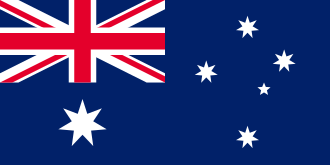
The ancestors of Aboriginal Australians began arriving from Southeast Asia 50,000 to 65,000 years ago, during the Last Glacial Period. By the time of British settlement, Aboriginal Australians spoke more than 250 distinct languages and had one of the oldest living cultures in the world. Australia's written history commenced with Dutch exploration of most of the coastline in the 17th century.
British colonisation began in 1788 with the establishment of the penal colony of New South Wales. By the mid-19th century, most of the continent had been explored by European settlers and five additional self-governing British colonies were established, each gaining responsible government by 1890. The colonies federated in 1901, forming the Commonwealth of Australia.
This continued a process of increasing autonomy from the United Kingdom, highlighted by the Statute of Westminster Adoption Act 1942, and culminating in the Australia Act 1986.
Australia is a parliamentary democracy with a constitutional monarchy, and a federation comprising six states and ten territories. Its population of almost 29 million is highly urbanised and heavily concentrated on the eastern seaboard. Canberra is the nation's capital, while its most populous cities are Sydney and Melbourne, each with a population of more than five million.
Australia's culture is diverse, and the country has one of the highest foreign-born populations in the world. It has a highly developed economy and one of the highest per capita incomes globally. Its abundant natural resources and well-developed international trade relations are crucial to the country's economy. It ranks highly for quality of life, health, education, economic freedom, civil liberties and political rights.
Australia is a middle power, and has the world's fourteenth-highest military expenditure. It is a member of international groups including: the United Nations, the G20, the OECD, the World Trade Organization, Asia-Pacific Economic Cooperation, the Pacific Islands Forum, the Pacific Community and the Commonwealth of Nations.
Australia also participates in the defence, intelligence and security alliances ANZUS, AUKUS and Five Eyes. It is a major non-NATO ally of the United States.
Etymology
The name Australia (pronounced /əˈstreɪliə/ in Australian English) is derived from the Latin Terra Australis Incognita ('unknown southern land'), a name used for a hypothetical continent in the Southern Hemisphere since ancient times. Several 16th-century cartographers used the word Australia on maps, but not to identify modern Australia.
When the Dutch began visiting and mapping Australia in the 17th century, they called the continent New Holland. The name Australia was popularised by the explorer Matthew Flinders, who circumnavigated the continent in 1803. However, when his account of his voyage was published in 1814, the name Terra Australis was used.
Governor of New South Wales Lachlan Macquarie officially recommended the name Australia to replace New Holland in December 1817. The British Admiralty adopted the name in 1824, and the British Parliament used it in legislation in 1828. The United Kingdom Hydrographic Office used the new name in The Australia Directory of 1830.
The name "Commonwealth of Australia" for the new federation of the six former colonies was formalised in the Commonwealth of Australia Constitution Act 1900 (UK).
Colloquial names for Australia include "Oz", "Straya" and "Down Under".
History
Indigenous prehistory
Indigenous Australians comprise two broad groups:
- Aboriginal Australians, who are the various Indigenous peoples of the Australian mainland and many of its islands, including Tasmania
- Torres Strait Islanders, who are a distinct Melanesian people of Torres Strait Islands
Human habitation of the Australian continent is estimated to have begun 50,000 to 65,000 years ago, with the migration of people by land bridges and short sea crossings from what is now Southeast Asia. It is uncertain how many waves of immigration may have contributed to these ancestors of modern Aboriginal Australians.
The Madjedbebe rock shelter in Arnhem Land is possibly the oldest site showing the presence of humans in Australia. The oldest human remains found are the Lake Mungo remains, which have been dated to approximately 42,000 years ago.
Aboriginal Australian culture is one of the oldest continuous cultures on Earth. At the time of first European contact, Aboriginal Australians belonged to wide range of societies, with diverse economies spread across at least 250 different language groups. Estimates of the Aboriginal population before British settlement range from 300,000 to 3 million.
Aboriginal Australians cultures were (and remain) deeply connected with the land and the environment, with stories of The Dreaming maintained through oral tradition, songs, dance and paintings. Certain groups engaged in fire-stick farming, fish farming, and built semi-permanent shelters. These practices have variously been characterised as "hunter-gatherer", "agricultural", "natural cultivation" and "intensification".
Torres Strait Islander people first settled their islands at least 2,500 years ago. Culturally and linguistically distinct from mainland Aboriginal peoples, they were seafarers and obtained their livelihood from seasonal horticulture and the resources of their reefs and seas. Agriculture also developed on some islands and villages appeared by the 1300s.
By the mid-18th century in northern Australia, contact, trade and cross-cultural engagement had been established between local Aboriginal groups and Makassan trepangers, visiting from present-day Indonesia.
European exploration and colonisation
In 1606 the crew of the Dutch ship, Duyfken, captained by Willem Janszoon, made the first documented European landing in Australia and contact with Aboriginal Australians. Later that year, Luís Vaz de Torres sailed to the north of Australia through Torres Strait, along New Guinea's southern coast. Abel Tasman's voyage of 1642 was the first known European expedition to reach Van Diemen's Land.
On his second voyage of 1644, he mapped the north coast of Australia south of New Guinea. Following Tasman's voyages, the Dutch were able to make almost complete maps of Australia's northern and western coasts and much of its southern and south-eastern Tasmanian coasts. They named the continent New Holland.
In 1770, Captain James Cook sailed along and mapped the east coast, which he named "New South Wales" and claimed for Great Britain. In 1786, the British government announced its intention to establish a penal colony in New South Wales. On 26 January 1788, the First Fleet commanded by Captain Arthur Phillip, arrived at Sydney Cove, Port Jackson. A camp was established and the Union Flag raised and the date later became Australia's national day.
Most early settlers were convicts, transported for petty crimes and assigned as labourers or servants to "free settlers" (willing immigrants). Once emancipated, convicts tended to integrate into colonial society. Aboriginal resistance, convict rebellions and bushranging were sometimes suppressed under martial law. The 1808 Rum Rebellion, carried out by officers of the New South Wales Corp, led to a temporary military junta.
During the next two decades, social and economic reforms, together with the establishment of a Legislative Council and Supreme Court, saw the penal colony transition to a civil society.
The indigenous population declined for 150 years following European settlement, mainly due to infectious disease. British colonial authorities did not sign any treaties with Aboriginal groups. As settlement expanded, tens of thousands of Indigenous people and thousands of settlers were killed in frontier conflicts, which many historians argue included acts of genocide by settlers. Settlers dispossessed surviving Indigenous peoples of most of their land.
Colonial expansion
In 1803, a settlement was established in Van Diemen's Land (present-day Tasmania), and in 1813, Gregory Blaxland, William Lawson and William Wentworth crossed the Blue Mountains west of Sydney, opening the interior to European settlement. The British claim was extended to the whole Australian continent in 1827 when Major Edmund Lockyer established a settlement on King George Sound (modern-day Albany).
The Swan River Colony (present-day Perth) was established in 1829, evolving into the largest Australian colony by area, Western Australia. Separate colonies were carved from New South Wales: Tasmania in 1825, South Australia in 1836, Victoria in 1851, and Queensland in 1859. South Australia and Victoria were founded as free colonies – they never accepted transported convicts.
Growing opposition to the convict system culminated in its abolition in the eastern colonies by the 1850s. Initially a free colony, Western Australia accepted convicts from 1850 to 1868.
The six colonies individually gained responsible government between 1855 and 1890, managing most of their own affairs while remaining part of the British Empire. The Colonial Office in London retained control of some matters, notably foreign affairs. The colonial parliaments progressively extended voting rights to adult men from 1856, with women's suffrage on equal terms following between the 1890s and 1900s. Some colonies introduced racial restrictions on voting from 1885.
In the mid-19th century, explorers such as Burke and Wills charted Australia's interior. A series of gold rushes beginning in the early 1850s led to an influx of new migrants from China, North America and continental Europe, as well as outbreaks of bushranging and civil unrest; the latter peaked in 1854 when Ballarat miners launched the Eureka Rebellion against gold licence fees.
The 1860s saw the rise of blackbirding, where South Sea Islanders were coerced or abducted into indentured labour, mainly by Queensland colonists.
From 1886, Australian colonial governments began removing many Aboriginal children from their families and communities, justified on the grounds of child protection and forced assimilation policies. The Second Boer War (1899–1902) marked the largest overseas deployment of Australia's colonial forces.
Federation to the World Wars
On 1 January 1901, federation of the colonies was achieved after a decade of planning, constitutional conventions and referendums, resulting in the establishment of the Commonwealth of Australia as a nation under the new Australian Constitution.
From 1901, Australia was a self-governing dominion within the British Empire. It was one of the founding members of the League of Nations in 1920, and the United Nations in 1945. The Statute of Westminster 1931 ended the ability of the UK to legislate for Australia at the federal level without Australia's consent. Australia adopted it in 1942, but it was backdated to 1939 to confirm the validity of legislation passed during World War II.
The Australian Capital Territory was formed in 1911 as the location for the future federal capital of Canberra. While it was being constructed, Melbourne served as the temporary capital from 1901 to 1927. The Northern Territory was transferred from South Australia to the Commonwealth in 1911. Australia took over the administration of the Territory of Papua (previously British New Guinea) in 1905 and of the Territory of New Guinea (formerly German New Guinea) in 1920.
The two were unified as the Territory of Papua and New Guinea in 1949 and gained independence from Australia in 1975.
In 1914, Australia joined the Allies in the First World War, and took part in the fighting on several fronts. Of the 324,000 men who served overseas, about 60,000 were killed and another 152,000 were wounded. Many Australians regard the defeat of the Australian and New Zealand Army Corps (ANZAC) at Gallipoli in 1915 as the "baptism of fire" that forged the new nation's identity.
The beginning of the campaign is commemorated annually on Anzac Day, a date which rivals Australia Day as the nation's most important.
From 1939 to 1945, Australia joined the Allies in fighting the Second World War. Australia's armed forces fought in the Pacific, European and Mediterranean and Middle East theatres. The shock of Britain's defeat in Singapore in 1942, followed soon after by the bombing of Darwin and other Japanese attacks on Australian soil, led to a widespread belief in Australia that a Japanese invasion was imminent, and a shift from the United Kingdom to the United States as Australia's principal ally and security partner.
Since 1951, Australia has maintained a mutual security alliance with the United States under the ANZUS treaty.
Post-war and contemporary eras
In the three decades following World War II, Australia experienced significant increases in living standards, leisure time and suburban development. Governments encouraged a large wave of immigration from across Europe and called these migrants "New Australians". High immigration was justified to Australians using the slogan "populate or perish", and from the 1960s the white Australia policy was gradually relaxed.
A member of the Western Bloc during the Cold War, Australia participated in the Korean War and the Malayan Emergency during the 1950s and the Vietnam War from 1962 to 1973. Tensions over communist influence in society led to unsuccessful attempts by the Menzies Government to ban the Communist Party of Australia, and a bitter split in the Labor Party in 1955.
As a result of a 1967 referendum, the federal government gained the power to legislate with regard to Aboriginal Australians, and Aboriginal Australians were fully included in the census. Pre-colonial land interests (referred to as native title in Australia) were recognised in law for the first time when the High Court of Australia held in Mabo v Queensland (No 2) that Australia was not terra nullius ('land belonging to no one') at the time of European settlement.
Following the abolition of the last vestiges of the White Australia policy in 1973, Australia's demography and culture transformed as a result of a large and ongoing wave of non-European immigration, mostly from Asia. During the late 20th century, Australia increased its foreign policy ties within the Asia–Pacific region.
The Australia Acts of 1986 severed the remaining constitutional ties between Australia and the United Kingdom while maintaining the monarch in her independent capacity as Queen of Australia. In a 1999 constitutional referendum, 55% of voters rejected abolishing the monarchy and becoming a republic.
Following the September 11 attacks in the United States, Australia joined the United States in fighting the Afghanistan War from 2001 to 2021 and the Iraq War from 2003 to 2009. The nation's trade relations also became increasingly oriented towards East Asia in the 21st century, with China becoming the nation's largest trading partner by a large margin.
In response to the COVID-19 pandemic, from March 2020 lockdowns and other restrictions on public gatherings and movement across the national and state borders were implemented by the Federal, state and territory governments. Following the rollout of vaccines in 2021, these restrictions were gradually eased. In October 2023, Australia declared that COVID-19 was no longer a communicable disease incident of national significance.