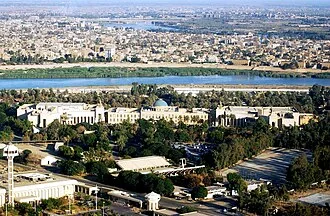
Founded in 762 AD by al-Mansur on a site with settlement dating back to at least the Neo-Babylonian period, Baghdad became the capital of the Abbasid Caliphate and its most notable development project. The city evolved into an intellectual and cultural center. This, in addition to housing several key academic institutions, including the House of Wisdom, as well as a multi-ethnic and multi-religious environment, garnered it a worldwide reputation as the "Center of Learning".
For much of the Abbasid era, during the Islamic Golden Age, Baghdad was one of the largest cities in the world and rivaled Chang'an, as the population peaked at more than one million. It was largely destroyed at the hands of the Mongol Empire in 1258, resulting in a decline that would linger for many centuries due to frequent plagues and shifts in power between multiple successive empires.
Later, Baghdad served as the administrative center of Ottoman Iraq, exercising authority over the provinces of Basra, Mosul, and Shahrizor.
During the First World War, Baghdad was made the capital of Mandatory Iraq. With the recognition of Iraq as an independent monarchy in 1932, it gradually regained some of its former prominence as a significant center of Arab culture. During the Ba'ath Party rule, the city experienced a period of relative prosperity and growth.
However, it faced severe infrastructural damage due to the Iraq War, which began with the invasion of Iraq in 2003, resulting in a substantial loss of cultural heritage and historical artifacts. During the insurgency and renewed war from 2013 to 2017, it had one of the highest rates of terrorist attacks in the world. However, these attacks have gradually declined since the territorial defeat of the Islamic State militant group in Iraq in 2017, and are now rare. Since the end of the war, numerous reconstruction projects have been underway to induce stability.
Iraq's largest city, Baghdad is the seat of government. It generates 40% of the economy of Iraq. A major center of Islamic history, Baghdad is home to numerous historic mosques, as well as churches, mandis and synagogues, highlighting the city's historical diversity. Religious sites such as Masjid al-Kadhimayn, Buratha Mosque, the Shrine of Abdul-Qadir Gilani and Abu Hanifa Mosque are visited by millions of people annually.
It was once home to a large Jewish community and was regularly visited by Sikh pilgrims from India. Baghdad is a regional cultural hub. The city is well known for its coffeehouses.
Name
The name Baghdad is pre-Islamic, and its origin is disputed. The site where the city of Baghdad developed has been populated for millennia. Archaeological evidence shows that the site of Baghdad was occupied long before the Arab conquest of Mesopotamia in 637 CE, and that several ancient empires had their capitals located in the surrounding area.
Arab authors, realizing the pre-Islamic origins of Baghdad's name, generally looked for its roots in Middle Persian. They suggested various meanings, the most common of which was "bestowed by God". Modern scholars generally tend to favor this etymology, which views the word as a Persian compound of bagh ( ) "god" and dād (
 ) "given".
In Old Persian the first element can be traced to boghu and is related to Indo-Iranian bhag and Slavic bog "god." A similar term in Middle Persian is the name Mithradāt (Mehrdad in New Persian), known in English by its borrowed Hellenistic form Mithridates, meaning "Given by Mithra" (dāt is the more archaic form of dād, related to Sanskrit dāt, Latin dat and English donor).
There are a number of other locations whose names are compounds of the Middle Persian word bagh, including Baghlan and Bagram in Afghanistan, Baghshan in Iran, and Baghdati in Georgia, which likely share the same etymological Iranic origins.
Other authors have suggested older origins for the name, in particular the name Bagdadu or Hudadu that existed in Old Babylonian (spelled with a sign that can represent both bag and hu), and the Jewish Babylonian Aramaic name of a place called Baghdatha (בגדתא).
A later attestation of the name is found in a boundary stone from the reign of Merodach-baladan I (12th century BC), where it appears in cuneiform as Bag-da-du. Some scholars suggested Aramaic derivations.
Another highly recommended view is that Baghdad is a reference to Bagh and Dad as in Dadan, Dedan, and Dad as in Hadad, Adad. Another view suggested by Christophe Wall-Romana, is that name of "Baghdad" is derived from "Akkad", as the cuneiform logogram for Akkad (𒀀𒂵𒉈𒆠) is pronounced "a-ga-dèKI" ("Agade") and its resemblance to "Baghdad" is compelling.
It is argued that, throughout all the various spellings of the city's name, whether Baghdad [بغداد], Baghdadh [بغداذ], Baghdan [بغدان], Maghdad [مغداد], Maghdadh [مغداذ], or Maghdan [مغدان], the only phonetically definite segment of the name appears to be Aghda [ىَغْدَا], which could be equated with the pronunciation of the name Agade.
When the Abbasid caliph al-Mansur founded a completely new city for his capital, he chose the name "City of peace" (Arabic: مدینة السلام, Madīnat as-Salām), which now refers to the Round City of Baghdad proper. By the 11th century, Baghdad became almost the exclusive name for the world-renowned metropolis.
Christophe Wall-Romana has suggested that al-Mansur's choice to found his "new city" at Baghdad because of its strategic location was the same criteria which influenced Sargon's choice to found the original city of Akkad in the exact same location.
History
Foundation
Archaeological evidence indicates that the site of Baghdad had been occupied prior to its Abbasid foundation. An extensive facing of Neo-Babylonian brickwork has been identified along the western bank of the Tigris at Baghdad, with bricks stamped with the name and titles of Nebuchadnezzar II. Assyrian geographical catalogues during the reign of Sardanapalus from the Neo-Assyrian period record a place whose name was very similar to “Baghdad”, which likely refers to the town standing on the site where the Abbasids would later build their capital.
After the fall of the Umayyads, the victorious Abbasids sought a new capital. On 30 July 762, the Caliph Al-Mansur commissioned Baghdad's construction, guided by the Iranian Barmakids. He believed Baghdad was ideal for ruling the Islamic Empire. Historian al-Tabari recorded a prophecy from Christian monks about a leader named Miklas building a great city in the area, and Al-Mansur, who was once called Miklas, saw this as a good omen.
He expressed deep affection for the site, declaring it would be the home of his dynasty. The two designers who were hired by Al-Mansur to plan the city's design were Naubakht, a Zoroastrian who also determined that the date of the foundation of the city would be astrologically auspicious, and Mashallah, a Jew from Khorasan, Iran.
They determined the city's auspicious founding date under the sign of Leo the lion, symbolizing strength and expansion.
The city's layout consisted of two large semicircles, with a 2 km-wide circular core known as the "Round City." It had parks, gardens, villas, and promenades. Unlike European cities of the time, Baghdad had a sanitation system, fountains, and public baths, with thousands of hammams enhancing hygiene. The mosque and guard headquarters stood at the center, though some central space's function remains unknown.
Baghdad's circular design reflected ancient Near Eastern urban planning, similar to the Sasanian city of Gur and older Mesopotamian cities like Mari. While Tell Chuera and Tell al-Rawda also provide examples of this type of urban planning existing in Bronze Age Syria. This style of urban planning contrasted with Ancient Greek and Roman urban planning, in which cities are designed as squares or rectangles with streets intersecting each other at right angles.
Baghdad was designed to symbolize paradise as described in the Qur'an. It took four years (764–768) to build, with over 100,000 workers involved. Al-Mansur recruited engineers and artisans worldwide. Astrologers Naubakht Ahvazi and Mashallah advised starting construction under Leo, associated with fire, productivity, and expansion.
Bricks for the city were 18 inches square, and Abu Hanifah supervised their production. A canal supplied water for drinking and construction. Marble was used extensively, including steps leading to the river. The Golden Gate Palace, home of the caliph, stood at Baghdad's center with a grand 48-meter green dome. Only the caliph could approach its esplanade on horseback.
Nearby were officer residences and a guardhouse. After Caliph Al-Amin's death in 813, the palace ceased to be the caliph's residence. It was divided into three judicial districts: Round City (Madinat al-Mansur), al-Karkh (al-Sharqiyya), and Askar al-Mahdi. The city had four walls named after major destinations—Kufa, Basra, Khurasan, and Syria; their gates pointed in on these destinations.
The gates were 2.4 km apart, with massive iron doors requiring several men to operate and walls, up to 44m thick and 30m high, were reinforced with a second wall, towers, and a moat for added defense.
Center of learning (8th–9th centuries)
Baghdad's strategic location along the Tigris and its abundant water supply contributed to its rapid growth. To prevent disturbances, Al-Mansur moved markets to al-Karkh. Over time, Baghdad became a hub for merchants and craftsmen. Officials called "Muhtasib" monitored trade to prevent fraud. Baghdad surpassed Ctesiphon, the former Sassanid capital, located 30 km southeast.
The ruins of Ctesiphon remain in Salman Pak, where Salman the Persian is believed to be buried. Ctesiphon itself had replaced Seleucia, which had earlier succeeded Babylon. According to the traveler Ibn Battuta, Baghdad was one of the largest cities, not including the damage it has received. The residents are mostly Hanbalis.
Most residents were Hanbali Muslims. The city housed Abu Hanifa's grave, marked by a mosque and cell. Its ruler, Abu Sa'id Bahadur Khan, was a Tatar who had embraced Islam.
Within a generation of its founding, Baghdad became a hub of learning and commerce. The city flourished into an unrivaled intellectual center of science, medicine, philosophy, and education, especially with the Abbasid translation movement began under the second caliph Al-Mansur and thrived under the seventh caliph Al-Ma'mun. Baytul-Hikmah or the "House of Wisdom" was among the most well known academies, and had the largest selection of books in the world by the middle of the 9th century.[citation needed] Notable scholars based in Baghdad during this time include translator Hunayn ibn Ishaq, mathematician al-Khwarizmi, and philosopher Al-Kindi.
Baghdad was lively, with attractions like cabarets, chess halls, live plays, concerts, and acrobatics. Storytelling flourished, with professional storytellers (al-Qaskhun) captivating crowds, inspiring the tales of Arabian Nights.
Although Arabic was used as the language of science, the scholarship involved not only Arabs, but also Persians, Syriacs, Nestorians, Jews, Arab Christians, and people from other ethnic and religious groups native to the region. These are considered among the fundamental elements that contributed to the flourishing of scholarship in the Medieval Islamic world.
Baghdad was also a significant center of Islamic religious learning, with Al-Jahiz contributing to the formation of Mu'tazili theology, as well as Al-Tabari culminating in the scholarship on the Quranic exegesis. Baghdad is likely to have been the largest city in the world from shortly after its foundation until the 930s, when it tied with Córdoba. Several estimates suggest that the city contained over a million inhabitants at its peak.
Many of the One Thousand and One Nights tales, widely known as the Arabian Nights, are set in Baghdad during this period. It would surpass even Constantinople in prosperity and size. Among the notable features of Baghdad during this period were its exceptional libraries. Many of the Abbasid caliphs were patrons of learning and enjoyed collecting both ancient and contemporary literature.
Although some of the princes of the previous Umayyad dynasty had begun to gather and translate Greek scientific literature, the Abbasids were the first to foster Greek learning on a large scale. Many of these libraries were private collections intended only for the use of the owners and their immediate friends, but the libraries of the caliphs and other officials soon took on a public or a semi-public character.
Four great libraries were established in Baghdad during this period. The earliest was that of the famous al-Ma'mun, who was caliph from 813 to 833. Another was established by Sabur ibn Ardashir in 991 or 993 for the literary men and scholars who frequented his academy. This second library was plundered and burned by the Seljuks only seventy years after it was established.
This was a good example of the sort of library built up out of the needs and interests of a literary society. The last two were examples of madrasa or theological college libraries. The Nizamiyya of Baghdad was founded by the Persian Nizam al-Mulk, who was vizier of two early Seljuk sultans. It continued to operate even after the coming of the Mongols in 1258.
The Mustansiriyya Madrasa, which owned an exceedingly rich library, was founded by al-Mustansir, the second last Abbasid caliph, who died in 1242. This would prove to be the last great library built by the caliphs of Baghdad.
Stagnation and invasions (10th–16th centuries)
By the 10th century, the city's population was between 1.2 million and 2 million. Baghdad's early meteoric growth eventually slowed due to troubles within the Caliphate, including relocations of the capital to Samarra (during 808–819 and 836–892), the loss of the western and easternmost provinces, and periods of political domination by the Iranian Buwayhids (945–1055) and Seljuk Turks (1055–1135).
The Seljuks were a clan of the Oghuz Turks from Central Asia that converted to the Sunni branch of Islam. In 1040, they destroyed the Ghaznavids, taking over their land and in 1055, Tughril Beg, the leader of the Seljuks, took over Baghdad. The Seljuks expelled the Buyid dynasty of Shiites that had ruled for some time and took over power and control of Baghdad.
They ruled as Sultans in the name of the Abbasid caliphs (they saw themselves as being part of the Abbasid regime). Tughril Beg saw himself as the protector of the Abbasid Caliphs.
Baghdad was captured in 1394, 1534, 1623 and 1638. The city has been sieged in 812, 865, 946, 1157, 1258 and in 1393 and 1401, by Tamerlane. In 1058, Baghdad was captured by the Fatimids under the Turkish general Abu'l-Ḥārith Arslān al-Basasiri, an adherent of the Ismailis along with the 'Uqaylid Quraysh. Not long before the arrival of the Saljuqs in Baghdad, al-Basasiri petitioned to the Fatimid Imam-Caliph al-Mustansir to support him in conquering Baghdad on the Ismaili Imam's behalf.
It has recently come to light that the famed Fatimid da'i, al-Mu'ayyad al-Shirazi, had a direct role in supporting al-Basasiri and helped the general to succeed in taking Mawṣil, Wāsit and Kufa. Soon after, by December 1058, a Shi'i adhān (call to prayer) was implemented in Baghdad and a khutbah (sermon) was delivered in the name of the Fatimid Imam-Caliph.
Despite his Shi'i inclinations, Al-Basasiri received support from Sunnis and Shi'is alike, for whom opposition to the Saljuq power was a common factor.
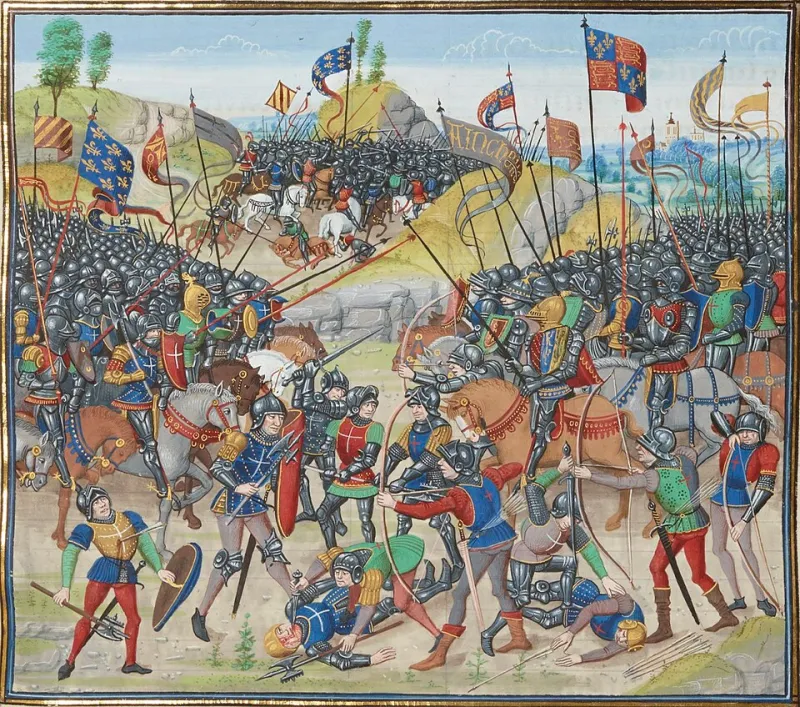
On 10 February 1258, Baghdad was captured by the Mongols led by Hulegu, a grandson of Genghis Khan (Chingiz Khan), during the siege of Baghdad. Many quarters were ruined by fire, siege, or looting. The Mongols massacred most of the city's inhabitants, including the caliph Al-Musta'sim, and destroyed large sections of the city.
The canals and dykes forming the city's irrigation system were also destroyed. During this time, in Baghdad, Christians and Shia were tolerated, while Sunnis were treated as enemies. The sack of Baghdad put an end to the Abbasid Caliphate. It has been argued that this marked an end to the Islamic Golden Age and served a blow from which Islamic civilization never fully recovered.
At this point, Baghdad was ruled by the Ilkhanate, a breakaway state of the Mongol Empire, ruling from Iran. In August 1393, Baghdad was occupied by the Central Asian Turkic conqueror Timur ("Tamerlane"), by marching there in only eight days from Shiraz. Sultan Ahmad Jalayir fled to Syria, where the Mamluk Sultan Barquq protected him and killed Timur's envoys.
Timur left the Sarbadar prince Khwaja Mas'ud to govern Baghdad, but he was driven out when Ahmad Jalayir returned.
In 1401, Baghdad was again sacked, by Timur, a Central Asian Turko-Mongol figure. When his forces took Baghdad, he spared almost no one, and ordered that each of his soldiers bring back two severed human heads. Baghdad became a provincial capital controlled by the Mongol Jalayirid (1400–1411), Turkic Kara Koyunlu (1411–1469), Turkic Ak Koyunlu (1469–1508), and the Iranian Safavid (1508–1534) dynasties.
Ottoman and Mamluks (16th–19th centuries)
The Safavids took control of the city in 1509 under the leadership of Shah Ismail I. It remained under Safavid rule until the Ottomans seized it in 1535, but the Safavids regained control in 1624. A massacre occurred when the Shah's army entered the city. It remained under Safavid rule until 1639 when Sultan Murad IV recaptured it in 1638.
In 1534, Baghdad was captured by the Ottoman Empire, becoming the administrative capital of Ottoman Iraq. Under the Ottomans, Baghdad continued into a period of decline, partially as a result of the enmity between its rulers and Iranian Safavids, which did not accept the Sunni control of the city. Between 1623 and 1638, it returned to Iranian rule before falling back into Ottoman hands.
Baghdad has suffered severely from visitations of the plague and cholera, and sometimes two-thirds of its population has been wiped out. The city became part of an eyalet and then a vilayet.
For a time, Baghdad had been the largest city in the Middle East. The city saw relative revival in the latter part of the 18th century, under Mamluk government. Direct Ottoman rule was reimposed by Ali Rıza Pasha in 1831. From 1851 to 1852 and from 1861 to 1867, Baghdad was governed, under the Ottoman Empire by Mehmed Namık Pasha. The Nuttall Encyclopedia reports the 1907 population of Baghdad as 185,000.