Early inhabitants of the territory included the Sao civilisation around Lake Chad and the Baka hunter-gatherers in the southeastern rainforest. Portuguese explorers reached the coast in the 15th century. Fulani soldiers founded the Adamawa Emirate in the north in the 19th century, and various ethnic groups of the west and northwest established powerful chiefdoms and fondoms.
Cameroon became a German colony in 1884 known as Kamerun. After World War I, it was divided between France and the United Kingdom as League of Nations mandates until independence in 1960 and 1961 respectively. The Union of the Peoples of Cameroon (UPC) political party advocated independence but was outlawed by France in the 1950s, leading to a national liberation insurgency between French Armed Forces and the Union of the Peoples of Cameroon (UPC) until January 1971.
In 1960, the French-administered part of Cameroon became independent, as the Republic of Cameroun, under President Ahmadou Ahidjo. The southern part of British Cameroons federated with it in 1961 to form the Federal Republic of Cameroon. The federation was abandoned in 1972. The country was renamed the United Republic of Cameroon in 1972 and back to the Republic of Cameroon in 1984 by a presidential decree by President Paul Biya.
Biya, the incumbent president, has led the country since 1982 following Ahidjo's resignation; he previously held office as prime minister from 1975 onward. Cameroon is governed as a unitary presidential republic. Biya is the world's longest-serving non-royal leader, having ruled for over four decades in an authoritarian manner.
Consequently, his Cameroon People's Democratic Movement governs the country as a de facto one-party state.
The official languages of Cameroon are French and English. Christianity is the majority religion in Cameroon, with significant minorities practising Islam and traditional faiths. It has experienced tensions from the English-speaking territories, where politicians have advocated for greater decentralisation and even complete separation or independence (as in the Southern Cameroons National Council).
In 2017, tensions over the creation of an Ambazonian state in the English-speaking territories escalated into open warfare. Large numbers of Cameroonians live as subsistence farmers. The country is often referred to as "Africa in miniature" for its geological, linguistic, and cultural diversity. Its natural features include beaches, deserts, mountains, rainforests, and savannas.
Cameroon's highest point, at almost 4,100 metres (13,500 ft), is Mount Cameroon in the Southwest Region.
Cameroon's most populous cities are Douala on the Wouri River, its economic capital and main seaport; Yaoundé, its political capital; and Garoua. Limbé in the southwest has a natural seaport. Cameroon is well known for its native music styles, particularly Makossa, Njang, and Bikutsi, and its successful national football team.
It is a member state of the African Union, the United Nations, the Organisation Internationale de la Francophonie (OIF), the Commonwealth of Nations, the Non-Aligned Movement, and the Organisation of Islamic Cooperation.
Etymology
Originally, Cameroon was the exonym given by the Portuguese to the Wouri River, which they called Rio dos Camarões meaning 'river of shrimps' or 'shrimp river', referring to the then abundant Cameroon ghost shrimp. The country's name in Portuguese remains Camarões.
History
Early history
Evidence from archaeological excavations at Shum Laka in the Northwest Region shows human occupation in Cameroon dating back 30,000 years. The longest continuous inhabitants are groups such as the Baka (Pygmies). From there, Bantu migrations into eastern, southern and central Africa are believed to have occurred about 2,000 years ago.
The Sao culture arose around Lake Chad, c. 500 CE, and gave way to the Kanem and its successor state, the Bornu Empire. Kingdoms, fondoms, and chiefdoms arose in the west.
Portuguese sailors reached the coast in 1472. They noted an abundance of the ghost shrimp Lepidophthalmus turneranus in the Wouri River and named it Rio dos Camarões (Shrimp River), which became Cameroon in English. Over the following few centuries, European interests regularised trade with the coastal peoples, and Christian missionaries pushed inland.
In 1896, Sultan Ibrahim Njoya created the Bamum script, or Shu Mom, for the Bamum language. It is taught in Cameroon by the Bamum Scripts and Archives Project.
European colonisation
German Empire
Germany began to establish roots in Cameroon in 1868 when the Woermann Company of Hamburg built a warehouse. It was built on the estuary of the Wouri River. Later, Gustav Nachtigal made a treaty with one of the local kings to annex the region for the German emperor. The German Empire claimed the territory as the colony of Kamerun in 1884 and began a steady push inland; the natives resisted in the Bafut Wars and Adamawa Wars.
Under the aegis of Germany, commercial companies were local administrations. These concessions used forced labour to run profitable banana, rubber, palm oil, and cocoa plantations. Even infrastructure projects relied on a regimen of forced labour. This economic policy was much criticised by the other colonial powers.
French and British mandates
With the defeat of Germany in World War I, Kamerun became a League of Nations mandate territory and was split into French Cameroon (French: Cameroun) and British Cameroon in 1919. France integrated the economy of Cameroon with that of France and improved the infrastructure with capital investments and skilled workers, modifying the colonial system of forced labour.
Britain offered German owned plantations to the highest bidder with the intent of paying the proceeds into a World War I reparations account. But few investors were willing to buy at the London auctions. Eventually Britain sold the majority of German plantations in British Cameroon back to their original German owners and opened up African maritime ports for German trade.
The British also encouraged German investment in the Tanganyika Territory. German companies built warehouses in Douala but were not allowed to purchase land.
The British administered their territory from neighbouring Nigeria. Natives complained that this made them a neglected "colony of a colony". Nigerian migrant workers flocked to Southern Cameroons, ending forced labour altogether but angering the local natives, who felt swamped. The League of Nations mandates were converted into United Nations Trusteeships in 1946, and the question of independence became a pressing issue in French Cameroon.
France outlawed the pro-independence political party, the Union of the Peoples of Cameroon (French: Union des Populations du Cameroun, UPC), on 13 July 1955. This prompted a long guerrilla war waged by the UPC and the assassination of several of the party's leaders, including Ruben Um Nyobè, Félix-Roland Moumié and Ernest Ouandie.
In the British Cameroons, the question was whether to reunify with French Cameroon or join Nigeria; the British ruled out the option of independence.
Republic of Cameroon
On 1 January 1960, French Cameroun gained independence from France under President Ahmadou Ahidjo as the Republic of Cameroon. The southern part of British Cameroons federated with it in 1961 to form the Federal Republic of Cameroon until 1972, when the federation was abandoned and the country renamed the United Republic of Cameroon. In 1984, President Paul Biya restored the name Republic of Cameroon via presidential decree.
Federal Republic of Cameroon
On 1 October 1961, the British Southern Cameroons gained independence from the United Kingdom by vote of the UN General Assembly and merged into the Republic of Cameroon to form the Federal Republic of Cameroon. The federal republic was composed of two federated states, East Cameroon and West Cameroon, each with its own legislature, government, and prime minister. 1 October is now observed as Unification Day, a public holiday.
Ahidjo used the ongoing war with the UPC to concentrate power in the presidency, continuing with this even after the suppression of the UPC in 1971.
United Republic of Cameroon
Ahidjo's political party, the Cameroon National Union (CNU), became the sole legal political party on 1 September 1966, and on 20 May 1972, a referendum was passed to abolish the federal system of government in favour of a United Republic of Cameroon, headed from Yaoundé. This day is now the country's National Day, a public holiday.
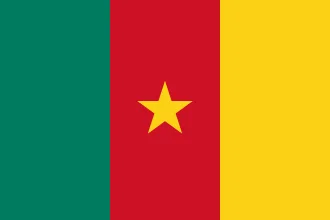
Ahidjo pursued an economic policy of planned liberalism, prioritising cash crops and petroleum development. The government used oil money to create a national cash reserve, pay farmers, and finance major development projects; however, many initiatives failed when Ahidjo appointed unqualified allies to direct them. The national flag was changed on 20 May 1975 with the two stars removed and replaced with a large central star as a symbol of national unity.
Republic of Cameroon under Biya
Ahidjo stepped down on 4 November 1982 and left power to his constitutional successor, Paul Biya. However, Ahidjo remained in control of the CNU and tried to run the country from behind the scenes until Biya and his allies pressured him into resigning. Biya began his administration by moving toward a more democratic government, but a failed coup d'état nudged him toward the leadership style of his predecessor.
Biya, the incumbent president, has led the country since 1982 following Ahidjo's resignation; he previously held office as prime minister from 1975 onward, making him the longest consecutively serving current non-royal national leader in the world and the oldest current head of state in the world.
In 1987, Dja Faunal Reserve, Cameroon's first World Heritage Site, was inscribed on the list by UNESCO. An economic crisis took effect in the mid-1980s to late 1990s as a result of international economic conditions, drought, falling petroleum prices, and years of corruption, mismanagement, and cronyism. Cameroon turned to foreign aid, cut government spending, and privatised industries.
With the reintroduction of multi-party politics in December 1990, the former British Southern Cameroons pressure groups called for greater autonomy, and the Southern Cameroons National Council advocated complete secession as the Republic of Ambazonia. The 1992 Labour Code of Cameroon gives workers the freedom to belong to a trade union or not to belong to any trade union at all.
It is the choice of a worker to join any trade union in their occupation since there is more than one trade union in each occupation.
In June 2006, talks concerning a territorial dispute over the Bakassi peninsula were resolved. The talks involved President Paul Biya of Cameroon, then President Olusegun Obasanjo of Nigeria, and then UN Secretary-General Kofi Annan, and resulted in Cameroonian control of the oil-rich peninsula. The northern portion of the territory was formally handed over to the Cameroonian government in August 2006, and the remainder of the peninsula was left to Cameroon two years later, in 2008.
The boundary change triggered a local separatist insurgency, as many Bakassians refused to accept Cameroonian rule. While most militants laid down their arms in November 2009, some carried on fighting for years.
In February 2008, Cameroon experienced its worst violence in 15 years when a transport union strike in Douala escalated into violent protests in 31 municipal areas.
In May 2014, in the wake of the Chibok schoolgirls kidnapping, presidents Paul Biya of Cameroon and Idriss Déby of Chad announced they were waging war on Boko Haram, and deployed troops to the Nigerian border. Boko Haram launched several attacks into Cameroon, killing 84 civilians in a December 2014 raid, but suffering a heavy defeat in a raid in January 2015. Cameroon declared victory over Boko Haram on Cameroonian territory in September 2018.
Since November 2016, protesters from the predominantly English-speaking Northwest and Southwest regions of the country have been campaigning for continued use of the English language in schools and courts. People were killed and hundreds were jailed as a result of these protests. In 2017, Biya's government blocked the regions' access to the Internet for three months.
In September, separatists started a guerilla war for the independence of the Anglophone region as the Federal Republic of Ambazonia. The government responded with a military offensive, and the insurgency spread across the Northwest and Southwest regions. As of 2019[update], fighting between separatist guerillas and government forces continues.
During 2020, numerous terrorist attacks—many of them carried out without claims of credit—and government reprisals have led to bloodshed throughout the country. Since 2016, more than 450,000 people have fled their homes. The conflict indirectly led to an upsurge in Boko Haram attacks, as the Cameroonian military largely withdrew from the north to focus on fighting the Ambazonian separatists.
More than 30,000 people in northern Cameroon fled to Chad after ethnic clashes over access to water between Musgum fishermen and ethnic Arab Choa herders in December 2021. In the aftermath of the 2025 Cameroonian presidential election, a series of protests broke out after allegations of electoral fraud were made by the opposition.
Politics and government
The President of Cameroon is elected and creates policy, administers government agencies, commands the armed forces, negotiates and ratifies treaties, and declares a state of emergency. The president appoints government officials at all levels, from the prime minister (considered the official head of government), to the provincial governors and divisional officers. The president is selected by popular vote every seven years.
The National Assembly makes legislation. The body consists of 180 members who are elected for five-year terms and meet three times per year. Laws are passed on a majority vote. The 1996 constitution establishes a second house of parliament, the 100-seat Senate. The government recognises the authority of traditional chiefs, fons, and lamibe to govern at the local level and to resolve disputes as long as such rulings do not conflict with national law.
Cameroon's legal system is a mixture of civil law, common law, and customary law. Although nominally independent, the judiciary falls under the authority of the executive's Ministry of Justice. The president appoints judges at all levels. The judiciary is officially divided into tribunals, the court of appeal, and the supreme court.
The National Assembly elects the members of a nine-member High Court of Justice that judges high-ranking members of government in the event they are charged with high treason or harming national security.
Political culture
Cameroon is viewed as rife with corruption at all levels of government. In 1997, Cameroon established anti-corruption bureaus in 29 ministries, but only 25% became operational, and in 2012, Transparency International placed Cameroon at number 144 on a list of 176 countries ranked from least to most corrupt. On 18 January 2006, Biya initiated an anti-corruption drive under the direction of the National Anti-Corruption Observatory.
There are several high corruption risk areas in Cameroon, for instance, customs, public health sector and public procurement. However, the corruption has gotten worse, regardless of the existing anti-corruption bureaus, as Transparency International ranked Cameroon 152 on a list of 180 countries in 2018.
President Biya's Cameroon People's Democratic Movement (CPDM) was the only legal political party until December 1990. Numerous regional political groups have since formed. The primary opposition is the Social Democratic Front (SDF), based largely in the Anglophone region of the country and headed by John Fru Ndi.
Biya and his party have maintained control of the presidency and the National Assembly in national elections, which rivals contend were unfair. Human rights organisations allege that the government suppresses the freedoms of opposition groups by preventing demonstrations, disrupting meetings, and arresting opposition leaders and journalists.
In particular, English-speaking people are discriminated against; protests often escalate into violent clashes and killings. In 2017, President Biya shut down the Internet in the English-speaking region for 94 days, at the cost of hampering five million people, including Silicon Mountain startups.
Freedom House ranks Cameroon as "not free" in terms of political rights and civil liberties. The last parliamentary elections were held on 9 February 2020.
Foreign relations
Cameroon is a member of both the Commonwealth of Nations and La Francophonie.
Its foreign policy closely follows that of its main ally, France (one of its former colonial rulers). Cameroon relies heavily on France for its defence, although military spending is high in comparison to other sectors of government.
President Biya has engaged in a decades-long clash with the government of Nigeria over possession of the oil-rich Bakassi peninsula. Cameroon and Nigeria share a 1,000-mile (1,600 km) border and have disputed the sovereignty of the Bakassi peninsula. In 1994 Cameroon petitioned the International Court of Justice to resolve the dispute.
The two countries attempted to establish a cease-fire in 1996; however, fighting continued for years. In 2002, the ICJ ruled that the Anglo-German Agreement of 1913 gave sovereignty to Cameroon. The ruling called for a withdrawal by both countries and denied the request by Cameroon for compensation due to Nigeria's long-term occupation.
By 2004, Nigeria had failed to meet the deadline to hand over the peninsula. A UN-mediated summit in June 2006 facilitated an agreement for Nigeria to withdraw from the region and both leaders signed the Greentree Agreement. The withdrawal and handover of control was completed by August 2006.
In July 2019, UN ambassadors of 37 countries, including Cameroon, signed a joint letter to the UNHRC defending China's treatment of Uyghurs in the Xinjiang region.
Military
The Cameroon Armed Forces (French: Forces armées camerounaises, FAC) consists of the country's army (Armée de Terre), the country's navy (Marine Nationale de la République (MNR), including naval infantry), the Cameroonian Air Force (Armée de l'Air du Cameroun, AAC), and the Gendarmerie.
The military is crucial in supporting Cameroon's authoritarian government since independence in 1960. The military has been involved in defeating rebellions, controlling protests for democratic reforms, combating Boko Haram since 2014, and handling the Anglophone separatist movement that began in 2017.