















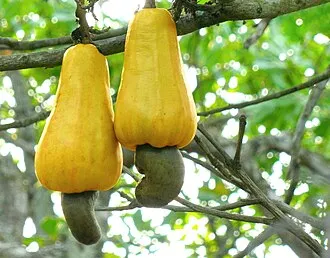
Cashew (Anacardium occidentale) is a tropical tree from the gum family (Anacardiaceae). It originates from Brazil and was introduced to the world thanks to the Portuguese. It grows most densely in the equatorial region.
When the Portuguese invaded Brazil in the early 16th century, they discovered cashew trees and took the seeds to the West African coast. The rainy and humid equatorial climate enabled this tree to quickly settle on the west coast of Africa and spread from countries such as Gabon, Angola and Namibia to East Africa, Mozambique, Kenya and Tanzania.
Apart from Brazil and Africa, cashew is also cultivated on a large scale in India. In terms of production and exports, India is a leader, especially through the Kerala Cashew Association; Brazil ranks second and Africa ranks third. While the harvest in India is usually in May, in Brazil this process coincides with October.
Because the fruit rots quickly, its commercial value is limited; However, the fact that only one peanut can be obtained from each cashew fruit makes it more expensive than other types of peanuts. The seeds are separated from the collected apples, their skins are peeled and consumed by roasting.
The world's largest cashew tree is located in Parnamirim, Brazil. Cashews are frequently eaten in South America and can even be fermented and used to produce alcohol. In Indian and Brazilian cuisines, this delicious peanut is included in various dishes and desserts.