The rule for leap years is that every year divisible by four is a leap year, except for years that are divisible by 100 but not also divisible by 400. For example, 1800 and 1900 were not leap years, but 1600 and 2000 were.
There were two reasons to establish the Gregorian calendar. First, the Julian calendar was based on the estimate that the average solar year is exactly 365.25 days long, an overestimate of a little under one day per century, and thus has a leap year every four years without exception. The Gregorian reform shortened the average (calendar) year by 0.0075 days to stop the drift of the calendar with respect to the equinoxes.
Second, in the years since the First Council of Nicaea in AD 325, the excess leap days introduced by the Julian algorithm had caused the calendar to drift such that the March equinox was occurring well before its nominal 21 March date. This date was important to the Christian churches because it is fundamental to the calculation of the date of Easter.
To reinstate the association, the reform advanced the date by 10 days: Thursday 4 October 1582 was followed by Friday 15 October 1582. In addition, the reform also altered the lunar cycle used by the Church to calculate the date for Easter, because astronomical new moons were occurring four days before the calculated dates.
The reform was adopted initially by the Catholic countries of Europe and their overseas possessions. Over the next three centuries, the Protestant and Eastern Orthodox countries also gradually moved to what they called the "Improved calendar", with Greece being the last European country to adopt the calendar (for civil use only) in 1923.
However, many Orthodox churches continue to use the Julian calendar for religious rites and the dating of major feasts. To unambiguously specify a date during the transition period (in contemporary documents or in history texts), both notations were given, tagged as "Old Style" or "New Style" as appropriate. During the 20th century, most non-Western countries also adopted the calendar, at least for civil purposes.
Description
The Gregorian calendar, like the Julian calendar, is a solar calendar with 12 months of 28–31 days each. The year in both calendars consists of 365 days, with a leap day being added to February in the leap years. The months and length of months in the Gregorian calendar are the same as for the Julian calendar. The only difference is that the Gregorian calendar omits a leap day in three centurial years every 400 years and leaves the leap day unchanged in the fourth.
A leap year normally occurs every four years: the leap day, historically, was inserted by doubling 24 February – there were indeed two days dated 24 February. However, for many years it has been customary to put the extra day at the end of the month of February, adding a 29 February for the leap day. Before the 1969 revision of its General Roman Calendar, the Catholic Church delayed February feasts after the 23rd by one day in leap years; masses celebrated according to the previous calendar still reflect this delay.
- 1 — January — 31
- 2 — February — 28 (29 in leap years)
- 3 — March — 31
- 4 — April — 30
- 5 — May — 31
- 6 — June — 30
- 7 — July — 31
- 8 — August — 31
- 9 — September — 30
- 10 — October — 31
- 11 — November — 30
- 12 — December — 31
Gregorian years are identified by consecutive year numbers. A calendar date is fully specified by the year (numbered according to a calendar era, in this case Anno Domini or Common Era), the month (identified by name or number), and the day of the month (numbered sequentially starting from 1). Although the calendar year currently runs from 1 January to 31 December, at previous times year numbers were based on a different starting point within the calendar .
Calendar cycles (ignoring lunar and Easter calculations) repeat completely every 400 years, which equals 146,097 days. Of these 400 years, 303 are regular years of 365 days and 97 are leap years of 366 days. A mean calendar year is 365+97/400 days = 365.2425 days, or 365 days, 5 hours, 49 minutes and 12 seconds. The cycle contains exactly 20,871 weeks (146,097 = 7 × 20,871).
Gregorian reform
The Gregorian calendar was a reform of the Julian calendar. It was instituted by the papal bull Inter gravissimas dated 24 February 1582 by Pope Gregory XIII, after whom the calendar is named. The motivation for the adjustment was to bring the date for the celebration of Easter to the time of year in which it was celebrated when it was introduced by the early Church.
The error in the Julian calendar (its assumption that there are exactly 365.25 days in a year) had led to the date of the equinox according to the calendar drifting from the observed reality, and thus an error had been introduced into the calculation of the date of Easter. Although a recommendation of the First Council of Nicaea in 325 specified that all Christians should celebrate Easter on the same day, it took almost five centuries before virtually all Christians achieved that objective by adopting the rules of the Church of Alexandria (see Easter for the issues which arose).
Background
Because the date of Easter is a function – the computus – of the date of the spring equinox in the northern hemisphere, the Catholic Church considered the increasing divergence between the canonical date of the equinox and observed reality to be unacceptable. Easter is celebrated on the Sunday after the ecclesiastical full moon on or after 21 March, which was adopted as an approximation to the March equinox. European scholars had been well aware of the calendar drift since the early medieval period.
Bede, writing in the 8th century, showed that the accumulated error in his time was more than three days. Roger Bacon, c. 1200, estimated the error at seven or eight days. Dante, writing c. 1300, was aware of the need for calendar reform.
An attempt to go forward with such a reform was undertaken by Pope Sixtus IV, who in 1475 invited Regiomontanus to the Vatican for this purpose. However, the project was interrupted by the death of Regiomontanus shortly after his arrival in Rome. The increase of astronomical knowledge and the precision of observations towards the end of the 15th century made the question more pressing.
Numerous publications over the following decades called for a calendar reform, among them two papers sent to the Vatican by the University of Salamanca in 1515 and 1578, but the project was not taken up again until the 1540s, and implemented only under Pope Gregory XIII (r. 1572–1585).
Preparation
In 1545, the Council of Trent authorised Pope Paul III to reform the calendar, requiring that the date of the vernal equinox be restored to that which it held at the time of the First Council of Nicaea in 325 and that an alteration to the calendar be designed to prevent future drift. This would allow for more consistent and accurate scheduling of the feast of Easter.
In 1577, a Compendium was sent to expert mathematicians outside the reform commission for comments. Some of these experts, including Giambattista Benedetti and Giuseppe Moleto, believed Easter should be computed from the true motions of the Sun and Moon, rather than using a tabular method, but these recommendations were not adopted. The reform adopted was a modification of a proposal made by the Calabrian doctor Aloysius Lilius (or Lilio).
Lilius's proposal included reducing the number of leap years in four centuries from 100 to 97, by making three out of four centurial years common instead of leap years. He also produced an original and practical scheme for adjusting the epacts of the Moon when calculating the annual date of Easter, solving a long-standing obstacle to calendar reform.
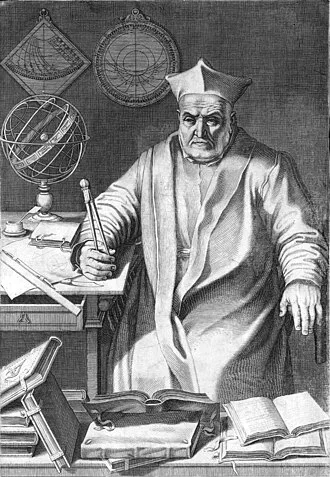
Ancient tables provided the Sun's mean longitude. The German mathematician Christopher Clavius, the architect of the Gregorian calendar, noted that the tables agreed neither on the time when the Sun passed through the vernal equinox nor on the length of the mean tropical year. Tycho Brahe also noticed discrepancies. The Gregorian leap year rule (97 leap years in 400 years) was put forward by Petrus Pitatus of Verona in 1560.
He noted that it is consistent with the tropical year of the Alfonsine tables and with the mean tropical year of Copernicus (De revolutionibus) and Erasmus Reinhold (Prutenic tables). The three mean tropical years in Babylonian sexagesimals as the excess over 365 days (the way they would have been extracted from the tables of mean longitude) were 0;14,33,9,57 (Alfonsine), 0;14,33,11,12 (Copernicus) and 0;14,33,9,24 (Reinhold).
In decimal notation, these are equal to 0.24254606, 0.24255185, and 0.24254352, respectively. All values are the same to two sexagesimal places (0;14,33, equal to decimal 0.2425) and this is also the mean length of the Gregorian year. Thus Pitatus's solution would have commended itself to the astronomers.
Lilius's proposals had two components. First, he proposed a correction to the length of the year. The mean tropical year is 365.24219 days long. A commonly used value in Lilius's time, from the Alfonsine tables, is 365.2425463 days. As the average length of a Julian year is 365.25 days, the Julian year is almost 11 minutes longer than the mean tropical year.
The discrepancy results in a drift of about three days every 400 years. Lilius's proposal resulted in an average year of 365.2425 days . At the time of Gregory's reform, there had already been a drift of 10 days since the Council of Nicaea, resulting in the vernal equinox falling on 10 or 11 March instead of the ecclesiastically fixed date of 21 March, and if unreformed it would have drifted further.
Lilius proposed that the 10-day drift should be corrected by deleting the Julian leap day on each of its ten occurrences over a period of forty years, thereby providing for a gradual return of the equinox to 21 March.
Lilius's work was expanded upon by Christopher Clavius in a closely argued, 800-page volume. He would later defend his and Lilius's work against detractors. Clavius's opinion was that the correction should take place in one move, and it was this advice that prevailed with Gregory.
The second component consisted of an approximation that would provide an accurate yet simple, rule-based calendar. Lilius's formula was a 10-day correction to revert the drift since the Council of Nicaea, and the imposition of a leap day in only 97 years in 400 rather than in 1 year in 4. The proposed rule was that "years divisible by 100 would be leap years only if they were divisible by 400 as well".
The 19-year cycle used for the lunar calendar required revision because the astronomical new moon was, at the time of the reform, four days before the calculated new moon. It was to be corrected by one day every 300 or 400 years (8 times in 2,500 years) along with corrections for the years that were no longer leap years (i.e. 1700, 1800, 1900, 2100, etc.) In fact, a new method for computing the date of Easter was introduced. The method proposed by Lilius was revised somewhat in the final reform.
When the new calendar was put in use, the error accumulated in the 13 centuries since the Council of Nicaea was corrected by a deletion of 10 days. The Julian calendar day Thursday, 4 October 1582 was followed by the first day of the Gregorian calendar, Friday, 15 October 1582 (the cycle of weekdays was not affected).
First printed Gregorian calendar
A month after decreeing the reform, the pope (with a brief of 3 April 1582) granted to one Antoni Lilio the exclusive right to publish the calendar for a period of ten years. The Lunario Novo secondo la nuova riforma was printed by Vincenzo Accolti, one of the first calendars printed in Rome after the reform, notes at the bottom that it was signed with papal authorization and by Lilio (Con licentia delli Superiori... et permissu Ant(onii) Lilij).
The papal brief was revoked on 20 September 1582, because Antonio Lilio proved unable to keep up with the demand for copies.
Adoption
Although Gregory's reform was enacted in the most solemn of forms available to the Church, the bull had no authority beyond the Catholic Church (of which he was the supreme religious authority) and the Papal States (which he personally ruled). The changes that he was proposing were changes to the civil calendar, which required adoption by the civil authorities in each country to have legal effect.
The bull Inter gravissimas became the law of the Catholic Church in 1582, but it was not recognised by Protestant churches, Eastern Orthodox churches, Oriental Orthodox churches, and a few others. Consequently, the days on which Easter and related holidays were celebrated by different Christian churches again diverged.
On 29 September 1582, Philip II of Spain decreed the change from the Julian to the Gregorian calendar. This affected much of Roman Catholic Europe, as Philip was at the time ruler over Spain and Portugal as well as much of Italy. In these territories, as well as in the Polish–Lithuanian Commonwealth and in the Papal States, the new calendar was implemented on the date specified by the bull, with Julian Thursday, 4 October 1582, being followed by Gregorian Friday, 15 October.
The Spanish and Portuguese colonies followed somewhat later de facto because of delay in communication. The other major Catholic power of Western Europe, France, adopted the change a few months later: 9 December was followed by 20 December.
Many Protestant countries initially objected to adopting a Catholic innovation; some Protestants feared the new calendar was part of a plot to return them to the Catholic fold. For example, the British could not bring themselves to adopt the Catholic system explicitly: the Annexe to their Calendar (New Style) Act 1750 established a computation for the date of Easter that achieved the same result as Gregory's rules, without actually referring to him.
Britain and the British Empire (including the eastern part of what is now the United States) adopted the Gregorian calendar in 1752. Sweden followed in 1753.
Prior to 1917, Turkey used the lunar Islamic calendar with the Hijri era for general purposes and the Julian calendar for fiscal purposes. The start of the fiscal year was eventually fixed at 1 March and the year number was roughly equivalent to the Hijri year (see Rumi calendar). As the solar year is longer than the lunar year, this originally entailed the use of "escape years" every so often when the number of the fiscal year would jump.
From 1 March 1917, the fiscal year became Gregorian, rather than Julian. On 1 January 1926, the use of the Gregorian calendar was extended to include use for general purposes and the number of the year became the same as in most other countries.
Adoption by country
- 1582 — Spain, Portugal, France, Polish–Lithuanian Commonwealth, Italy, Catholic Low Countries, Luxembourg, and colonies thereof
- 1584 — Bohemia, some Catholic Swiss cantons
- 1610 — Prussia
- 1648 — Alsace
- 1682 — Strasbourg
- 1700 — Protestant Low Countries, Denmark–Norway, some Protestant Swiss cantons
- 1752 — Great Britain, Ireland, and the "First" British Empire (1707–1783)
- 1753 — Sweden, including Finland
- 1873 — Japan
- 1875 — Egypt
- 1896 — Korea
- 1912 — China, Albania
- 1915 — Latvia, Lithuania
- 1916 — Bulgaria
- 1917 — Ottoman Empire
- 1918 — Ukraine, Russia, Estonia
- 1919 — Romania, Yugoslavia
- 1923 — Greece
- 1926 — Turkey (common era years; Gregorian dates in use since 1917 Ottoman adoption)
- 2016 — Saudi Arabia
Difference between Gregorian and Julian calendar dates
- From 15 October 1582to 28 February 1700 — From 5 October 1582to 18 February 1700 — 10 days
- From 1 March 1700to 28 February 1800 — From 19 February 1700to 17 February 1800 — 11 days
- From 1 March 1800to 28 February 1900 — From 18 February 1800to 16 February 1900 — 12 days
- From 1 March 1900to 28 February 2100 — From 17 February 1900to 15 February 2100 — 13 days
- From 1 March 2100to 28 February 2200 — From 16 February 2100to 14 February 2200 — 14 days
This section always places the intercalary day on 29 February even though it was always obtained by doubling 24 February (the bissextum (twice sixth) or bissextile day) until the late Middle Ages. The Gregorian calendar is proleptic before 1582 (calculated backwards on the same basis, for years before 1582), and the difference between Gregorian and Julian calendar dates increases by three days every four centuries (all date ranges are inclusive).
The following equation gives the number of days that the Gregorian calendar is ahead of the Julian calendar, called the "secular difference" between the two calendars. A negative difference means the Julian calendar is ahead of the Gregorian calendar. where is the secular difference and is the year using astronomical year numbering, that is, use 1 − (year BC) for BC years. means that if the result of the division is not an integer it is rounded down to the nearest integer.



The general rule, in years which are leap years in the Julian calendar but not the Gregorian, is:
Up to 28 February in the calendar being converted from, add one day less or subtract one day more than the calculated value. Give February the appropriate number of days for the calendar being converted into. When subtracting days to calculate the Gregorian equivalent of 29 February (Julian), 29 February is discounted. Thus if the calculated value is −4 the Gregorian equivalent of this date is 24 February.
Beginning of the year
- Roman Republic,Roman Empire — 153 BC
- Denmark — Gradual change from13th to 16th centuries — 1700
- Republic of Venice — 1522 — 1582
- Papal States — 1583 — 1582
- Holy Roman Empire(Catholic states) — 1544 — 1583
- Spain, Poland, Portugal — 1556 — 1582
- Holy Roman Empire(Protestant states) — 1559 — 1700
- Sweden — 1559 — 1753
- France — 1564 — 1582
- Southern Netherlands — 1576 — 1582
- Lorraine — 1579 — 1582
- Netherlands — 1583 — 1582
- Scotland — 1600 — 1752
- Russia — 1700 — 1918
- Tuscany — 1750 — 1582
- Great Britain andthe British Empireexcept Scotland — 1752 — 1752
The year used in dates during the Roman Republic and the Roman Empire was the consular year, which began on the day when consuls first entered office—probably 1 May before 222 BC, 15 March from 222 BC and 1 January from 153 BC. The Julian calendar, which began in 45 BC, continued to use 1 January as the first day of the new year.
Even though the year used for dates changed, the civil year always displayed its months in the order January to December from the Roman Republican period until the present.
During the Middle Ages, under the influence of the Catholic Church, many Western European countries moved the start of the year to one of several important Christian festivals—25 December (Christmas), 25 March (Annunciation), or Easter, while the Byzantine Empire began its year on 1 September and Russia did so on 1 March until 1492, when the new year was moved to 1 September.
In common usage, 1 January was regarded as New Year's Day and celebrated as such, but, from the 12th century until 1751, the legal year in England began on 25 March (Lady Day). So, for example, the Parliamentary record lists the execution of Charles I on 30 January as occurring in 1648 (as the year did not end until 24 March), although later histories adjust the start of the year to 1 January and record the execution as occurring in 1649.
Most Western European countries changed the start of the year to 1 January before they adopted the Gregorian calendar. For example, Scotland changed the start of the Scottish New Year to 1 January in 1600 (this meant that 1599 was a short year). England, Ireland and the British colonies changed the start of the year to 1 January in 1752 (so 1751 was a short year with only 282 days).
Then, in September 1752, the Gregorian calendar was introduced throughout Britain and the British colonies (see the section Adoption). These two reforms were implemented by the Calendar (New Style) Act 1750.
In some countries, an official decree or law specifies that the start of the year should be 1 January. For such countries, a specific date when a "1 January year" became the norm, can be identified. In other countries, customs varied, and the start of the year moved back and forth as fashion and influence from other countries dictated various customs.
Neither the papal bull nor its attached canons explicitly fix such a date, though the latter states that the "Golden number" of 1752 ends in December and a new year (and new Golden number) begins in January 1753.
Dual dating
During the period between 1582, when the first countries adopted the Gregorian calendar, and 1923, when the last European country adopted it, it was often necessary to indicate the date of some event in both the Julian calendar and in the Gregorian calendar, for example, "10/21 February 1750/51", where the dual year accounts for some countries already beginning their numbered year on 1 January while others were still using some other date.
Even before 1582, the year sometimes had to be double-dated because of the different beginnings of the year in various countries. Woolley, writing in his biography of John Dee (1527–1608/9), notes that immediately after 1582 English letter writers "customarily" used "two dates" on their letters, one OS and one NS.
Old Style and New Style dates
"Old Style" (O.S.) and "New Style" (N.S.) indicate dating systems before and after a calendar change, respectively. Usually, this is the change from the Julian calendar to the Gregorian calendar as enacted in various European countries between 1582 and the early 20th century.
In England, Wales, Ireland, and Britain's American colonies, there were two calendar changes, both in 1752. The first adjusted the start of a new year from Lady Day (25 March) to 1 January (which Scotland had done from 1600), while the second discarded the Julian calendar in favour of the Gregorian calendar, removing 11 days from the September 1752 calendar to do so.
To accommodate the two calendar changes, writers used dual dating to identify a given day by giving its date according to both styles of dating.
For countries such as Russia where no start of year adjustment took place, O.S. and N.S. simply indicate the Julian and Gregorian dating systems. Many Eastern Orthodox countries continue to use the older Julian calendar for religious purposes.