The territory of modern Guatemala hosted the core of the Maya civilization, which extended across Mesoamerica; in the 16th century, most of this was conquered by the Spanish and claimed as part of the viceroyalty of New Spain. Guatemala attained independence from Spain and Mexico in 1821. From 1823 to 1841, it was part of the Federal Republic of Central America.
For the latter half of the 19th century, Guatemala suffered instability and civil strife. From the early 20th century, it was ruled by a series of dictators backed by the United States. In 1944, authoritarian leader Jorge Ubico was overthrown by a pro-democratic military coup, initiating a decade-long revolution that led to social and economic reforms.
In 1954, a U.S.-backed military coup ended the revolution and installed a dictatorship. From 1960 to 1996, Guatemala endured a bloody civil war fought between the U.S.-backed government and leftist communist rebels backed by the USSR/Cuba, including genocidal massacres of the Maya population perpetrated by the Guatemalan military.
The United Nations negotiated a peace accord, resulting in economic growth and successive democratic elections.
Guatemala's abundance of biologically significant and unique ecosystems includes many endemic species and contributes to Mesoamerica's designation as a biodiversity hotspot. Although rich in export goods, around a quarter of the population (4.6 million) face food insecurity; other major issues include poverty, crime, corruption, drug trafficking, and civil instability.
With an estimated population of around 17.6 million, Guatemala is the most populous country in Central America, the fourth most populous country in North America and the 11th most populous country in the Americas. Its capital and largest city, Guatemala City, is the second most populous city in Central America, and its metro area is the most populous in Central America.
Etymology
The name "Guatemala" comes from the Nahuatl word Cuauhtēmallān, or "place of many trees", a derivative of the K'iche' Mayan word for "many trees" or, perhaps more specifically, for the Cuate/Cuatli tree Eysenhardtia. This name was originally used by the Mexica to refer to the Kaqchikel city of Iximche, but was extended to refer to the whole country during the Spanish colonial period.
The official name of the country is the Republic of Guatemala (República de Guatemala), by a decree from 21 March 1847, and prior to that it was the State of Guatemala (Estado de Guatemala) from 17 April 1839.
History
Pre-Columbian
The first evidence of human habitation in Guatemala dates to 12,000 BC. Archaeological evidence, such as obsidian arrowheads found in various parts of the country, suggests a human presence as early as 18,000 BC. There is archaeological proof that early Guatemalan settlers were hunter-gatherers. Maize cultivation had been developed by 3500 BC.
Sites dating to 6500 BC have been found in the Quiché region in the Guatemalan Highlands, and in Sipacate and Escuintla on the central Pacific coast.
Archaeologists divide the pre-Columbian history of Mesoamerica into the Preclassic period (2000 BC to 250 AD), the Classic period (250 to 900 AD), and the Postclassic period (900 to 1500 AD). Until recently, the Preclassic was regarded by researchers as a formative period, in which the peoples typically lived in huts in small villages of farmers, with few permanent buildings.
This notion has been challenged since the late 20th century by discoveries of monumental architecture from that period, such as the Mirador Basin cities of Nakbé, Xulnal, El Tintal, Wakná, and El Mirador.
The Classic period of Mesoamerican civilization corresponds to the height of the Maya civilization. It is represented by countless sites throughout Guatemala, although the largest concentration is in Petén. This period is characterized by urbanization, the emergence of independent city-states, and contact with other Mesoamerican cultures.
This lasted until approximately 900 AD, when the Classic Maya civilization collapsed. The Maya abandoned many of the cities of the central lowlands or died during a drought-induced famine. The cause of the collapse is debated, but the drought theory is gaining currency, supported by evidence such as lakebeds, ancient pollen, and others.
A series of prolonged droughts in what is otherwise a seasonal desert is thought to have decimated the Maya, who relied on regular rainfall to support their dense population.
The Post-Classic period is represented by regional kingdoms, such as the Itza, Kowoj, Yalain and Kejache in Petén, and the Mam, Ki'che', Kackchiquel, Chajoma, Tz'utujil, Poqomchi', Q'eqchi' and Ch'orti' peoples in the highlands. Their cities preserved many aspects of Maya culture.
The Maya civilization shares many features with other Mesoamerican civilizations due to the high degree of interaction and cultural diffusion that characterized the region. Advances such as writing, epigraphy, and the calendar did not originate with the Maya; however, their civilization fully developed them. Maya influence can be detected from Honduras, Belize, Guatemala, and Northern El Salvador to as far north as central Mexico, more than 1,000 km (620 mi) from the Maya area.
Many outside influences are found in Maya art and architecture, which are thought to have resulted from trade and cultural exchange rather than direct external conquest.
Spanish era (1519–1821)
The Spanish conquest of Guatemala began in the early 16th century, led by conquistador Pedro de Alvarado, who was appointed by Hernán Cortés to extend Spanish control into Central America. In 1523–1524, Alvarado launched a military campaign into the Guatemalan highlands, initially allying with the Kaqchikel Maya to defeat their rivals, the K'iche' (Quiché) Maya.
Relations with the Kaqchikel soon deteriorated, leading to further conflict and eventual Spanish dominance over the region.
The Spanish incursion introduced devastating epidemics, including smallpox, which significantly reduced the indigenous population even before full military conquest was achieved. In 1524, the Spanish established their first capital, Villa de Santiago de Guatemala, near the ruins of Iximché, the former Kaqchikel capital. This settlement was later relocated to the Almolonga Valley (present-day Ciudad Vieja) in 1527 due to indigenous resistance.
On 11 September 1541, a catastrophic lahar from Volcán de Agua destroyed Ciudad Vieja, prompting the relocation of the capital to the Panchoy Valley, where it was renamed Santiago de los Caballeros de Guatemala (now Antigua Guatemala). In 1542, the region was formally organized as the Captaincy General of Guatemala (Capitanía General de Guatemala), a subdivision of the Viceroyalty of New Spain.
Later renamed the Kingdom of Guatemala (a province of Spain), this administrative unit encompassed present-day Guatemala, Belize, El Salvador, Honduras, Nicaragua, Costa Rica, and the Mexican state of Chiapas.
Due to its strategic location on the Pacific coast, Guatemala became integrated into the Manila Galleon trade network, which connected Spanish colonies in Asia and the Americas between 1565 and 1815. Goods such as silver, porcelain, silk, and spices passed through Guatemala en route between Manila and Acapulco.
In 1773, the Santa Marta earthquakes devastated Antigua Guatemala, leading to the relocation of the capital to its current site in the Ermita Valley. The new city, officially founded in 1776, became known as La Nueva Guatemala de la Asunción (modern-day Guatemala City).
Independence and Central America (1821–1847)
On 15 September 1821, the Captaincy General of Guatemala officially proclaimed its independence from Spain at a public meeting in Guatemala City. Independence from Spain was gained, and the Captaincy General of Guatemala joined the First Mexican Empire under Agustín de Iturbide.
Under the First Mexican Empire, Mexico reached its greatest territorial extent, stretching from northern California to the provinces of Central America (excluding Panama, which was then part of Gran Colombia), which had not initially approved becoming part of the Mexican Empire but joined the Empire shortly after their independence.
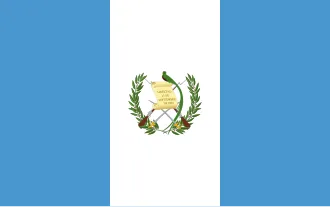
This region was formally a part of the Viceroyalty of New Spain throughout the colonial period, but as a practical matter had been administered separately from Mexico. It was not until 1825 that Guatemala created its own flag.
In 1838, the liberal forces of Honduran leader Francisco Morazán and Guatemalan José Francisco Barrundia invaded Guatemala and reached San Sur, where they executed Chúa Alvarez, father-in-law of Rafael Carrera, then a military commander and later the first president of Guatemala. The liberal forces impaled Alvarez's head on a pike as a warning to followers of the Guatemalan caudillo.
Carrera and his wife Petrona – who had come to confront Morazán as soon as they learned of the invasion and were in Mataquescuintla – swore they would never forgive Morazán even in his grave; they felt it impossible to respect anyone who would not avenge family members.
After sending several envoys, whom Carrera would not receive – and especially not Barrundia whom Carrera did not want to murder in cold blood – Morazán began a scorched-earth offensive, destroying villages in his path and stripping them of assets. The Carrera forces had to hide in the mountains. Believing Carrera totally defeated, Morazán and Barrundia marched to Guatemala City, and were welcomed as saviors by state governor Pedro Valenzuela and members of the conservative Aycinena clan, who proposed to sponsor one of the liberal battalions, while Valenzuela and Barrundia gave Morazán all the Guatemalan resources needed to solve any financial problem he had.
The criollos of both parties celebrated until dawn that they finally had a criollo caudillo like Morazán, who was able to crush the peasant rebellion.
Morazán used the proceeds to support Los Altos and then replaced Valenzuela with Mariano Rivera Paz, a member of the Aycinena clan, although he did not return to that clan any property confiscated in 1829. In revenge, Juan José de Aycinena y Piñol voted to dissolve the Central American Federation in San Salvador a little later, forcing Morazán to return to El Salvador to fight for his federal mandate. Along the way, Morazán increased repression in eastern Guatemala, as punishment for helping Carrera.
Knowing that Morazán had gone to El Salvador, Carrera tried to take Salamá with the small force that remained, but was defeated, and lost his brother Laureano in combat. With just a few men left, he managed to escape, badly wounded, to Sanarate. After recovering somewhat, he attacked a detachment in Jutiapa and got a small amount of booty which he gave to the volunteers who accompanied him.
He then prepared to attack Petapa near Guatemala City, where he was victorious, although with heavy casualties.
In September 1839, Carrera attempted an assault on the capital of Guatemala, but the liberal general Carlos Salazar Castro defeated him in the fields of Villa Nueva and Carrera had to retreat. After unsuccessfully trying to take Quetzaltenango, Carrera found himself both surrounded and wounded. He had to capitulate to Mexican General Agustín Guzmán, who had been in Quetzaltenango since Vicente Filísola's arrival in 1823.
Morazán had the opportunity to shoot Carrera, but did not, because he needed the support of the Guatemalan peasants to counter the attacks of Francisco Ferrera in El Salvador. Instead, Morazán left Carrera in charge of a small fort in Mita, without any weapons. Knowing that Morazán was going to attack El Salvador, Francisco Ferrera gave arms and ammunition to Carrera and convinced him to attack Guatemala City.
Meanwhile, despite insistent advice to definitively crush Carrera and his forces, Salazar tried to negotiate with him diplomatically; he even went as far as to show that he neither feared nor distrusted Carrera by removing the fortifications of the Guatemalan capital, in place since the battle of Villa Nueva. Taking advantage of Salazar's good faith and Ferrera's weapons, Carrera took Guatemala City by surprise on 13 April 1839; Salazar, Mariano Gálvez and Barrundia fled before the arrival of Carrera's militiamen.
Salazar, in his nightshirt, vaulted roofs of neighboring houses and sought refuge, reaching the border disguised as a peasant. With Salazar gone, Carrera reinstated Rivera Paz as head of state.
Between 1838 and 1840 a secessionist movement in the city of Quetzaltenango founded the breakaway state of Los Altos and sought independence from Guatemala. The most important members of the Liberal Party of Guatemala and liberal enemies of the conservative régime moved to Los Altos, leaving their exile in El Salvador.
The liberals in Los Altos began severely criticizing the Conservative government of Rivera Paz. Los Altos was the region with the main production and economic activity of the former state of Guatemala. Without Los Altos, conservatives lost many of the resources that had given Guatemala hegemony in Central America. The government of Guatemala tried to reach a peaceful solution, but two years of bloody conflict followed.
On 17 April 1839, Guatemala declared itself independent from the United Provinces of Central America. In 1840, Belgium began to act as an external source of support for Carrera's independence movement, in an effort to exert influence in Central America. The Compagnie belge de colonisation (Belgian Colonization Company), commissioned by Belgian King Leopold I, became the administrator of Santo Tomas de Castilla replacing the failed British Eastern Coast of Central America Commercial and Agricultural Company.
Even though the colony eventually crumbled, Belgium continued to support Carrera in the mid-19th century, although Britain continued to be the main business and political partner to Carrera. Rafael Carrera was elected Guatemalan Governor in 1844.
Republic
On 21 March 1847, Guatemala declared itself an independent republic and Carrera became its first president.
Carrera government (1847–1851)
During the first term as president, Carrera brought the country back from extreme conservatism to a traditional moderation; in 1848, the liberals were able to drive him from office, after the country had been in turmoil for several months. Carrera resigned of his own free will and left for México. The new liberal regime allied itself with the Aycinena family and swiftly passed a law ordering Carrera's execution if he returned to Guatemalan soil.
The liberal criollos from Quetzaltenango were led by general Agustín Guzmán who occupied the city after Corregidor general Mariano Paredes was called to Guatemala City to take over the presidential office. They declared on 26 August 1848 that Los Altos was an independent state once again. The new state had the support of Doroteo Vasconcelos' régime in El Salvador and the rebel guerrilla army of Vicente and Serapio Cruz, who were sworn enemies of Carrera.
The interim government was led by Guzmán himself and had Florencio Molina and the priest Fernando Davila as his Cabinet members. On 5 September 1848, the criollos altenses chose a formal government led by Fernando Antonio Martínez.
In the meantime, Carrera decided to return to Guatemala and did so, entering at Huehuetenango, where he met with native leaders and told them that they must remain united to prevail; the leaders agreed and slowly the segregated native communities started developing a new Indian identity under Carrera's leadership. In the meantime, in the eastern part of Guatemala, the Jalapa region became increasingly dangerous; former president Mariano Rivera Paz and rebel leader Vicente Cruz were both murdered there after trying to take over the Corregidor office in 1849.
When Carrera arrived to Chiantla in Huehuetenango, he received two altenses emissaries who told him that their soldiers were not going to fight his forces because that would lead to a native revolt, much like that of 1840; their only request from Carrera was to keep the natives under control. The altenses did not comply, and led by Guzmán and his forces, they started chasing Carrera; the caudillo hid, helped by his native allies and remained under their protection when the forces of Miguel Garcia Granados arrived from Guatemala City looking for him.
On learning that officer José Víctor Zavala had been appointed as Corregidor in Suchitepéquez, Carrera and his hundred jacalteco bodyguards crossed a dangerous jungle infested with jaguars to meet his former friend. Zavala not only did not capture him, he agreed to serve under his orders, thus sending a strong message to both liberal and conservatives in Guatemala City that they would have to negotiate with Carrera or battle on two fronts – Quetzaltenango and Jalapa.
Carrera went back to the Quetzaltenango area, while Zavala remained in Suchitepéquez as a tactical maneuver. Carrera received a visit from a cabinet member of Paredes and told him that he had control of the native population and that he assured Paredes that he would keep them appeased. When the emissary returned to Guatemala City, he told the president everything Carrera said, and added that the native forces were formidable.
Guzmán went to Antigua to meet with another group of Paredes emissaries; they agreed that Los Altos would rejoin Guatemala, and that the latter would help Guzmán defeat his enemy and also build a port on the Pacific Ocean. Guzmán was sure of victory this time, but his plan evaporated when in his absence Carrera and his native allies occupied Quetzaltenango; Carrera appointed Ignacio Yrigoyen as Corregidor and convinced him that he should work with the K'iche', Q'anjobal and Mam leaders to keep the region under control. On his way out, Yrigoyen murmured to a friend: "Now he is the king of the Indians, indeed!"
Guzmán then left for Jalapa, where he struck a deal with the rebels, while Luis Batres Juarros convinced President Paredes to deal with Carrera. Back in Guatemala City within a few months, Carrera was commander-in-chief, backed by military and political support of the Indian communities from the densely populated western highlands.
During the first presidency, from 1844 to 1848, he brought the country back from excessive conservatism to a moderate regime, and – with the advice of Juan José de Aycinena y Piñol and Pedro de Aycinena – restored relations with the Church in Rome with a Concordat ratified in 1854.
Second Carrera government (1851–1865)
After Carrera returned from exile in 1849 the president of El Salvador, Doroteo Vasconcelos, granted asylum to the Guatemalan liberals, who harassed the Guatemalan government in several different ways. José Francisco Barrundia established a liberal newspaper for that specific purpose. Vasconcelos supported a rebel faction named "La Montaña" in eastern Guatemala, providing and distributing money and weapons.
By late 1850, Vasconcelos was getting impatient at the slow progress of the war with Guatemala and decided to plan an open attack. Under that circumstance, the Salvadorean head of state started a campaign against the conservative Guatemalan regime, inviting Honduras and Nicaragua to participate in the alliance; only the Honduran government led by Juan Lindo accepted. In 1851 Guatemala defeated an Allied army from Honduras and El Salvador at the Battle of La Arada.
In 1854 Carrera was declared "supreme and perpetual leader of the nation" for life, with the power to choose his successor. He held that position until he died on 14 April 1865. While he pursued some measures to set up a foundation for economic prosperity to please the conservative landowners, military challenges at home and a three-year war with Honduras, El Salvador, and Nicaragua dominated his presidency.
His rivalry with Gerardo Barrios, President of El Salvador, resulted in open war in 1863. At Coatepeque the Guatemalans suffered a severe defeat, which was followed by a truce. Honduras joined with El Salvador, and Nicaragua and Costa Rica with Guatemala. The contest was finally settled in favor of Carrera, who besieged and occupied San Salvador, and dominated Honduras and Nicaragua.
He continued to act in concert with the Clerical Party, and tried to maintain friendly relations with European governments. Before he died, Carrera nominated his friend and loyal soldier, Army Marshall Vicente Cerna y Cerna, as his successor.
Vicente Cerna y Cerna regime (1865–1871)
Vicente Cerna y Cerna was president of Guatemala from 24 May 1865 to 29 June 1871. Liberal author Alfonso Enrique Barrientos, described Marshall Cerna's government in the following manner:
A conservative and archaic government, badly organized and with worse intentions, was in charge of the country, centralizing all powers in Vicente Cerna, ambitious military man, who not happy with the general rank, had promoted himself to the Army Marshall rank, even though that rank did not exist and it does not exist in the Guatemalan military. The Marshall called himself President of the Republic, but in reality he was the foreman of oppressed and savaged people, cowardly enough that they had not dared to tell the dictator to leave threatening him with a revolution.