Other names used for those living in the city are Manceaux and Mancelles.
History
The city of Le Mans was the home of the ancestors of the Plantagenet Dynasty, which came to rule the Duchy of Normandy (1144), the Kingdom of England (1154), the Kingdom of Jerusalem (1131) and the Duchy of Aquitaine (1153), and the Valois Dynasty, which came to power the Kingdom of France in 1328.
Le Mans XVI. It was the center of the "Maine et du Perche" province of the former Kingdom of France from the 19th century until the French Revolution.
The city of Le Mans boasts of being the city that signed the first German-French city agreement. In 836 Le Mans signed a treaty of European alliance with the German city of Paderborn, and the townspeople of Le Mans boast that it is a nucleus of the European Union.
Population
The population of the city within the municipal borders (as of 2007) is 148,340, and the population in the "Le Mans Metro" urbanization area with its surrounding suburbs is 303,289. It is the third largest city in the "Pays de la Loire" region, after Nantes and Angers. "Le Mans Metropolitaine", the metropolitan region within the urbanization area, ranks 16th in France.
Approximately 1,100 Turks live in the city center.
"Le Mans 24 hour races" and other sporting events
The city of Le Mans attracts great attention from auto sports lovers around the world by organizing automobile races called "24 Heures du Mans" every year since 1923. Due to the mechanical industry in the city, Le Mans contributed greatly to the birth of the automobile and created the "French Grand Prix" auto race for the first time in 1906.
Similarly, the city of Le Mans has contributed greatly to the establishment and development of sportive motorcycle racing, and today it is the leading city in France in this sport according to the number of sportive motorcycle competitions organized.
places to see
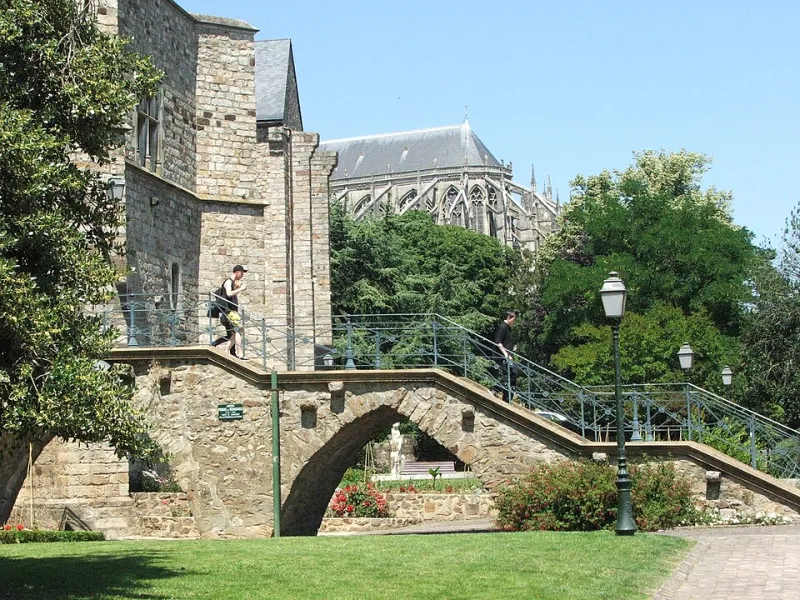
- The central district of the city, dating back to the 3rd century, called "Cité Plantagenêt" or "Vieux Mans (Old Mans)", constitutes the historical center of the city of Le Mans, which has been preserved to this day. It is called the "red city" due to the special architectural qualities of the ancient Mans stone buildings.
- As an important center of the Gaelic province of ancient Rome, some of the walls surrounding the city have survived to the present day and attract tourists. There are ruins of an old Roman bath on the banks of the river passing by the city, dating back to the period of the ancient Roman Gaelic province.
- "Saint-Julien Cathedral" in Le Mans was the historical building that attracted the most tourists in the "Pays de la Loire" region in 2009.
- Another historical tourist attraction in Le Mans is the palace of the Dukes of Maine.
- In the city of Le Mans, a "sound and light (son et lumiere)" show is prepared and presented every summer in July and August in the evenings, attracting tourists and spectators. In this show, special attention is drawn to the Roman-Welsh walls and the city's St Julien Cathedral.
sister cities
The city of Le Mans has sister city ties with the following cities:
 Bolton, United Kingdom
 Paderborn, Germany
 Haouza, Western Sahara
 Rostov-on-Don, Russia
 Suzuka, Mie, Japan
 Volos, Greece
 Xianyang, China
pictures
See also
- List of cities in France
- Le Mans 24 Hours
- Le Mans 24 Hours Winners
- Le Mans