















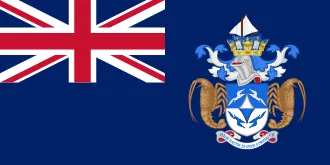
Tristan da Cunha is a collection of islands that are considered part of the African continent and, together with Saint Helena and Ascension, form a territory of the United Kingdom. The most striking feature of these islands is that they are the farthest piece of land where human life exists. Its discovery dates back to 1506, during the voyage of Portuguese sailor Admiral Tristao da Cunha. Tristan da Cunha, a volcanic formation, survives with a population of approximately 275 people.
Tristan da Cunha's geographical location is quite isolated. The closest land to it is Saint Helena Island, located approximately 2,334 kilometers to the north. Its distance from the continent is even greater; The nearest major city, Cape Town, is 2,778 kilometers to the east, in South Africa.
The entire settlement of the island is concentrated in a small town called Edinburgh of the Seven Seas. Tristan da Cunha does not have an airport; A small port serves the island for transportation and basic logistics needs. Basic social facilities are also available for those living in the region. These include a school, a hospital, a post office, a small museum, a patisserie, a bar and a swimming pool for public use.