The British Isles have been continuously inhabited since the Neolithic. In AD 43 the Roman conquest of Britain began. The Roman departure between 383 and 410 was followed by Anglo-Saxon settlement beginning around 450. In 1066 the Normans conquered England. Over the 17th century the role of the British monarchy was reduced, particularly as a result of the English Civil War.
In 1707 the Kingdom of England and the Kingdom of Scotland united under the Treaty of Union to create the Kingdom of Great Britain. The Acts of Union 1800 incorporated the Kingdom of Ireland to create the United Kingdom of Great Britain and Ireland in 1801. Most of Ireland seceded from the UK in 1922 as the Irish Free State, and the Royal and Parliamentary Titles Act 1927 created the present United Kingdom.
The UK became the first industrialised country and was the world's foremost power for the majority of the 19th and early 20th centuries, particularly during the Pax Britannica between 1815 and 1914. The British Empire was the leading economic power for most of the 19th century, a position supported by its agricultural prosperity, its role as a dominant trading nation, a massive industrial capacity, significant technological achievements, and the rise of 19th-century London as the world's principal financial centre.
At its height in the 1920s, the empire encompassed around a quarter of the world's landmass and population, and was the largest in history. However, its involvement in the First World War and in the Second World War damaged Britain's economic power, and a global wave of decolonisation led to the independence of most British colonies.
The UK is a constitutional monarchy and parliamentary democracy with three distinct jurisdictions: England and Wales, Scotland, and Northern Ireland. Scotland, Wales and Northern Ireland have their own governments and parliaments which control various devolved matters. A developed country with an advanced economy, the UK ranks amongst the largest economies by nominal GDP and is one of the world's largest exporters and importers.
As a nuclear state with one of the highest defence budgets, the UK maintains one of the strongest militaries in Europe. British culture is globally influential, notably in the Anglosphere and the Commonwealth; its soft power influence is observable in the legal and political systems of many former colonies, and in its exports of language, literature, theatre, cinema, music, media, art and sport. A great power, the UK is part of numerous international organisations.
Etymology and terminology
The Acts of Union 1707 declared that the Kingdom of England and the Kingdom of Scotland were "United into One Kingdom by the Name of Great Britain". The term "United Kingdom" has occasionally been used for the former Kingdom of Great Britain, although its official name from 1707 to 1800 was simply "Great Britain". The Acts of Union 1800 formed the United Kingdom of Great Britain and Ireland.
Following the partition of Ireland and the independence of the Irish Free State in 1922, which left Northern Ireland as the only part of the island of Ireland within the United Kingdom, the name was changed in 1927 to the "United Kingdom of Great Britain and Northern Ireland".
Although the United Kingdom is a sovereign country, England, Scotland, Wales and Northern Ireland are widely referred to as countries. The UK Prime Minister's website has used the phrase "countries within a country" to describe it. Some statistical summaries, such as those for the twelve NUTS 1 regions, refer to Scotland, Wales and Northern Ireland as "regions".
Northern Ireland is also referred to as a "province". With regard to Northern Ireland, the descriptive name used "can be controversial, with the choice often revealing one's political preferences".
The term "Great Britain" conventionally refers to the island of Great Britain, or politically to England, Scotland and Wales in combination. It is sometimes used as a loose synonym for the United Kingdom as a whole. The word England is occasionally used incorrectly to refer to the United Kingdom as a whole, a mistake principally made by people from outside the UK.
The term "Britain" is used as a synonym for Great Britain, but also sometimes for the United Kingdom. Usage is mixed: the style guide of the UK Government prefers the term "UK" rather than "Britain" or "British" (except when referring to embassies), while other government documents acknowledge that both terms refer to the United Kingdom and that elsewhere "British government" is used at least as frequently as "United Kingdom government".
The UK Permanent Committee on Geographical Names recognises "United Kingdom", "UK" and "U.K." as shortened and abbreviated geopolitical terms for the United Kingdom of Great Britain and Northern Ireland in its toponymic guidelines; it does not list "Britain" but notes that "it is only the one specific nominal term 'Great Britain' which invariably excludes Northern Ireland".
The BBC historically preferred to use "Britain" as shorthand only for Great Britain, though the present style guide does not take a position except that "Great Britain" excludes Northern Ireland.
The adjective "British" is commonly used to refer to matters relating to the United Kingdom and is used in law to refer to United Kingdom citizenship and nationality. People of the United Kingdom use several different terms to describe their national identity and may identify themselves as being British, English, Scottish, Welsh, Northern Irish or Irish; or as having a combination of different national identities.
History
Prior to the Treaty of Union
Settlement by Cro-Magnons of what is now the United Kingdom occurred in waves beginning by about 30,000 years ago. The island has been continuously inhabited since the last retreat of ice around 11,500 years ago. By the end of the region's prehistoric period, the population is thought to have belonged largely to a culture termed Insular Celtic, comprising Brittonic Britain and Gaelic Ireland.
The Roman conquest, beginning in AD 43, and the 400-year rule of southern Britain, was followed by an invasion by Germanic Anglo-Saxon settlers, reducing the Brittonic area mainly to what was to become Wales, Cornwall and, until the latter stages of the Anglo-Saxon settlement, the Hen Ogledd (northern England and parts of southern Scotland).
Most of the region settled by the Anglo-Saxons became unified as the Kingdom of England in the 10th century. Gaelic speakers in north-west Britain (with connections to the north-east of Ireland and traditionally supposed to have migrated from there in the 5th century) united with the Picts to create the Kingdom of Scotland in the 9th century.
In 1066, the Normans invaded England from northern France. After conquering England they seized large parts of Wales, conquered much of Ireland and were invited to settle in Scotland, bringing to each country feudalism on the Northern French model and Norman-French culture. The Anglo-Norman ruling class greatly influenced, but eventually assimilated with, the local cultures.
Subsequent medieval English kings completed the conquest of Wales and tried unsuccessfully to annex Scotland. Asserting its independence in the 1320 Declaration of Arbroath, Scotland maintained its independence thereafter, albeit in near-constant conflict with England.
In 1215, Magna Carta was the first document to state that no government was above the law and that citizens have rights protecting them.
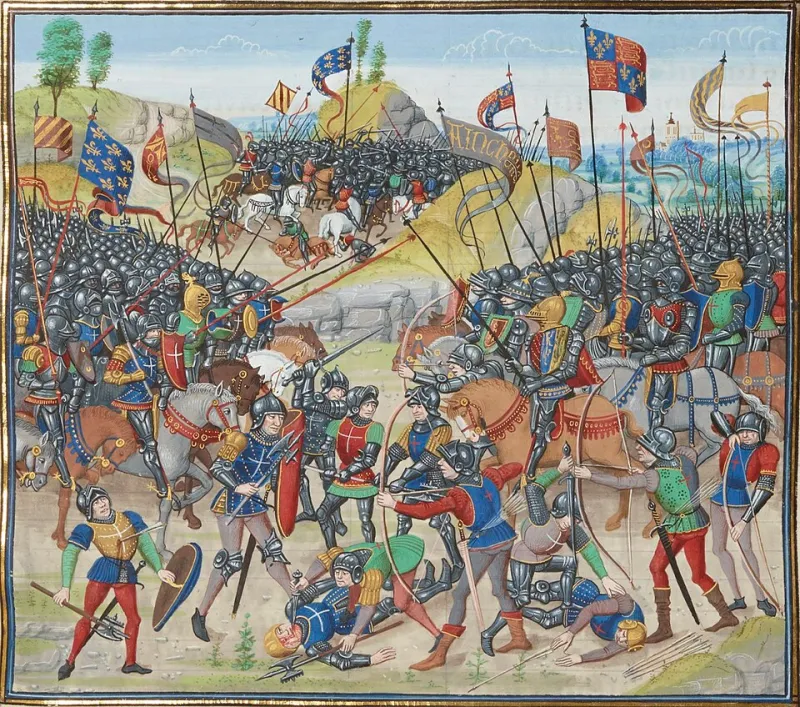
The English monarchs, through inheritance of substantial territories in France and claims to the French crown, were also heavily involved in conflicts in France, most notably the Hundred Years' War, while the Kings of Scots were in an alliance with the French during this period. Early modern Britain saw religious conflict resulting from the Reformation and the introduction of Protestant state churches in each country.
The English Reformation ushered in political, constitutional, social and cultural change in the 16th century and established the Church of England. It defined a national identity for England and slowly, but profoundly, changed people's religious beliefs. Wales was fully incorporated into the Kingdom of England, and Ireland was constituted as a kingdom in personal union with the English crown.
During the Plantation of Ulster in the 17th century, the lands of the Catholic Gaelic nobility were confiscated by the Crown and granted to Protestant settlers from England and Scotland.
The Union of the Crowns occurred in 1603 when James VI of Scotland inherited the thrones of England and Ireland, subsequently moving his court from Edinburgh to London. Although unified under a single monarch, the three realms remained entirely separate political entities, preserving their respective parliaments, judicial systems, and established churches.
In the mid-17th century, all three kingdoms were involved in a series of connected wars (including the English Civil War) which led to the temporary overthrow of the monarchy, with the execution of King Charles I, and the establishment of the short-lived unitary republic of the Commonwealth of England, Scotland and Ireland.
Although the monarchy was restored, the Interregnum along with the Glorious Revolution of 1688 and the subsequent Bill of Rights 1689 in England and Claim of Right Act 1689 in Scotland ensured that, unlike much of the rest of Europe, royal absolutism would not prevail, and a professed Catholic could never accede to the throne.
The British constitution would develop on the basis of constitutional monarchy and the parliamentary system. With the founding of the Royal Society in 1660, science was greatly encouraged. During this period, particularly in England, the development of naval power and an interest in voyages of discovery led to the acquisition and settlement of overseas colonies, particularly in North America and the Caribbean.
Though previous attempts at uniting the two kingdoms within Great Britain in 1606, 1667 and 1689 had proved unsuccessful, the attempt initiated in 1705 led to the Treaty of Union of 1706 being agreed and ratified by both parliaments.
Union of England and Scotland
On 1 May 1707 the Kingdom of Great Britain was formed, the result of the Acts of Union 1707 between the Kingdom of England and Kingdom of Scotland. In the 18th century cabinet government developed under Robert Walpole, who is considered the de facto first prime minister from 1721 to 1742. A series of Jacobite uprisings sought to remove the Protestant House of Hanover from the throne and restore the Catholic House of Stuart.
In 1746, the Jacobites were defeated at the Battle of Culloden, after which the Scottish Highlanders were forcibly assimilated into Scotland by revoking the feudal independence of clan chiefs. The British colonies in North America that broke away in the American War of Independence became the United States. British imperial ambition turned towards Asia, particularly to India.
British merchants played a leading part in the Atlantic slave trade, mainly between 1662 and 1807 when British or British-colonial slave ships transported nearly 3.3 million slaves from Africa. The slaves were taken to work on plantations, principally in the Caribbean but also in North America. However, with pressure from the abolitionist movement, Parliament banned the trade in 1807, banned slavery in the British Empire in 1833, and Britain took a leading role in the movement to abolish slavery worldwide through the blockade of Africa and pressing other nations to end their trade with a series of treaties.
United Kingdom of Great Britain and Ireland
In 1800, the parliaments of Great Britain and Ireland each passed an Act of Union, uniting the two kingdoms and creating the United Kingdom of Great Britain and Ireland on 1 January 1801.
After the defeat of France at the end of the French Revolutionary Wars and Napoleonic Wars (1792–1815), the United Kingdom emerged as the principal naval and imperial power (with London the largest city in the world from about 1830). Unchallenged at sea, British dominance was later described as the Pax Britannica ("British Peace"), a period of relative peace amongst the great powers (1815–1914) during which the British Empire became the global hegemon and adopted the role of global policeman.
From 1853 to 1856 Britain took part in the Crimean War, allied with the Ottoman Empire against Tsarist Russia. Following the Indian Rebellion of 1857 the British government led by Lord Palmerston assumed direct rule over India. Alongside the formal control it exerted over its own colonies, British dominance of much of world trade meant that it effectively controlled the economies of regions such as East Asia and Latin America.
Throughout the Victorian era (1837–1901) political attitudes favoured free trade and laissez-faire policies. Beginning with the Great Reform Act in 1832, Parliament gradually widened the voting franchise, with the 1884 Reform Act championed by William Gladstone granting suffrage to a majority of males for the first time.
The British population increased at a dramatic rate, accompanied by rapid urbanisation, causing significant social and economic stresses. By the late 19th century, Conservative governments under Benjamin Disraeli and Lord Salisbury accelerated imperial expansion in Africa, sustained a foreign policy of "splendid isolation" from European alliances, and intensified strategic containment of the Russian Empire in Central Asia, a competition known as the Great Game.
During this time, Canada, Australia and New Zealand were granted self-governing dominion status. At the turn of the 20th century, Britain's industrial dominance became challenged by the German Empire and the United States. The Edwardian era (1901–1910) saw social reform and home rule for Ireland become important domestic issues, while the Labour Party emerged from an alliance of trade unions and small socialist groups in 1900, and suffragettes campaigned for women's right to vote.
World wars and partition of Ireland
Britain was one of the principal Allies that defeated the Central Powers in the First World War (1914–1918). Alongside their French, Russian and (after 1917) American counterparts, British armed forces were engaged across much of the British Empire and in several regions of Europe, particularly on the Western Front.
The high fatalities of trench warfare caused the loss of much of a generation of men, with lasting social effects in the nation and a great disruption in the social order. Britain had suffered 2.5 million casualties and finished the war with a huge national debt.