Benedict Cumberbatch
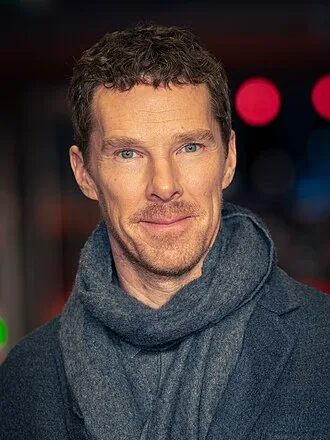
Cumberbatch studied drama at the Victoria University of Manchester and obtained a Master of Arts in classical acting at the London Academy of Music and Dramatic Art. He began acting in Shakespearean theatre productions before making his West End debut in Richard Eyre's revival of Hedda Gabler in 2005. Since then, he has starred in Royal National Theatre productions of After the Dance (2010) and Frankenstein (2011), winning the Laurence Olivier Award for Best Actor for the latter. In 2015, he played the title role in Hamlet at the Barbican Theatre.
Cumberbatch's television work includes his performance as Stephen Hawking in the film Hawking (2004). He gained wide recognition for portraying Sherlock Holmes in the series Sherlock from 2010 to 2017, for which he won a Primetime Emmy Award for Outstanding Lead Actor. For playing the title role in the miniseries Patrick Melrose (2018), he won the BAFTA TV Award for Best Actor.
In films, Cumberbatch received nominations for the Academy Award for Best Actor for playing Alan Turing in The Imitation Game (2014) and a volatile rancher in The Power of the Dog (2021). He has acted in several period dramas, including Amazing Grace (2006), Atonement (2007), Tinker Tailor Soldier Spy (2011), 12 Years a Slave (2013), The Current War (2017), 1917 (2019) and The Courier (2020).
He has also starred in numerous blockbuster films portraying Smaug and Sauron in The Hobbit film series (2012–2014), Khan in Star Trek Into Darkness (2013), and Dr. Stephen Strange in the Marvel Cinematic Universe, including in the films Doctor Strange (2016) and Doctor Strange in the Multiverse of Madness (2022).
Early life and education
Birth, family and schooling
Benedict Timothy Carlton Cumberbatch was born on 19 July 1976 at Queen Charlotte's Hospital (now Queen Charlotte's and Chelsea Hospital) in the London district of Hammersmith, to actors Timothy Carlton and Wanda Ventham. He grew up in the borough of Kensington and Chelsea. He has a half-sister, Tracy Peacock, from his mother's first marriage.
Cumberbatch attended boarding schools from the age of eight, attending Brambletye, a prep school near East Grinstead, West Sussex. He undertook secondary schooling as an arts scholar at Harrow School. He was a member of the Rattigan Society, Harrow's principal club for the dramatic arts, which was named after Old Harrovian and playwright Sir Terence Rattigan.
He was involved in numerous Shakespearean works at school and made his acting debut as Titania, Queen of the Fairies, in A Midsummer Night's Dream when he was 12. His first leading role was as Eliza Doolittle in Bernard Shaw's Pygmalion, in a production by the Head of Classics, James Morwood, who observed that Cumberbatch "acted everyone else off the stage".
Cumberbatch's drama teacher, Martin Tyrell, called him "the best schoolboy actor" he had ever worked with. Despite his abilities, Cumberbatch's drama teacher at Harrow warned him against a career in acting, calling it a "tough business".
Tertiary education
After leaving Harrow, Cumberbatch took a gap year to volunteer as an English teacher at a Tibetan monastery in Darjeeling, India. He then attended the Victoria University of Manchester, where he studied drama. He continued his training as an actor at the London Academy of Music and Dramatic Art (LAMDA), graduating with an MA in classical acting. In January 2018, Cumberbatch succeeded Timothy West as president of LAMDA.
Antecedents and family tree
In 1728, Benedict Cumberbatch's 7th-great-grandfather, Abraham Cumberbatch of Saint Andrew, Barbados (died 1753), acquired properties on the island of Barbados in the West Indies, which used enslaved people for labour. St Nicholas Abbey was owned by Cumberbatch's ancestors for at least two hundred years.
These properties were passed down through the generations to Benedict's great-great-great-grandfather, Abraham Parry Cumberbatch (died 1840 in Hellingly, Sussex). He was an absentee landlord of two estates, Cleland and Lammings, for which he received £5388 as slave compensation (via the Slave Compensation Act 1837, four years after the Slavery Abolition Act 1833 had abolished slavery).
The Cleland plantation enslaved 250 people, and was the main source of the Cumberbatch family's considerable wealth at the time; they were one of the richest families in Britain.
There has been media speculation that the Barbados National Task Force on Reparations, which, as part of the wider Caribbean's CARICOM Reparations Commission, is as of January 2023[update] seeking reparations from wealthy British MP Richard Drax for his ancestors' involvement in slavery, might also consider seeking reparations from families such as the Cumberbatches.
Benedict Cumberbatch has said that by the time of his birth, most of the money had run out, and he grew up "definitely middle class", or upper middle class. The Drax family still owns a large estate in Barbados, and Richard Drax is said to be worth at least £150 million. Barbados′ officials have since rebuked those speculations and called them a "Campaign of deceptive and misleading British 'yellow journalism'".
Abraham Parry Cumberbatch's son (Benedict's great-great-grandfather) Robert William Cumberbatch, was a British consul in the Ottoman and Russian Empires. His great-grandfather, Henry Alfred Cumberbatch, was also a diplomat who served as consul in Turkey and Lebanon, and his grandfather, Henry Carlton Cumberbatch, was a submarine officer of both World Wars, and a prominent figure of London high society.
Cumberbatch is third cousin 16 times removed of King Richard III, whom he portrayed in The Hollow Crown. He attended Richard III's 2015 reburial and read a poem.
Career
Theatre
Since 2001, Cumberbatch has had major roles in a dozen classic plays at the Regent's Park Open Air, Almeida, Royal Court and Royal National Theatres. He was nominated for an Olivier Award for Best Performance in a Supporting Role for his role as George Tesman in Hedda Gabler, which he performed at the Almeida Theatre on 16 March 2005 and at the Duke of York's Theatre when it transferred to the West End on 19 May 2005. This transfer marked his first West End appearance.
In June 2010, Cumberbatch led the revival of Sir Terence Rattigan's After the Dance directed by Thea Sharrock at the Royal National Theatre. He played 1920s aristocrat David Scott-Fowler to commercial and critical success. The play won four Olivier Awards including Best Revival. He acted in Danny Boyle's The Children's Monologues, a theatrical charity event at London's Old Vic Theatre on 14 November 2010 which was produced by Dramatic Need.
In February 2011, Cumberbatch began playing, on alternate nights, both Victor Frankenstein and his creature, opposite Jonny Lee Miller, in Boyle's stage production of Mary Shelley's Frankenstein at the Royal National Theatre. Frankenstein was broadcast to cinemas as a part of National Theatre Live in March 2011. He achieved the "Triple Crown of London Theatre" in 2011 when he received the Olivier Award, Evening Standard Award and Critics' Circle Theatre Award for his performance in Frankenstein.
Cumberbatch was a part of a cast featuring members of the Royal National Theatre Company in 50 Years on Stage, the Royal National Theatre's landmark event for its 50th anniversary on 2 November 2013. He played Rosencrantz in a selected scene from Sir Tom Stoppard's play Rosencrantz and Guildenstern Are Dead. The show was directed by Sir Nicholas Hytner and was broadcast on BBC Two and in cinemas worldwide as a part of National Theatre Live.
Cumberbatch returned to theatre to play Shakespeare's Hamlet at London's Barbican Theatre. The production was directed by Lyndsey Turner and produced by Sonia Friedman, which started its 12-week run in August 2015. The performance, co-starring Sian Brooke, was broadcast by the National Theatre Company by satellite internationally as Hamlet in Rehearsal. He earned his third Laurence Olivier Awards nomination for the role.
Television
Cumberbatch's early television roles include two separate guest roles in Heartbeat (2000, 2004), Freddy in Tipping the Velvet (2002), Edward Hand in Cambridge Spies (2003) and Rory in the ITV comedy drama series Fortysomething (2003). He also featured in Spooks and Silent Witness.
In 2004, he landed his first main part in television as Stephen Hawking in Hawking. He was nominated for the BAFTA TV Award for Best Actor and won the Golden Nymph for Television Films – Best Performance by an Actor. He later provided Hawking's voice in the first episode of the television series Curiosity. He also appeared in the BBC miniseries Dunkirk as Lieutenant Jimmy Langley.
In 2005, Cumberbatch portrayed protagonist Edmund Talbot in the miniseries To the Ends of the Earth, based on Sir William Golding's trilogy; during filming he said he experienced a carjacking in South Africa, managing to escape. He made brief appearances in the comedy sketch show Broken News and the Channel 4 sitcom Nathan Barley in 2005 and featured alongside Tom Hardy in the television adaptation of Stuart: A Life Backwards, which aired on the BBC in September 2007.
In 2008, Cumberbatch played the lead character in the BBC miniseries drama The Last Enemy, earning a Satellite Award nomination for Best Actor in a Miniseries or TV Film. In 2009, he appeared in Agatha Christie's Miss Marple: Murder Is Easy as Luke Fitzwilliam. He played Bernard in the TV adaptation of Small Island, earning him a nomination for BAFTA Television Award for Best Supporting Actor.
Cumberbatch featured in Michael Dobbs' play, The Turning Point, which aired as one of a series of TV plays broadcast live on Sky Arts. The play depicted an October 1938 meeting between Soviet spy Guy Burgess, then a young man working for the BBC, and Winston Churchill. Cumberbatch portrayed Burgess; Churchill was played by Matthew Marsh, who had played a supporting role in Hawking.
He narrated the 6-part series South Pacific (US title: Wild Pacific), which aired from May to June 2009 on BBC 2.
In 2010, Cumberbatch portrayed Vincent van Gogh in Van Gogh: Painted with Words. The Daily Telegraph called his performance "[a] treat ... vividly bringing Van Gogh to impassioned, blue-eyed life". In the same year, Cumberbatch began playing Sherlock Holmes in the joint BBC/PBS television series Sherlock, to critical acclaim.
The second series began on New Year's Day 2012 in the United Kingdom and was broadcast on PBS in the United States in May 2012. The third series aired on PBS over a period of three weeks in January to February 2014. Cumberbatch won an Emmy as Outstanding Lead Actor in a Miniseries or a Movie for the third episode of the third series of the show entitled His Last Vow.
Cumberbatch has one of the most aggressive fanbases to date, part of the 'Big Three' fandoms on the social media site Tumblr, called SuperWhoLock. In April 2015, Cumberbatch was nominated for his sixth British Academy Television Award for Best Leading Actor for the third series of the Sherlock. In 2016, he was once again nominated for an Emmy as Outstanding Lead Actor in a Miniseries or a Movie, this time for Sherlock: The Abominable Bride.
In 2012, he led the BBC and HBO co-produced miniseries Parade's End with Rebecca Hall. An adaptation of the tetralogy of novels of the same name by Ford Madox Ford, it was filmed as five episodes, directed by Susanna White and adapted by Sir Tom Stoppard. His performance earned Cumberbatch his second Emmy Award nomination for Best Actor in Miniseries or TV Movie.
In February 2014, Cumberbatch appeared with Sesame Street characters Murray and Count von Count for PBS. In 2016, Cumberbatch portrayed Richard III in Shakespeare's play of the same name, as part of the second series of films for The Hollow Crown, which aired in both Britain and the United States.
Cumberbatch starred in Patrick Melrose, a miniseries adaptation of the Edward St Aubyn novels, which began airing on Showtime on 12 May 2018. In 2019 Cumberbatch appeared as British political strategist Dominic Cummings (who served as the campaign director of Vote Leave, the official campaign in favour of the UK leaving the European Union) in HBO and Channel 4's television film Brexit: The Uncivil War.
In 2023 he was confirmed as executive producer and lead role in the miniseries Eric for streaming service Netflix.
Film
The 2006 film Starter for 10 has been credited with helping launch Cumberbatch's big-screen career. Also in 2006, Cumberbatch played late 18th/early 19th century British parliamentarian William Pitt the Younger in Amazing Grace, a role that garnered him a nomination for the London Film Critics Circle "British Breakthrough Acting Award".
In Atonement (2007), Cumberbatch played what The Guardian called one of his "small parts in big films", and came to the attention of Sue Vertue and Steven Moffat, who would later cast him in Sherlock. In 2008, he had a supporting role in The Other Boleyn Girl, and the next year he appeared in the Charles Darwin biographical film Creation as Darwin's friend Joseph Hooker.
In 2010, he appeared in The Whistleblower as well as Four Lions. He portrayed Peter Guillam, George Smiley's right-hand man, in the 2011 adaptation of the John le Carré novel Tinker Tailor Soldier Spy. The film was directed by Tomas Alfredson and featured Gary Oldman and Colin Firth. Cumberbatch played Major Jamie Stewart in Steven Spielberg's War Horse from DreamWorks Pictures in 2011.
In 2012, Cumberbatch provided the voice and motion-capture for both Smaug the Dragon and the Necromancer in An Unexpected Journey, the first instalment of The Hobbit series based on the novel of the same name by J. R. R. Tolkien. He reprised his roles as Smaug and the Necromancer for The Desolation of Smaug (2013) and The Battle of the Five Armies (2014).
For the motion-capture aspect of the films, he used a suit and facial markers to highlight the dragon's expressions and movements. Cumberbatch told Total Film "You just have to lose your shit on a carpeted floor, in a place that looks a little bit like a mundane government building. It was just me as well, with four static cameras and all the sensors."
📚 Source: Wikipedia