
















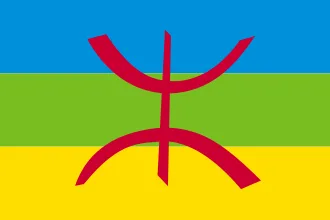
The Berbers are indigenous to the Maghreb region of North Africa, where they live in communities across parts of Morocco, Algeria, Libya, and to a lesser extent Tunisia, Mauritania, northern Mali and northern Niger (Azawagh). Smaller Berber communities are also found in Burkina Faso and Egypt's Siwa Oasis. Many in the community view the exonym "Berber", equivalent and related to the Arabic word for "barbarian" (بربر), as pejorative, and prefer the endonym "Amazigh".
Descended from Stone Age cultures indigenous to North Africa, accounts of the Imazighen were first mentioned in Ancient Egyptian writings. From about 2000 BC, Berber languages spread westward from the Nile Valley across the northern Sahara into the Maghreb. A series of Berber peoples such as the Mauri, Masaesyli, Massyli, Musulamii, Gaetuli, and Garamantes gave rise to Berber kingdoms, such as Numidia and Mauretania.
Other kingdoms appeared in late antiquity, such as Altava, Aurès, Ouarsenis, and Hodna. Berber kingdoms were eventually suppressed by the Arab conquests of the 7th and 8th centuries AD, which initiated a long process of cultural and linguistic Arabization. This involved the spread of Arabic language and Arab culture among the Berbers, as well as their conversion to Islam.
Notably, the Arab migrations to the Maghreb from the 7th century to the 17th century accelerated this process. However, Berber tribes remained powerful political forces and created dynasties that ruled much of North Africa and the Iberian Peninsula from the eleventh to sixteenth centuries such as the Zirids, Hammadids, various Zenata principalities in the western Maghreb, and several Taifa kingdoms in al-Andalus, and empires of the Almoravids and Almohads.
Their Berber successors – the Marinids, the Zayyanids, and the Hafsids – continued to rule until the 16th century. From the 16th century onward, the process continued in the absence of Berber dynasties; in Morocco, they were replaced by Arabs claiming descent from the Islamic prophet Muhammad.
Berbers are divided into several ethnic groups, such as Kabyles, Chaouis and Rifians. The use of the endonym Amazigh dates back to antiquity, as attested by groups such as the Mazices, and it remains in use today. Various Berber nations (such as Rifians, Nafusi, Ghomaras, Shilhas, etc.) used the root MZƔ for the name of their language and their people up to the latter half of the 20th Century, when more regionally specific terms such as Tarifit or Tanfusit were coined.
Names and etymology
The indigenous populations of the Maghreb region of North Africa are collectively known as Berbers or Amazigh in English.
Tribal titles such as Barabara and Beraberata appear in Egyptian inscriptions of 1700 and 1300 BC, and the Berbers were probably intimately related with the Egyptians in very early times. Thus the true ethnic name may have become confused with Barbari, the designation used by classical conquerors.[better source needed]
The plural form Imazighen is sometimes also used in English.
The term "Berber" as a collective label has been the subject of scholarly debate. The historian Ramzi Rouighi argues that Berbers began to be referred to collectively only after the Arab conquests of the 7th century, and that the term's modern usage carries problematic historical baggage. However, Rouighi's treatment of the term "Amazigh" has been criticized for oversimplifying its historical distribution and dismissing it as a colonial invention without adequately engaging with its use as an endonym in many regions long before modern nationalism.
Today, many consider the term "Berber" pejorative and prefer "Amazigh" instead, due to its problematic history as an exonym and its equivalence with the Arabic word for "barbarian". Since the late 20th century, a trans-national movement – known as Berberism or the Berber Culture Movement – has emerged among various parts of the Berber populations of North Africa to promote a collective Amazigh ethnic identity and to advocate for greater linguistic rights and cultural recognition.
Stéphane Gsell proposed the translation "noble/free" for the term Amazigh based on Leo Africanus's translation of "awal amazigh" as "noble language" referring to the Berber languages. This definition remains disputed and is seen by some as an undue extrapolation. Related words such as mmuzeɣ ('to be noble', 'generous') exist among the Imazighen of Central Morocco, while tmuzeɣ ('to free oneself', 'revolt') is found among the Kabyles of Ouadhia.
The term also has a cognate in the Tuareg "Amajegh", meaning noble. "Mazigh" was used as a tribal surname in Roman Mauretania Caesariensis.
Abraham Isaac Laredo proposes that the term Amazigh could be derived from "Mezeg", which is the name of Dedan of Sheba in the Targum.
The medieval Arab historian Ibn Khaldun says the Berbers were descendants of Barbar, the son of Tamalla, son of Mazigh, son of Canaan, son of Ham, son of Noah.
The Numidian, Mauri and Libu populations of antiquity are typically understood by contemporary writers to have referred to the same population as modern Berbers.
History
The areas of North Africa that have retained the Berber language and traditions best have been, in general, Algeria, Libya, Morocco and Tunisia. Much of Berber culture is still celebrated among the cultural elite in Morocco and Algeria, especially in Kabylia, the Aurès and the Atlas Mountains. The Kabyles were one of the few peoples in North Africa who remained independent during successive rule by the Carthaginians, Romans, Byzantines, Vandals, and the Ottoman Turks.
Even after the Arab conquest of North Africa, the Kabyle people still maintained possession of their mountains.
Prehistory
The Maghreb region in northwestern Africa is believed to have been inhabited by Berbers from at least 10,000 BC.[dubious – discuss] Cave paintings, which have been dated to twelve millennia before present, have been found in the Tassili n'Ajjer region of southeastern Algeria.
Other rock art has been discovered at Tadrart Acacus in the Libyan desert. A Neolithic society, marked by domestication and subsistence agriculture and richly depicted in the Tassili n'Ajjer paintings, developed and predominated in the Saharan and Mediterranean region (the Maghreb) of northern Africa between 6000 and 2000 BC (until the classical period).
Prehistoric Tifinagh inscriptions were found in the Oran region. During the pre-Roman era, several successive independent states (Massylii) existed before King Masinissa unified the people of Numidia.[full citation needed]
Mythology
According to the Roman historian Gaius Sallustius Crispus, the original people of North Africa are the Gaetulians and the Libyans, they were the prehistoric peoples that crossed to Africa from the Iberian Peninsula, then much later, Hercules and his army crossed from Iberia to North Africa where his army intermarried with the local populace and settled the region permanently, the Medes of his army that married the Libyans formed the Maur people, while the other part of his Army formed the Nomadas or as they are today known as the Numidians which later on united all of Berber tribes of North Africa under the rule of Massinissa.
Other sources
According to the Al-Fiḥrist, the Barber (i.e. Berbers) comprised one of seven principal races in Africa.
The medieval Tunisian scholar Ibn Khaldun (1332–1406), recounting the oral traditions prevalent in his day, sets down two popular opinions as to the origin of the Berbers: according to one opinion, they are descended from Canaan, son of Ham, and have for ancestors Berber, son of Temla, son of Mazîgh, son of Canaan, son of Ham, a son of Noah; alternatively, Abou-Bekr Mohammed es-Souli (947 AD) held that they are descended from Berber, the son of Keloudjm (Casluhim), the son of Mesraim, the son of Ham.
They belong to a powerful, formidable, brave and numerous people; a true people like so many others the world has seen – like the Arabs, the Persians, the Greeks and the Romans. The men who belong to this family of peoples have inhabited the Maghreb since the beginning.
— Ibn Khaldun
Ancestry and DNA
As of about 5000 BC, the populations of North Africa were descended primarily from the Iberomaurusian and Capsian cultures, with a more recent intrusion being associated with the Neolithic Revolution. The proto-Berber tribes evolved from these prehistoric communities during the late Bronze- and early Iron ages.
Uniparental DNA analysis has established ties between Berbers and other Afroasiatic speakers in Africa. Most of these populations belong to the E1b1b paternal haplogroup, with Berber speakers having among the highest frequencies of this lineage.
Additionally, genomic analysis found that Berber and other Maghreb communities have a high frequency of an ancestral component that originated in the Near East. This Maghrebi element peaks among Tunisian Berbers. This ancestry is related to the Coptic/Ethio-Somali component, which diverged from these and other West Eurasian-affiliated components before the Holocene.
In 2013, Iberomaurusian skeletons from the prehistoric sites of Taforalt and Afalou in the Maghreb were also analyzed for ancient DNA. All of the specimens belonged to maternal clades associated with either North Africa or the northern and southern Mediterranean littoral, indicating gene flow between these areas since the Epipaleolithic.
The ancient Taforalt individuals carried the mtDNA haplogroups U6, H, JT, and V, which points to population continuity in the region dating from the Iberomaurusian period.
Human fossils excavated at the Ifri n'Amr ou Moussa site in Morocco have been radiocarbon dated to the Early Neolithic period, c. 5000 BC. Ancient DNA analysis of these specimens indicates that they carried paternal haplotypes related to the E1b1b1b1a (E-M81) subclade and the maternal haplogroups U6a and M1, all of which are frequent among present-day communities in the Maghreb.
These ancient individuals also bore an autochthonous Maghrebi genomic component that peaks among modern Berbers, indicating that they were ancestral to populations in the area. Additionally, fossils excavated at the Kelif el Boroud site near Rabat were found to carry the broadly distributed paternal haplogroup T-M184 as well as the maternal haplogroups K1, T2 and X2, the latter of which were common mtDNA lineages in Neolithic Europe and Anatolia.
These ancient individuals likewise bore the Berber-associated Maghrebi genomic component. This altogether indicates that the late-Neolithic Kehf el Baroud inhabitants were ancestral to contemporary populations in the area, but also likely experienced gene flow from Europe.
The late-Neolithic Kehf el Baroud inhabitants were modelled as being of about 50% local North African ancestry and 50% Early European Farmer (EEF) ancestry. It was suggested that EEF ancestry had entered North Africa through Cardial Ware colonists from Iberia sometime between 5000 and 3000 BC. They were found to be closely related to the Guanches of the Canary Islands.
The authors of the study suggested that the Berbers of Morocco carried a substantial amount of EEF ancestry before the establishment of Roman colonies in Berber Africa.
Antiquity
The great tribes of Berbers in classical antiquity (when they were often known as ancient Libyans) were said to be three (roughly, from west to east): the Mauri, the Numidians near Carthage, and the Gaetulians. The Mauri inhabited the far west (ancient Mauretania, now Morocco and central Algeria). The Numidians occupied the regions between the Mauri and the city-state of Carthage.
Both the Mauri and the Numidians had significant sedentary populations living in villages, and their peoples both tilled the land and tended herds. The Gaetulians lived to the near south, on the northern margins of the Sahara, and were less settled, with predominantly pastoral elements.
For their part, the Phoenicians (Semitic-speaking Canaanites) came from perhaps the most advanced multicultural sphere then existing, the western coast of the Fertile Crescent region of West Asia. Accordingly, the material culture of Phoenicia was likely more functional and efficient, and their knowledge more advanced, than that of the early Berbers.
Hence, the interactions between Berbers and Phoenicians were often asymmetrical. The Phoenicians worked to keep their cultural cohesion and ethnic solidarity, and continuously refreshed their close connection with Tyre, the mother city.
The earliest Phoenician coastal outposts were probably meant merely to resupply and service ships bound for the lucrative metals trade with the Iberians, and perhaps at first regarded trade with the Berbers as unprofitable. However, the Phoenicians eventually established strategic colonial cities in many Berber areas, including sites outside of present-day Tunisia, such as the settlements at Oea, Leptis Magna, Sabratha (in Libya), Volubilis, Chellah, and Mogador (now in Morocco).
As in Tunisia, these centres were trading hubs, and later offered support for resource development, such as processing olive oil at Volubilis and Tyrian purple dye at Mogador. For their part, most Berbers maintained their independence as farmers or semi-pastorals, although, due to the example of Carthage, their organized politics increased in scope and sophistication.
In fact, for a time their numerical and military superiority (the best horse riders of that time) enabled some Berber kingdoms to impose a tribute on Carthage, a condition that continued into the 5th century BC. Also, due to the Berbero-Libyan Meshwesh dynasty's rule of Egypt (945–715 BC), the Berbers near Carthage commanded significant respect (yet probably appearing more rustic than the elegant Libyan pharaohs on the Nile).
Correspondingly, in early Carthage, careful attention was given to securing the most favourable treaties with the Berber chieftains, "which included intermarriage between them and the Punic aristocracy". In this regard, perhaps the legend about Dido, the foundress of Carthage, as related by Trogus is apposite. Her refusal to wed the Mauritani chieftain Hiarbus might be indicative of the complexity of the politics involved.
Eventually, the Phoenician trading stations would evolve into permanent settlements, and later into small towns, which would presumably require a wide variety of goods as well as sources of food, which could be satisfied through trade with the Berbers. Yet, here too, the Phoenicians probably would be drawn into organizing and directing such local trade, and also into managing agricultural production.
In the 5th century BC, Carthage expanded its territory, acquiring Cape Bon and the fertile Wadi Majardah, later establishing control over productive farmlands for several hundred kilometres. Appropriation of such wealth in land by the Phoenicians would surely provoke some resistance from the Berbers; although in warfare, too, the technical training, social organization, and weaponry of the Phoenicians would seem to work against the tribal Berbers. This social-cultural interaction in early Carthage has been summarily described:
Lack of contemporary written records makes the drawing of conclusions here uncertain, which can only be based on inference and reasonable conjecture about matters of social nuance. Yet it appears that the Phoenicians generally did not interact with the Berbers as economic equals, but employed their agricultural labour, and their household services, whether by hire or indenture; many became sharecroppers.
For a period, the Berbers were in constant revolt, and in 396 there was a great uprising.
Thousands of rebels streamed down from the mountains and invaded Punic territory, carrying the serfs of the countryside along with them. The Carthaginians were obliged to withdraw within their walls and were besieged.
Yet the Berbers lacked cohesion; and although 200,000 strong at one point, they succumbed to hunger, their leaders were offered bribes, and "they gradually broke up and returned to their homes". Thereafter, "a series of revolts took place among the Libyans [Berbers] from the fourth century onwards".
The Berbers had become involuntary 'hosts' to the settlers from the east, and were obliged to accept the dominance of Carthage for centuries. Nonetheless, therein they persisted largely unassimilated,[citation needed] as a separate, submerged entity, as a culture of mostly passive urban and rural poor within the civil structures created by Punic rule.
In addition, and most importantly, the Berber peoples also formed quasi-independent satellite societies along the steppes of the frontier and beyond, where a minority continued as free 'tribal republics'. While benefiting from Punic material culture and political-military institutions, these peripheral Berbers (also called Libyans)—while maintaining their own identity, culture, and traditions—continued to develop their own agricultural skills and village societies, while living with the newcomers from the east in an asymmetric symbiosis.
As the centuries passed, a society of Punic people of Phoenician descent but born in Africa, called Libyphoenicians emerged there. This term later came to be applied also to Berbers acculturated to urban Phoenician culture. Yet the whole notion of a Berber apprenticeship to the Punic civilization has been called an exaggeration sustained by a point of view fundamentally foreign to the Berbers.
A population of mixed ancestry, Berber and Punic, evolved there, and there would develop recognized niches in which Berbers had proven their utility. For example, the Punic state began to field Berber–Numidian cavalry under their commanders on a regular basis. The Berbers eventually were required to provide soldiers (at first "unlikely" paid "except in booty"), which by the fourth century BC became "the largest single element in the Carthaginian army".
Yet in times of stress at Carthage, when a foreign force might be pushing against the city-state, some Berbers would see it as an opportunity to advance their interests, given their otherwise low status in Punic society.[citation needed] Thus, when the Greeks under Agathocles (361–289 BC) of Sicily landed at Cape Bon and threatened Carthage (in 310 BC), there were Berbers, under Ailymas, who went over to the invading Greeks.
During the long Second Punic War (218–201 BC) with Rome (see below), the Berber King Masinissa (c. 240 – c. 148 BC) joined with the invading Roman general Scipio, resulting in the war-ending defeat of Carthage at Zama, despite the presence of their renowned general Hannibal; on the other hand, the Berber King Syphax (d. 202 BC) had supported Carthage.
The Romans, too, read these cues, so that they cultivated their Berber alliances and, subsequently, favored the Berbers who advanced their interests following the Roman victory.
Carthage was faulted by her ancient rivals for the "harsh treatment of her subjects" as well as for "greed and cruelty". Her Libyan Berber sharecroppers, for example, were required to pay half of their crops as tribute to the city-state during the emergency of the First Punic War. The normal exaction taken by Carthage was likely "an extremely burdensome" one-quarter.
Carthage once famously attempted to reduce the number of its Libyan and foreign soldiers, leading to the Mercenary War (240–237 BC). The city-state also seemed to reward those leaders known to deal ruthlessly with its subject peoples, hence the frequent Berber insurrections. Moderns fault Carthage for failure "to bind her subjects to herself, as Rome did [her Italians]", yet Rome and the Italians held far more in common perhaps than did Carthage and the Berbers.
Nonetheless, a modern criticism is that the Carthaginians "did themselves a disservice" by failing to promote the common, shared quality of "life in a properly organized city" that inspires loyalty, particularly with regard to the Berbers. Again, the tribute demanded by Carthage was onerous.