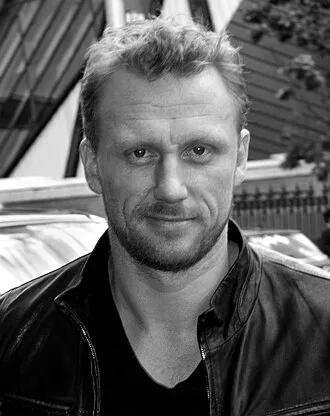
Kevin Keegan
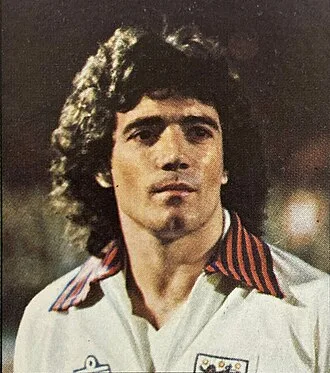
Keegan began his playing career at Scunthorpe United in 1968, before Bill Shankly signed him for Liverpool. There, he won three First Division titles, the UEFA Cup twice, the FA Cup and, in his final season, the European Cup. During this period, he was a regular member of the England national team, and captained the team on 31 occasions, including at UEFA Euro 1980.
He moved to Hamburger SV in the summer of 1977 and was named European Footballer of the Year in both 1978 and 1979. Hamburg won the Bundesliga title in the 1978–79 season and reached the 1980 European Cup final. Keegan left Hamburg and played at Southampton for two seasons, before transferring to Newcastle United in the Second Division in 1982.
He helped Newcastle secure promotion in his second season, and retired from playing in 1984. He scored 204 goals in 592 appearances in his club career, adding 21 goals in 63 caps for England.
He moved into management at Newcastle in 1992, and the team won promotion to the Premier League as First Division champions in his first full season. Newcastle finished second in the Premier League in the 1995–96 season, despite leading the way for most of the campaign. After managing Fulham for two seasons, he took charge of the England national team in February 1999, but resigned in October 2000 following a 1–0 loss against Germany in qualification for the 2002 FIFA World Cup.
In 2001, he became manager of Manchester City for four years, until he resigned in 2005. Keegan had been out of football for almost three years when he returned to Newcastle for a second spell as manager in January 2008, but this lasted only eight months, as he resigned in September following speculation about a dispute with the club's directors. The three clubs he managed were promoted as champions in his first full season in charge of them.
Early years
Joseph Kevin Keegan was born on 14 February 1951 at his aunt Nellie's house in Elm Place in Armthorpe, as she had electricity, which made it safer[clarification needed] for childbirth.
He was the second of three children of Joe and Doris Keegan. His father, a Geordie, had moved to Armthorpe, in Doncaster (then in the West Riding of Yorkshire) to work in a colliery, where he met and married Doris. Keegan attended St Peter's High School in nearby Cantley.
Keegan's paternal ancestors arrived in Newcastle from Ireland. In 1909, his grandfather Frank, an inspector, heroically saved lives in the West Stanley Pit disasters. His father Joe and uncle Frank were Newcastle United supporters, describing their favourite players as Hughie Gallacher and Jackie Milburn. Keegan's father never saw him play for Newcastle.
Keegan was given his first football by his uncle and his first pair of football boots by his father after he won betting on horses. They were a second-hand pair of Winit boots bought from a sports shop run by former Doncaster Rovers centre forward Ray Harrison. Keegan played football at Hyde Park using his baby brother Michael's pushchair as a goal post.
As a boy, he supported Doncaster Rovers. His favourite player was Alick Jeffrey, a player once described by Matt Busby's assistant, Jimmy Murphy, as the English Pelé, and once described by Milburn as "the best young player he had ever seen". As a schoolboy, Keegan had a trial for Coventry City under manager Jimmy Hill.
Despite being one of two players kept on for an extra six-week period, the club did not offer him a contract. They did offer apprenticeship terms to the right-back Brian Joy, who went on to have a 15-year career in football. Keegan had another trial with Doncaster Rovers arranged by his father, but when he arrived he found out he had the wrong information: the trial was earlier in the day and at a different place.
Keegan participated in various sports, including cross-country running, rugby, and football, and served his school's cricket team as captain. He also boxed at his local club, run by the former British Heavyweight champion Bruce Woodcock. At age 15, Keegan and two friends completed a 50-mile run from Nottingham to Doncaster.
In his autobiography, he said this run prepared him physically and psychologically for any running he had to do in future pre-season training or football matches. He left school with O Levels in History and Art.
At the age of 15, Keegan started working at Pegler Brass Works as an office clerk, though he said he was more of a tea boy and messenger than a clerk. Whilst working at Pegler, he played Saturday afternoon football for his local youth club, Elmfield House, and Sunday morning football for the Lonsdale Hotel. It was during this time that a colleague named Harry Holland invited him to play for the Peglers Works reserves.
His chance at professional football came when he was playing Sunday morning league football for the Lonsdale Hotel in a match against Woodfield Social in 1966. Keegan was marked by an older player named Bob Nellis, who was so impressed by his ability that he offered him a trial at Fourth Division side Scunthorpe United – one of just two professional sides in the division.
This trial led to Scunthorpe manager Ron Ashman giving Keegan his first contract in professional football.
Club career
1966–1971: Scunthorpe United
Scunthorpe United could not afford a set of football nets and trained on a rugby pitch at Quibell Park. They also had five-a-side training sessions on the Old Show Ground concrete car park. Keegan took training very seriously, and he did twice-a-week training with teammate Derek Hemstead by doing weighted farmers walks up and down the cantilever stand at the Old Show Ground.
In running drills at Scunthorpe, Keegan liked trying to finish first and was told by coach Jack Brownsword that one thing he had going for him was that he was a "one-hundred percenter" and he should never lose that. This was the first of his running drills that would later irritate senior professionals such as Liverpool's Tommy Smith, and Bill Shankly would advise Keegan that he did not have to win all his runs.
Scunthorpe did not have the funds for a full-time driver to drive them to away games, so Keegan and the other younger players would take turns in driving the minibus to and from away games. Keegan, Nigel Jackson, Jimmy Coyne, Alan Olbison and Steve Hibbotson once borrowed Brownsword's stopwatch and had timed rallies around the Old Show Ground with the club's vintage tractor.
On Keegan's turn, the tractor crashed and the axle went through the engine. The tractor was very expensive to fix, and the five players were harshly reprimanded by manager Ron Ashman. This experience gave Keegan awareness of his responsibility as a representative of Scunthorpe United. In 1968, Keegan made his debut against Peterborough United at the age of 17, and went on to make 29 league starts in his first season.
He became a regular in the first team by the 1969–70 season, playing all 46 league games for the club. That season saw the team reach the fifth round of the FA Cup, beating First Division side Sheffield Wednesday along the way. His low wages at Scunthorpe meant Keegan had to find summer jobs, such as plate-laying at the Appleby Frodingham Steelworks.
Keegan played regularly in a creative right midfield role for the Scunthorpe first team, scoring 18 goals in 124 games for the club. After his first season, he started attracting interest from higher division clubs. In a rare televised interview at Scunthorpe during the 1969–70 season, Keegan tried to play down the interest, stating: "I'm getting first-team football here.
Should think if I went First Division, I'd struggle a bit." Not long after this interview, Keegan began to feel impatient about playing in higher divisions and even considered quitting the game and getting a full-time job. Higher division clubs such as Preston North End, Birmingham City, Notts County, Millwall and Arsenal all showed interest in Keegan but nothing came of it.
1971–1977: Liverpool
In 1971, Keegan attracted the attention of Liverpool's head scout Geoff Twentyman, whose opinion was held in high regard by manager Bill Shankly. After Twentyman's recommendation, Liverpool made an offer for Keegan which Scunthorpe accepted. After Scunthorpe agreed to the fee offered, Keegan was driven the four hours to Liverpool by manager Ron Ashman, who was determined to get a cash influx for the club.
Prior to the journey, Keegan's father advised Keegan to not sell himself cheap. Keegan negotiated a contract worth £50 a week after Shankly had originally offered him £45. Ashman, sensing the deal may fall through, was at one stage aghast at Keegan's negotiation tactics. On the drive back to Scunthorpe, Ashman was critical of Keegan's bluff that he was earning almost £45 a week at a Fourth Division club. After the negotiation, 20-year-old Keegan was transferred to Liverpool for a fee of £33,000.
Liverpool bought Keegan as a midfielder, but Shankly soon decided to move Keegan up front alongside John Toshack. In a reserve match against Tranmere Rovers, Keegan played right midfield, and after playing with an attacking mindset he was strongly warned by Ronnie Moran that he was "playing too free and easy", and "nearly playing up front".
Keegan took Moran's criticism as a slight, and for a period perceived that Moran strongly had it in for him. As a result of Keegan's lack of positional discipline, he was tested up front in a preseason reserve match against Southport. Keegan scored both goals in a 2–1 victory observed by Shankly. Liverpool then tried Keegan in attack at Melwood in a game between the first team and reserves.
Keegan played for the first team and scored four in a 7–0 victory. His attacking ability prompted Shankly to keep Keegan up front, and he was immediately deployed as the new strike partner for Toshack. Though Keegan liked Toshack as a teammate, they did not socialise off the pitch, and Keegan said it was strange how quickly they could understand each other's play styles.
Keegan said that the only other player who reached that level of football understanding with him was England international Trevor Brooking. On 14 August 1971, Keegan made his Liverpool debut against Nottingham Forest at Anfield, scoring after 12 minutes. Keegan's impact at Liverpool became such that Shankly devoted an entire chapter of his autobiography to him entitled A Boy Called Keegan, and called him "the inspiration of the new team".
Shankly's advice to Keegan before a game was "just go out and drop a few hand grenades all over the place son." On his relationship with Shankly and the supporters, Keegan would write, "Liverpool made me, not just as a footballer but as a person."
In the 1972–73 season, Keegan won his first major titles. As the season was coming to a close, Liverpool was in a tight race with Leeds United and Arsenal for the top spot in the First Division. Don Revie's Leeds squad visited Anfield for a showdown on Easter Monday. Two plays on either side of halftime decided the match.
First, Leeds' Peter Lorimer missed an open goal just before halftime. Two minutes after the break, Peter Cormack scored to put Liverpool ahead. Keegan added a late second goal to seal the win. Arsenal dropped a point at Southampton, and Liverpool clinched the title with a 0–0 draw against Leicester City in the final game.
This was their first major trophy since 1966. In the UEFA Cup, Liverpool reached the final, where they would face German side Borussia Mönchengladbach. The first leg at Anfield was abandoned after 27 minutes due to a downpour and rescheduled for the next day. The 27 minutes they played gave Shankly an insight into Mönchengladbach's defensive vulnerability in the air.
To exploit this, he brought tall forward Toshack into the starting team, demoting the smaller Brian Hall, who appeared only as a late substitute. Keegan scored two goals set up by Toshack headers in a 3–0 win. Liverpool lost the second leg 2–0 away, winning the title 3–2 on aggregate.
"Kevin Keegan was Liverpool's superstar for much of the 1970s and signed off by helping to win the club's first European Cup on his final appearance. Nimble, skilful, courageous and non-stop, Keegan [formed] a superb strike partnership with John Toshack [...] plundering exactly a century of goals while wearing the red shirt."
Keegan was a frequent scorer the following season, but Liverpool lost the league title to a Leeds team that went unbeaten for a then-record 29 games at the start of the season. The team were more successful in the FA Cup. Their campaign in the competition started with a match against the club which had rejected Keegan, Doncaster Rovers, and it was Keegan who scored both Liverpool goals in a 2–2 draw.
Liverpool won the replay and advanced. Keegan scored twice more on the way to the cup finals at Wembley Stadium, including a lob-volley over the head of Peter Shilton in the semi-final against Leicester City at Villa Park.
In the 1974 final, Liverpool played Newcastle United. Keegan explained Liverpool players were motivated by trash-talk from Newcastle's Malcolm Macdonald and John Tudor. Macdonald and Tudor gave pre-game interviews confidently proclaiming superiority over Liverpool and criticising older Liverpool professionals like Tommy Smith.
Keegan also believed Shankly may have got into the heads of the Newcastle players when, on the night before the game, Shankly and Newcastle manager Joe Harvey were being interviewed. Shankly was audible off-camera, stating, "Joe looks a bag of nerves..." Keegan explained it would not have surprised him if this was not an accident, and that Shankly did this to neutralise Newcastle's confidence.
In the final, Keegan scored twice as Liverpool beat Newcastle 3–0. He opened the scoring with a volley; his second was the culmination of a sequence of passes that led the commentator to exclaim "Newcastle were stripped naked!." Keegan claimed that with 100,000 people in attendance, the non-stop chanting of both sets of supporters, and the millions watching on television, this game was "as close to a non-drug-induced psychedelic experience as he could ever get".
Keegan's next visit to Wembley was three months later in the Charity Shield, the traditional curtain raiser to a new season, in what was the last game Shankly led the team out. The match was contentious and turned violent. Leeds midfielder Johnny Giles punched an unsuspecting Keegan, but was spared getting sent off after Keegan asked the referee to be lenient.
Giles later lunged two-footed at Keegan. Upon Keegan's outraged reaction, Billy Bremner challenged Keegan, who then exploded and punched Bremner. Bremner punched back, and they were both sent off, the first time anyone had been sent off in a Charity Shield match. Both players removed their shirts in protest, with Keegan vocally outraged by the decision.
Inside the Liverpool dressing room, Bremner approached Keegan to apologise and was met by the fury of Keegan's father who had come down to check on his son. The fight was shown that night on the BBC. Keegan and Bremner were fined £500 each, with Keegan being suspended for three games and Bremner eight. Despite this, Keegan, Bremner and Giles remained good friends outside of football.
The next year saw Keegan score 12 goals for Liverpool, but the 1974–75 season was a trophyless season. There were numerous honours for Keegan over the next two years, however, as Liverpool again won the League championship and UEFA Cup in the 1975–76 season. Keegan scored in both legs of the UEFA Cup final against FC Bruges, which Liverpool won 4–3 on aggregate.
Having to get a result at Wolverhampton Wanderers on the final day to win the league, Keegan equalised for Liverpool with only 14 minutes remaining before the team ran out 3–1 winners. That season he was named the Football Writers' Association Footballer of the Year.
In the 1976–77 season, Keegan helped Liverpool win the League championship and European Cup. Midway through the season, he announced his intention to leave Liverpool in the summer to play abroad. The club's leading goalscorer in a season for a third time, he scored 20 goals and had 18 assists in his final season for Liverpool, which included scoring the opener in their comeback win against Saint-Étienne in the second-leg of the quarter-final of the European Cup at Anfield.
His last appearance in a Liverpool shirt on home soil was in their defeat in the FA Cup final to bitter rivals Manchester United. The European Cup final in Rome against Borussia Mönchengladbach was four days later. Keegan did not score, but he did make a late run which led to a foul inside the penalty area by Berti Vogts.
This led to a penalty which was successfully converted by Phil Neal, sealing a 3–1 win. Having ran man-marker Vogts ragged, the Daily Post wrote "Keegan in his farewell flourish wrote his name over this game". During the season, on 4 December 1976, Keegan's father died of cancer at the age of 71.
After 323 appearances and 100 goals, Keegan left Liverpool. He had offers from clubs across Europe, and chose to join Hamburger SV in the West German Bundesliga for £500,000. Liverpool replaced him with Kenny Dalglish. Of his time in Liverpool, Keegan later said, "The only thing I fear is missing an open goal in front of the Kop.
I would die if that were to happen. When they start singing 'You'll Never Walk Alone' my eyes start to water. There have been times when I've actually been crying while I've been playing."
In his post-Liverpool career, Keegan received an award in London, which to his surprise was presented to him by Shankly. Keegan immediately gave the award to Shankly, crediting his former manager for his playing career. In the 2017 documentary, Shankly: Nature's Fire, an emotional Keegan recalled Shankly's funeral in 1981 where Shankly's wife Nessie gave him back his award, which had been Shankly's dying wish that it be returned to him.
1977–1980: Hamburger SV
Keegan's transfer to Hamburger SV was agreed between the FA Cup final and the European Cup final of 1977, although Keegan had negotiated a maximum transfer fee the season before. The agreement set the British record transfer fee at £500,000, and nearly doubled the German transfer record. Keegan arrived in Germany, joining a club that had not finished higher than sixth in two decades.
He told ITV's Brian Moore that his annual salary the last season he played for Liverpool was £22,000, whereas at Hamburg it was £122,000.
Following his move to Hamburg, Keegan became an early trendsetter with his new haircut, a perm. On first sight, his wife thought it was hilarious and his agent jokingly tried to disown him in public. Soon though, players such as Bryan Robson, Charlie George, Phil Neal, Terry McDermott also had perms. Later, when Keegan was at Newcastle United as a manager, he and McDermott would joke about the perm in an advertisement.
Keegan became Hamburg's best-paid player and was billed by the club's business manager, Dr. Peter Krohn, as the superstar signing from England who would transform an average German team. Keegan did not feel immediately accepted by his new teammates, and perceived slights from teammates that supported this idea, like making an open run in training but not receiving a pass.
Rules stated that no club was allowed more than two foreign players on its squad. Unbeknownst to Keegan, his transfer had indirectly moved out the three-time European Cup winner Horst Blankenburg. Blankenburg was a very popular member of the squad, and this upset some players. There was also some resentment among the other players who thought that the previous coach, whom the players liked, was replaced by Krohn to accommodate Keegan.
It was not until Keegan had moved out of temporary accommodation and moved to a bungalow in the little village of Itzstedt that Keegan began to feel he could make inroads and have a successful career and life in Germany.
In one early interview, Keegan mentioned how he was settling in, he explained how he missed British cereals that he could not find in the supermarkets in Germany. The Hamburg supporters then flooded him with parcels of his favourite cereal with lists of the suppliers. There were language difficulties early on. In one instance in the summer, Keegan went into a hardware shop intending to buy a fuse and he eventually left the shop after buying Christmas lights.
He scored in pre-season friendlies against Barcelona and his former club Liverpool, but Hamburg would later suffer defeat in the European Super Cup final against the latter opposition. Keegan's time in Hamburg got off to a bad start as Hamburg lost 5–2 to MSV Duisburg in their first league match. Rudi Gutendorf, the manager some believed was appointed for Keegan, would only last until October.
In the winter break of his first season, feeling isolated by the clique in the dressing room, a frustrated Keegan was sent off in a friendly against lower league club VfB Lübeck. A player in the match was targeting Keegan, and after the third time being smashed, Keegan walked to the goading Lübeck player and punched him.
Keegan, who knew he was going to be sent off, walked off the pitch prior to any decision by the referee. Keegan maintains this was his lowest point in Germany. After the incident, he decided to master the German language to fully integrate himself in the team. Up to that point he did not have the language to ask teammates why they were not passing to him, nor to show them that he too loved the club.
Keegan was suspended for eight weeks and in that time he and the squad made efforts to integrate. He knew the dressing room was turning in his favour when he was invited to the squad nights out. Eventually, one player told him he could get cheap meat for Keegan's dogs, and full-back Peter Hidien even got a perm. An unhappy first few months at the club gave way to a more successful season.
Although the club finished tenth in the league in the 1977–78 season, Keegan's 12 goals helped him pick up a personal honour, the France Football European Footballer of the Year award for 1978.
Hamburg appointed Croatian Branko Zebec as a new coach. Zebec was a man who was known to work players intensely. His squad did a lot of running, and Keegan claimed he had never been worked as hard in his life. The 1978–79 season saw a vast improvement on the club's 1978 finish. A rigorous training regime, Keegan's increasing grasp of the German language, and the newly imposed discipline contributed to Hamburg's first league championship in nineteen years.
The club's success also translated into individual recognition for Keegan, who picked up the European Footballer of the Year award for a second consecutive season. Before Keegan, only Alfredo di Stéfano, Franz Beckenbauer and Johan Cruyff had won the award two or more times. As of 2023, six more players have won the award multiple times, bringing the total to ten.
📚 Source: Wikipedia