Michael Cimino
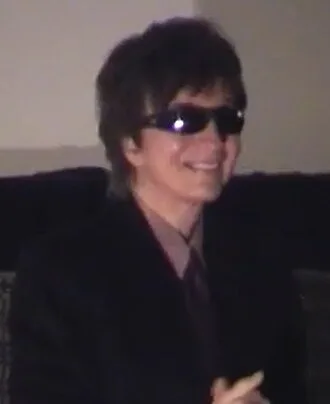
With a background in painting and architecture, Cimino began his career as a commercial director in New York before moving to Los Angeles in the early 1970s to take up screenwriting. After co-writing the scripts for both Silent Running (1972) and Magnum Force (1973), he wrote the preliminary script for Thunderbolt and Lightfoot (1974). The latter became his directorial debut and one of the highest-grossing films of that year.
The accolades received for co-writing, directing, and producing The Deer Hunter led to Cimino receiving creative control of Heaven's Gate (1980). The film became a critical failure and a box-office bomb, which lost production studio United Artists an estimated $37 million. Its failure was seen by many observers as the end of the New Hollywood era, with studios next shifting focus from director-driven films toward high-concept, crowd-pleasing blockbusters.
More recently, however, Heaven's Gate has undergone a dramatic reappraisal, even being named by BBC Culture as one of the greatest American films of all time.
Cimino made only four subsequent films and grew infamous for the number of projects left unfinished due to his uncompromising artistry. In 2002, Cimino claimed he had written at least 50 scripts overall. Several of his ambitious "dream projects" included adaptations of the novels Conquering Horse, The Fountainhead and Man's Fate as well as biopics on crime boss Frank Costello and Irish rebel Michael Collins.
Early life
Cimino publicly shared few details of his early life and family background and is believed to have given false birth year information. Many Cimino biographies thus include inaccuracies about his early years, as well as his background in filmmaking.
Cimino's presumed birth date was February 3, 1939. A third-generation Italian-American, Cimino and his two younger brothers, Peter and Edward, grew up with their parents in the town of Westbury, on Long Island. He was regarded as a prodigy in early private education, but rebelled as an adolescent by consorting with delinquents, getting into fights, and coming home drunk. Of this time, Cimino described himself as
always hanging around with kids my parents didn't approve of. Those guys were so alive. When I was fifteen I spent three weeks driving all over Brooklyn with a guy who was following his girlfriend. He was convinced she was cheating on him, and he had a gun, he was going to kill her. There was such passion and intensity about their lives. When the rich kids got together, the most we ever did was cross against a red light.
His father was a music publisher. Cimino says his father was responsible for marching bands and organs playing pop music at football games. "When my father found out I went into the movie business, he didn't talk to me for a year," Cimino said.
He was very tall and thin... His weight never changed his whole life and he didn't have a gray hair on his head. He was a bit like a Vanderbilt or a Whitney, one of those guys. He was the life of the party, women loved him, a real womanizer. He smoked like a fiend. He loved his martinis. He died really young. He was away a lot, but he was fun. I was just a tiny kid.
His mother was a costume designer. After Cimino made The Deer Hunter, she said that she knew he had become famous because his name was in The New York Times crossword puzzle.
Cimino graduated from Westbury High School in 1956. He entered Michigan State University in East Lansing, Michigan. At Michigan State, Cimino majored in graphic arts, was a member of a weightlifting club, and participated in a group that welcomed incoming students. He graduated in 1959 with honors and won the Harry Suffrin Advertising Award.
He was described in the 1959 Red Cedar Log yearbook as having tastes that included blondes, Thelonious Monk, Chico Hamilton, Mort Sahl, Ludwig Mies van der Rohe, Frank Lloyd Wright, and "drinking, preferably vodka."
In Cimino's final year at Michigan State, he became art director, and later managing editor, of the school's humor magazine Spartan. Steven Bach wrote of Cimino's early magazine work:
It is here that one can see what are perhaps the first public manifestations of the Cimino visual sensibility, and they are impressive. He thoroughly restyled the Spartan's derivative Punch look, designing a number of its strikingly handsome covers himself. The Cimino-designed covers are bold and strong, with a sure sense of space and design.
They compare favorably to professional work honored in, say, any of the Modern Publicity annuals of the late fifties and are far better than the routine work turned out on Madison Avenue. The impact and quality of his work no doubt contributed to his winning the Harry Suffrin Advertising Award at MSU and perhaps to his acceptance at Yale University.
At Yale, Cimino continued to study painting as well as architecture and art history and became involved in school dramatics. In 1962, while still at Yale, he enlisted in the U.S. Army Reserve. He trained for five months at Fort Dix, New Jersey, and had a month of medical training in Fort Sam Houston, Texas. Cimino graduated from Yale University, receiving his Bachelor of Fine Arts in 1961 and his Master of Fine Arts in 1963, both in painting.
After graduating, Cimino moved to Manhattan and was given a job by Pablo Ferro with a small company that produced documentary and industrial films: "They taught me how to use a Moviola. I operated the Moviola and swept the floors and I was hooked — I decided to become a filmmaker." During this time, he also took ballet classes and studied under Lee Strasberg at the Actors Studio once every week in order to better understand how actors performed.
Career
1960s
Within eighteen months of directing TV ads, he was hired by Madison Pollack O'Hare to work on special assignments involving "graphic design concepts and unusual approaches to live film". While there, he handpicked the best cameramen MPO employed to shoot his commercials, including Gordon Willis and Owen Roizman, before either rose to fame.
He directed ads for L'eggs hosiery, Kool cigarettes, Pepsi, Canada Dry and Maxwell House coffee, among others. "I met some people who were doing fashion stuff – commercials and stills. And there were all these incredibly beautiful girls," Cimino said. "And then, zoom – the next thing I know, overnight, I was directing commercials." Few of Cimino's early commercial work survived.
One of his more successful commercials was shot for United Airlines in 1967. Taking a song called "Take Me Along" from the short-lived Broadway musical, he created an ad in which a group of housewives plead, musically, to their husbands to take them along on their business trips. The commercial is filled with the dynamic visuals, American symbolism and lavish set design that would become Cimino's trademarks.
Later that year, he made his most famous commercial; for Eastman Kodak, called "Yesterdays", which went on to win several awards that year. The elaborate commercial took six days to shoot — two on an intricately built set in New York and four on location in Connecticut. Cimino apparently shot close to eight thousand feet of film, which was whittled down to 2 minutes.
Although the ads he made were considered among the most prestigious in the industry, they became increasingly costly. "The clients of the agencies liked Cimino," remarked Charles Okun, his production manager from 1964 to 1978. "His visuals were fabulous, but the amount of time it took was just astronomical. Because he was so meticulous and took so long. Nothing was easy with Michael."
At the height of his commercial career, Cimino met Joann Carelli, then a commercial director representative, and the two began to date. Encouraged by Carelli, Cimino began to write screenplays, despite no background in writing. To be more prolific, Cimino sought out collaborators to work with, including poet Thomas McGrath and playwright Deric Washburn, who had produced a one-act play off-Broadway. Washburn later recalled that there was always a big distance, socially, between him and Cimino:
"I remember trying to get to know him a little better. A friend had a house in Poughkeepsie, and I invited him up for the weekend. He shows up in his Rolls-Royce, and he's not comfortable there. But he wanted something from me, I think. Mike and I got closest when we started talking about a story. Then it was amazing. It was like one person. It was like a dance. We could boil together."
Thomas McGrath and Cimino co-wrote two scripts together, Paradise and Kef. McGrath also gave Cimino a copy of the 1959 Frederick Manfred novel Conquering Horse, tracing the history of the Dakota Indians in America before the arrival of the white man, which Cimino would go on throughout the rest of his life to try and make into a film.
1970s
By 1970, Cimino's agent Michael Gruskoff was approached with an offer from studio executive Ned Tanen to produce a slate of low-budget films for Universal Pictures, with Conquering Horse among them. The estimated budget for the film had gone far over what initially was projected, and would have cost Universal substantially more than their cut-off figure of $1 million to produce it.
Moreover, Cimino wanted to shoot the film in black-and-white and use authentic Sioux dialogue, with subtitles. Shortly after the project was cancelled, Gruskoff assigned Cimino to help draft the script for a story outline by Douglas Trumbull for his science fiction film Silent Running, and he brought aboard Deric Washburn to help.
The two morphed the script to be more countercultural. However, Steven Bochco was later brought in and rewrote the story to be less bleak and more "accessible" to a mainstream audience.
The following year, Cimino and Joann Carelli moved to Los Angeles where they rented a house in Hidden Hills that belonged to British director J. Lee Thompson. Carelli told Cimino that the only way he would be able to direct a film is if he wrote an original screenplay and got the biggest star in Hollywood to agree to be in it.
Cimino, who had never written on his own, began by writing stories about people he knew about. From this habit, the script for Thunderbolt and Lightfoot was born, which first began as a period story about the Irish outlaw folk heroes Capt. Thunderbolt and Capt. Lightfoot. Cimino gained representation from Stan Kamen of the William Morris Agency, who urged him to make it a contemporary story.
Taking both their advice, Cimino took the spec script to Clint Eastwood, who loved it and wanted to direct it himself. Cimino told him that it wasn't for sale, and that he would have to direct the film or else there was no deal. Eastwood agreed, but under one condition: "I'll give you three days. If it doesn't work, I'll get another director." He also asked Cimino to finish John Milius' script treatment for the Dirty Harry sequel Magnum Force, which had a set shooting date.
When Magnum Force was in production, Cimino was looking at various locations in Montana and preparing for Thunderbolt and Lightfoot. "We traveled a lot," said Cimino, "especially around the Great Falls; in the banks of the Dearborn and the Missouri; in the fields of wheat, east of Great Falls." In the film, Eastwood plays an aging Korean War veteran who, in the words of Cimino, "has lost his zest for life" and runs into an "exuberant, freedom-loving kid" (played by Jeff Bridges), who restores his youth. Bridges, for his part, felt hugely unprepared for the role, but was quickly reassured:
"Mike looked at me, and said, 'You know that game Tag?' 'Yeah,' I said. 'Well... you're it,' Mike told me. He went on to say that this guy, Lightfoot, was no one other than me, that I couldn't make a mistake, or a false move, even if I wanted to. I've never forgotten that bit of direction that that young director gave me on his first movie, that gift of confidence."
George Kennedy and Geoffrey Lewis were also cast to star in the film, chosen for the primary reason that neither actor had ever done comedic roles before. Cimino had since compared their chemistry in the film to that of Laurel and Hardy. The film shot from July to September with a schedule of forty-seven days on a budget of $4 million.
Cimino was careful to make Eastwood happy by keeping things moving quickly and efficiently. "I knew that the only way I could keep control of the movie was to be ahead of schedule," he said. Eastwood was impressed enough with Cimino's work that he allowed him to finish it his way. "I owe such a debt to that man," he later said of Eastwood.
The film became a solid box office success at the time grossing $25 million and earned Bridges an Academy Award nomination for Best Supporting Actor.
With the success of Thunderbolt and Lightfoot, Cimino landed a deal at United Artists to write and direct The Fountainhead, based on Ayn Rand's sprawling novel about an architect who refuses to compromise, which he had loved for years. He sent his script to Elliott Kastner, who was going to produce, and his first choice to play the character of Howard Rourk was Clint Eastwood.
Taking its cue from more than the novel, Cimino's modern-day adaptation was largely modeled on architect Jørn Utzon's troubled building of the Sydney Opera House, as well as the construction of the Empire State Plaza in Albany, New York. "Making it a contemporary story meant that there was a lot of new work that had to be done [in adapting]," he said.
According to Cimino, Eastwood turned the film down over concerns of being compared to his idol Gary Cooper, who had played the same character in the 1949 film adaptation. Over the years he continued to try to get it made, approaching different funding sources with copies of the script and each time rewriting it in the process.
He then worked for a year and a half at Paramount Pictures on a film from his original screenplay Perfect Strangers. Cimino described the film as a political love story that bore "some resemblance to Casablanca, involving the romantic relationship of three people." The film was sold to the studio as "a romantic Z" and was to star Roy Scheider, Romy Schneider and Oskar Werner in the lead roles. Cimino said they had come very close to doing it:
"We'd already shot two weeks of pre-production stuff, but because of various political machinations at the studio, the project fell through. This was just before David Picker left. He was the producer. There were internal difficulties, that's all. Nevertheless, I'd spent a year and a half of my life on something. It had been a difficult time. My father passed away while I was writing the screenplay. I kept working..."
Around this time he also spent two years developing two projects for 20th Century Fox. One film, Pearl, based on an unpublished book he wrote, was to be a musical biopic about singer-songwriter Janis Joplin. Cimino conceived the film's story with producer Marvin Worth and collaborated on the script in association with Oscar-winning screenwriter Bo Goldman.
The film was made several years later under a rewritten script titled The Rose, with Joplin's name cut out after her family denied the producers the rights to her story. While Goldman received screenplay credit for his work, Cimino did not. Then, after meeting with James Toback, the two began work on The Life and Dreams of Frank Costello, a biopic chronicling four decades of the life of Mafia boss Frank Costello.
Cimino saw the mobster as Gatsby; to him, he had a vision of America. "We got a good screenplay together," said Cimino, "but again, the studio, 20th Century Fox in this case, was going through management changes and the script was put aside." Cimino added, "Costello took a long time because Costello himself had a long, interesting life.
The selection of things to film was quite hard." He also did a rewrite for United Artists of Frederick Forsyth's The Dogs of War to be directed by Norman Jewison, and was briefly attached to direct the film after Jewison left.
The film that came closest to production was an original for Paramount, titled Head of the Dragon, that was set in a "mythical South American country" and revolved around a polo-playing WASP who springs a Mafia killer from jail in order to assassinate a rebel leader. The project was described as Cimino's desperate attempt to come up with something commercial that might stand a chance at being made.
With location scouting and pre-production work already three weeks in, the film was cancelled, due to issues Paramount was having with their other big production, Sorcerer, which was being shot in the same country. A month later, in October 1976, Cimino took what he thought would be another routine meeting at a production studio, where he gave a 1-hour pitch (with no script), verbally, to EMI executives for his ambitious Vietnam War drama The Deer Hunter.
To his surprise, they accepted his pitch and gave him a set start date of March 17, later postponed to June.
I believe that this research is an integral part of the film; the time spent watching people, talking to them, hitting the road, sleeping in those towns, walking down those streets. You notice things, some consciously, others involuntarily, that otherwise... It really approaches the work of an actor, you absorb a number of details; you notice a lot of things which, in a certain way, find their way back into the film.
Derived from some of Cimino's personal experiences, The Deer Hunter tells the story of three blue-collar steelworkers, portrayed by Robert De Niro, John Savage and Christopher Walken, who during the Vietnam War volunteer to serve together. Since he had to spend the next several months prepping for the film and scouting for locations, Cimino brought in Deric Washburn to help him write the film's script.
According to Cimino, he would call Washburn every night and feed him lines of dialogue and scenes to write. When Cimino returned, he was shocked with what he read, recalling that he felt it was written by someone who was "mentally deranged". Washburn, who said he couldn't handle the pressure in writing within the time constraint, left the project.
From there, Cimino wrote the screenplay by himself within six weeks. "I had to write the thing on buses, on trains, in cars, at night in hotels, I mean I worked like a dog." Despite this, Washburn received sole writer's credit from the Guild after he went to a lawyer demanding arbitration. Roy Scheider was initially considered for the lead role, but after he dropped out, Cimino took the script to Robert De Niro, who insisted that he accompany him for the location scouting.
The film also starred John Cazale, who at the time was dying of cancer and was therefore considered a liability by EMI. The steel town of Clairton, Pennsylvania used in the film was not shot there, but was instead composed of eight different towns in four states, including several in Ohio; Cleveland, Steubenville and Mingo Junction.
Principal photography began in June 1977, but since the film took place during the winter, everything had to be defoliated; the grass had to be browned and the leaves stripped from the trees, which made the film fall behind schedule. Many locals from the various towns they shot in played minor roles in the film. "They brought an exceptional characteristic to the film," Cimino said, "[they] had certain facial expressions.
You couldn't create that in professional extras." For the deer-hunting sequences, Cimino had his crew assemble, paint and transport a prefabricated cabin up to the Cascade mountain range. He also specifically requested that wild deer be used, which they had to ship from a special game preserve in New Jersey. The Vietnam scenes were filmed on location in Thailand, on the River Kwai and near the Burmese border, and in Bangkok, where the conditions were arduous, doubling the film's initial budget of $8 million to $15 million.
Once there, Cimino advised De Niro, Walken and Savage that they sleep in their uniforms and never take them off, wet or dry, for the entire month. Because of the unstable political situation in Thailand and the subject matter of the material, Cimino had been warned not to fly the processed footage back in. Cimino agreed not to see any dailies on the condition that "I am going to have every camera we have rolling all the time because there is no coming back here." As a result, the film took a whole three months just to view the footage that had been shot, and another three to edit it down.
Cimino's chosen length came in at almost three and a half hours. Universal initially wanted to cut it down to two hours, so that more daily showings were possible. "If we had done that," said Cimino, "We would have lost important things. The first places people attack are those scenes that involve character development.
A film lives, becomes alive, because of its shadows, its spaces, and that's what people wanted to cut." Despite its grim subject matter, The Deer Hunter performed well when it opened in December 1978, but quickly aroused controversy, particular for the film's depiction of Russian roulette, which the characters were forced to play when captured by the Viet Cong.
Even though he had never intended the film to be political (himself referring to it as a story of what happens to ordinary people when they experience tragedy), some critics felt that Cimino was making a "right-wing statement", particularly with the film's ending. Nevertheless, the film became a massive critical and commercial success, winning five Oscars, including Best Picture and Best Director for Cimino.
📚 Source: Wikipedia