Muhammad al-Fezari
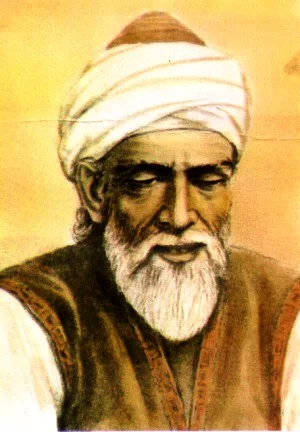
Muhammad al-Fezârî was an astronomer and mathematician who worked in Baghdad during the early period of the Abbasids. He is known for preparing one of the first translations of Indian astronomy into Arabic and for being the first person to make and use an astrolabe in the Islamic world. Date of birth unknown; His death is mentioned in sources as 796 or 806.
His full name is Ebû Abdillah Muhammed b. Ibrahim b. Habîb b. Semure b. Cüneb el-Fezârî is el-Kûfî. The nisbe on his name indicates his family's connection with Kufa; his father Ibrahim b. It is Habîb.
Transmission of Indian astronomy
During the reign of Caliph Mansur, an Indian astronomer was among the embassy delegation that came to Baghdad from the Sindh region in 771 or 773. The Caliph gave Fezârî the job of translating the Sanskrit astronomical text brought by this knowledge into Arabic. The resulting work is the astronomical tables known as Zîcü's-Sindhind, which include calculation methods based on the Brahmagupta tradition.
This work was an important tool in the transition of Indian calculation techniques and number system to the Islamic world. In the same period, Ya'kûb b. Târiq also worked on similar texts.
Zîcs prepared in the Sindhind style continued to be used in the east until the beginning of the 10th century and in Andalusia until the 12th century. Among Fezârî's other works in this field, the ruler book called Kitâbü'z-Zîc, treatises on the construction and use of instruments such as the astrolabe and the celestial sphere, and an ode describing the knowledge of the stars in verse are considered.
Most of these works have not survived to the present day, and their contents are known from the transmissions of later writers.
As one of the first representatives of the translation activities carried out in the Abbasid palace, Fezârî occupies a decisive place in the founding period of Islamic astronomy.
📚 Source: Wikipedia