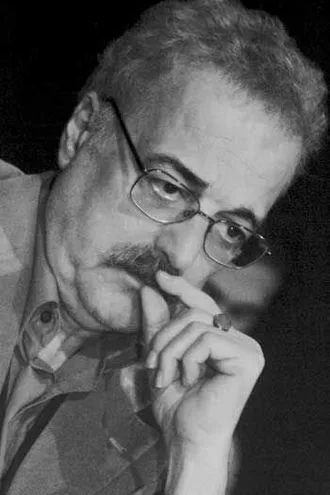
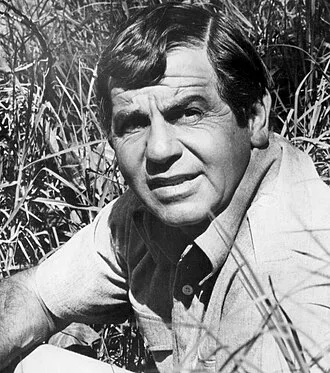
Paul Feyerabend
Feyerabend's most famous work is Against Method (1975), wherein he argues that there are no universally valid methodological rules for scientific inquiry. He also wrote on topics related to the politics of science in several essays and in his book Science in a Free Society (1978). Feyerabend's later works include Wissenschaft als Kunst (Science as Art) (1984), Farewell to Reason (1987), Three Dialogues on Knowledge (1991), and Conquest of Abundance (released posthumously in 1999), which collect essays from the 1970s until Feyerabend's death.
The uncompleted draft of an earlier work was released posthumously in 2009 as Naturphilosophie and translated to English in 2016 as Philosophy of Nature. This work contains Feyerabend's reconstruction of the history of natural philosophy from the Homeric period until the mid-20th century. In these works and others, Feyerabend wrote about numerous issues at the interface between history and philosophy of science and ethics, ancient philosophy, philosophy of art, political philosophy, medicine, and physics.
His final work was an autobiography, Killing Time, which he completed on his deathbed. Feyerabend's extensive correspondence and other materials from his Nachlass continue to be published.
Feyerabend is recognized as one of the most important 20th-century philosophers of science. In a 2010 poll, he was ranked as the 8th-most significant philosopher of science. He is often mentioned alongside Thomas Kuhn, Imre Lakatos, and N. R. Hanson as a crucial figure in the historical turn in philosophy of science, and his work on scientific pluralism has been markedly influential on the Stanford School and on much contemporary philosophy of science.
Feyerabend was also a significant figure in the sociology of scientific knowledge. His lectures were extremely well-attended, attracting international attention. His multifaceted personality is eloquently summarized in his obituary by Ian Hacking: "Humanists, in my old-fashioned sense, need to be part of both arts and sciences. Paul Feyerabend was a humanist. He was also fun."
In line with this humanistic interpretation and the concerns apparent in his later work, the Paul K. Feyerabend Foundation was founded in 2006 in his honour. The Foundation "promotes the empowerment and wellbeing of disadvantaged human communities. By strengthening intra and inter-community solidarity, it strives to improve local capacities, promote the respect of human rights, and sustain cultural and biological diversity." In 1970, the Loyola University of Chicago awarded Feyerabend a Doctor of Humane Letters Degree honoris causa. Asteroid (22356) Feyerabend is named after him.
Biography
Early life
Feyerabend was born in 1924 in Vienna, Austria. His paternal grandfather was the illegitimate child of a housekeeper, Helena Feierabend, who introduced the 'y' into 'Feyerabend.' His father, originally from Carinthia, was an officer in the merchant marine in World War I in Istria and a civil servant in Vienna until he died due to complications from a stroke.
His mother's family came from Stockerau. She was a seamstress and died on July 29, 1943 by suicide. The family lived in a working-class neighborhood (Wolfganggasse) where gypsy musicians, over-the-top relatives, illusionists, sudden accidents, and heated quarrels were part of everyday life. In his autobiography Feyerabend remembers a childhood in which magic and mysterious events were separated by dreary 'commonplace' only by a slight change of perspective — a theme later found in his work.
Raised Catholic, Feyerabend attended the Realgymnasium, where he excelled as a Vorzugsschüler (top student), especially in physics and mathematics. At 13 he built, with his father, his own telescope, which allowed him to become an observer for the Swiss Institute of Solar Research.
He was inspired by his teacher Oswald Thomas and developed a reputation as knowing more than the teachers. A voracious reader, especially of mystery and adventure novels and plays, Feyerabend casually stumbled onto philosophy. Works by Plato, Descartes, and Büchner awoke his interest in the dramatic power of argument.
He later encountered philosophy of science through the works of Mach, Eddington, and Dingler and was fascinated by Nietzsche's Thus Spoke Zarathustra and his depiction of the "lonely man." During high school, Feyerabend also began his lifelong interest in singing. He sang in a choir under Leo Lehner and was later introduced to opera and inspired by performances from George Oeggl and Hans Hotter. He later trained formally under the tutelage of Adolf Vogel and others.
Nazi Occupation of Austria and World War II
Feyerabend's parents were both welcoming of the Anschluss. His mother was entranced by Hitler's voice and demeanor and his father was similarly impressed by Hitler's charisma and later joined the Nazi Party. Feyerabend himself was unmoved by the Anschluss or World War II, which he saw as an inconvenience that got in the way of reading and astronomy.
Feyerabend was in the Hitler Youth as a part of compulsory policies and sometimes rebelled, praising the British or claiming he had to leave a meeting to attend Mass, and sometimes conformed, bringing in members who missed meetings. After the war, Feyerabend recounts that he "did not accept the aims of Nazism" and that he "hardly knew what they were." Later, he wondered why he did not see the occupation and war as moral problems.
They were just "inconveniences" and his reactions—recalled with uncommon honesty—were suggested by accidental moods and circumstances rather than by a "well defined outlook".
“Looking back, I notice a rather unstable combination of contrariness and a tendency to conform. A critical judgement or a feeling of unease could be silenced or turned into its opposite by an almost imperceptible counter-force. It was like a fragile cloud dispersed by heat. On other occasions I would not listen to reason or Nazi common sense and would cling to unpopular ideas.
This ambivalence (which survived for many years and was weakened only recently) seems to have been connected with my ambivalence towards people: I wanted to be close to them, but I also wanted to be left alone.”
—
From his autobiography, Killing Time, p 40-41After graduating from high school, in April 1942 Feyerabend was drafted into the German Arbeitsdienst (working service), received basic training in Pirmasens, and was assigned to a unit in Quelerne en Bas, near Brest. He described the work he did during that period as monotonous: "we moved around in the countryside, dug ditches, and filled them up again." After a short leave he volunteered for officer school.
In his autobiography he writes that he hoped the war would be over by the time he had finished his education as an officer. This turned out not to be the case. From December 1943 on, he served as an officer on the northern part of the Eastern Front, was decorated with an Iron cross, and attained the rank of lieutenant.
When the German army started its retreat from the advancing Red Army, Feyerabend was hit by three bullets while directing traffic. One hit him in the spine which left him wheel-chaired for a year and partially paralyzed for the rest of his life. He later learned to walk with a crutch, but was left impotent and plagued by intermittent bouts of severe pain for the rest of his life.
Post-WWII, PhD, and early career in England
After getting wounded in action, Feyerabend was hospitalized in and around Weimar where he spent more than a year recovering and where he witnessed the end of the war and Soviet occupation. The mayor of Apolda gave him a job in the education sector and he, then still on two crutches, worked in public entertainment including writing speeches, dialogues, and plays.
Later, at the music academy in Weimar, he was granted a scholarship and food stamps and took lessons in Italian, harmony, singing, enunciation, and piano. He also joined the Cultural Association for the Democratic Reform of Germany, the only association he ever joined.
As Feyerabend moved back to Vienna, he was permitted to pursue a PhD at the University of Vienna. He originally intended to study physics, astronomy, and mathematics (while continuing to practice singing) but decided to study history and sociology to understand his wartime experiences. He became dissatisfied, however, and soon transferred to physics and studied astronomy, especially observational astronomy and perturbation theory, as well as differential equations, nuclear physics, algebra, and tensor analysis.
He took classes with Hans Thirring, Hans Leo Przibram, and Felix Ehrenhaft. He also had a small role in a film directed by G.W. Pabst and joined the Austrian College where he frequented their speaker series in Alpbach. Here, in 1948, Feyerabend met Karl Popper who made a positive impression on him. He was also influenced by the Marxist playwright Bertolt Brecht, who invited him to be his assistant at the East Berlin State Opera, but Feyerabend turned down the offer.
A possible reason was Feyerabend's instinctive aversion to group thinking, which, for instance, made him staunchly refuse joining any Marxist Leninist organizations despite having friends there and despite voting communist in the early Austrian election.
In Vienna, Feyerabend organized the Kraft Circle, where students and faculty discussed scientific theories (he recalled five meetings about non-Einsteinian interpretations of the Lorentz transformations) and often focused on the problem of the existence of the external world. There, he also met Elizabeth Anscombe who, in turn, led Feyerabend to meet Ludwig Wittgenstein.
In the years between 1949 and 1952, Feyerabend traveled in Europe and exchanged with philosophers and scientists, including Niels Bohr. He also married his first wife (Jacqueline, 'to be able to travel together and share hotel rooms'), divorced, and became involved in various romantic affairs, despite his physical impotence. Cycles of amorous excitement, dependence, isolation, and renewed dependence characterized his relations with women for a good part of his life.
He drew great pleasure from opera, which he could attend even five days a week, and from singing (he resumed his lessons even if his crutch excluded an operatic career). Attending opera and singing (he had an excellent tenor voice) remained constant passions throughout his life. In 1951, he earned his doctorate with a thesis on basic statements (Zur Theorie der Basissätze) under Victor Kraft's supervision.
In 1952-53, thanks to a British Council scholarship, he continued his studies at the London School of Economics where he focused on Bohm's and von Neumann's work in quantum mechanics and on Wittgenstein's later works, including Remarks on the Foundations of Mathematics and Philosophical Investigations. He also attended Popper's lectures on logic and scientific method and became convinced that induction was irrational.
During this time, he developed an early version of his theory of incommensurability, which he thought was a triviality, and was encouraged to develop it further by Popper, H.L.A. Hart, Peter Geach, and Georg Henrik von Wright. He met many others including J.O. Wisdom, A. I. Sabra, Joseph Agassi, and Martin Buber. After his return to Vienna, Feyerabend met often with Viktor Frankl and with Arthur Pap, who offered him a position as his research assistant at the University of Vienna.
Thanks to Pap, he became acquainted with Herbert Feigl. During this time, Feyerabend worked on the German translation of Popper's The Open Society and Its Enemies and often met with Herbert Feigl and Philipp Frank. Franck argued that Aristotle was a better empiricist than Copernicus, an argument that became influential on Feyerabend's primary case study in Against Method.
In 1955, Feyerabend successfully applied for a lectureship at the University of Bristol with letters of reference from Karl Popper and Erwin Schrödinger and started his academic career. In 1956, he met Mary O’Neill, who became his second wife – another passionate love affair that soon ended in separation. After presenting a paper on the measurement problem at the 1957 symposium of the Colston Research Society in Bristol, Feyerabend was invited to the University of Minnesota by Michael Scriven.
There, he exchanged with Herbert Feigl, Ernst Nagel, Wilfred Sellars, Hilary Putnam, and Adolf Grünbaum. Soon afterwards, he met Gilbert Ryle who said of Feyerabend that he was "clever and mischievous like a barrel of monkeys."
Berkeley, Zurich and retirement
Feyerabend's primary academic appointment was at the University of California at Berkeley. While he was hired there in 1958, he spent part of his first years in the United States at the University of Minnesota, working closely with Herbert Feigl and Paul Meehl after rejecting a job offer from Cornell University. In California, he met and befriended Rudolf Carnap, whom he described as a "wonderful person, gentle, understanding, not at all as dry as would appear from some (not all) of his writings", and Alfred Tarski, among others.
He also married for a third time. At Berkeley, Feyerabend mostly lectured on general philosophy and philosophy of science. During the student revolution, he also lectured on revolutionaries (Lenin, Mao, Mill, and Cohn-Bendit). He often invited students and outsiders, including Lenny Bruce and Malcolm X, to guest lecture on a variety of issues including gay rights, racism, and witchcraft.
He supported the students but did not support student strikes. John Searle attempted to get Feyerabend fired from his position for hosting lectures off-campus.
As Feyerabend was highly marketable in academia and personally restless, he kept accepting and leaving university appointments while holding more 'stable' positions in Berkeley and London. For instance, starting in 1968, he spent two terms at Yale, which he describes as boring, feeling that most there did not have "ideas of their own." There, however, he did meet Jeffrey Bub, and the two became friends.
He remembered attempting to give everyone in graduate seminars 'As', which was strongly resisted by the students at Yale. He also asked students in his undergraduate classes to build something useful, like furniture or short films, rather than term papers or exams. In the same years, he accepted a new chair in philosophy of science in Berlin and a professorship in Auckland (New Zealand).
In Berlin, he faced a 'problem' as he was assigned two secretaries, fourteen assistants and an impressive office with antique furniture and an anteroom, which "gave him the willies":
“...I wrote and mailed my own letters, including official ones ... never had a mailing list or any list of my publications, and I threw away most of the offprints that were sent to me... That took me out of the academic landscape, but it also simplified my life. ... [In Berlin] the secretaries were soon used by my less independent colleagues and by the assistants. "Look," I said to them, "I was given 80,000 marks for starting a new library; go and buy all the books you want and run as many seminars as you like.
Don't ask me-- be independent!". Most of the assistants were revolutionaries, and two of them were sought by the police. Yet, they didn't buy Che Guevara or Mao, or Lenin; they bought books on logic! "We have to learn how to think," they said, as if logic has anything to do with that.
—
From his autobiography, Killing Time, p 132While teaching at the London School of Economics, Imre Lakatos often 'jumped in' during Feyerabend's lectures and started defending rationalist arguments. The two "differed in outlook, character and ambitions" but became very close friends. They often met at Lakatos' luxurious house in Turner Woods, which included an impressive library.
Lakatos had bought the house for representation purposes and Feyerabend often made gentle fun of it, choosing to help Lakatos' wife to wash dishes after dinner rather than engaging in scholarly debates with 'important guests' in the library. "Don't worry" – Imre would say to his guests – "Paul is an anarchist". Lakatos and Feyerabend planned to write a dialogue volume in which Lakatos would defend a rationalist view of science and Feyerabend would attack it.
This planned joint publication was put to an end by Lakatos's sudden death in 1974. Feyerabend was devastated by it.
Feyerabend had become more and more aware of the limitation of theories – no matter how well conceived – compared with the detailed, idiosyncratic issues encountered in the course of scientific practice. The "poverty of abstract philosophical reasoning" became one of the "feelings" that motivated him to pull together the collage of observations and ideas that he had conceived for the project with Imre Lakatos, whose first edition was published in 1975 as Against Method.
Feyerabend added to it some outrageous passages and terms, including about an 'anarchistic theory of knowledge', for the sake of provocation and in memory of Imre. He mostly wanted to encourage attention to scientific practice and common sense rather than to the empty 'clarifications' of logicians, but his views were not appreciated by the intellectuals who were then directing traffic in the philosophical community, who tended to isolate him.
Against Method also suggested that "approaches not tied to scientific institutions" may have value, and that scientists should work under the control of the larger public-- views not appreciated by all scientists either. Some gave him the dubious fame of 'worst enemy of science'. Moreover, Feyerabend was aware that "scientific jargon" – read literally, world for word, could reveal not only "nonsense", as found out by John Austin, "but also inhumanity.
With the Dadaists Feyerabend realized that "the language of philosophers, politicians, theologians" had similarities with "brute in-articulations". He exposed that by "avoiding scholarly ways of presenting a view" and using "common locutions and the language of show business and pulp instead".
In his autobiography, Feyerabend describes how the community of 'intellectuals' seemed to "...take a slight interest in me, lift me up to his own eye level, took a brief look at me, and drop me again. After making me appear more important than I ever thought I was, it enumerated my shortcomings and put me back on my place." This treatment left him all but indifferent.
During the years following the publication of Against Method and the critical reviews that followed – some of which as scathing as superficial – he suffered from bouts of ill health and depression. While medical doctors could not do anything for him, some help came from alternative therapies (e.g., Chinese herbal medicines, acupuncture, diet, massage). He also kept moving among academic appointments (Auckland, Brighton, Kassel).
Towards the end of the 1970s, Feyerabend was assigned a position as Professor of Philosophy at the Eidgenössische Technische Hochschule (ETH) in Zurich. There, he ran well attended lectures, including on the Theaetetus, Timeaus, and Aristotle's physics as well as public debates and seminars for the non-academic public.
Through the 1980s, he enjoyed alternating between posts at ETH Zurich and UC Berkeley. In 1983, he also met Grazia Borrini, who would become his fourth and final wife. She heard of Feyerabend from train passengers in Europe and attended his seminar in Berkeley. They were married in 1989, when they both decided to try to have children, for which they needed medical assistance due to Feyerabend's war injury.
Feyerabend claims that he finally understood the meaning of love because of Grazia. This had a dramatic impact on his worldview ("Today it seems to me that love and friendship play a central role and that without them even the noblest achievements and the most fundamental principles remain pale, empty and dangerous"). It is also in those years that he developed what he describes as "...a trace of a moral character".
“...a moral character cannot be created by argument, 'education' or an act of will. It cannot be created by any kind of planned action, whether scientific, political, moral or religious. Like true love, it is a gift, not an achievement. It depends on accidents, such as parental affection, some kind of stability, friendship, and-- following therefrom-- on a delicate balance between self-confidence and concern for others.
We can create conditions that favor the balance; we cannot create the balance itself. Guilt, responsibility, obligation-- these ideas make sense when the balance is given. They are empty words, even obstacles, when it is lacking.”
—
From his autobiography, Killing Time, p 174📚 Source: Wikipedia