Gisela Januszewska
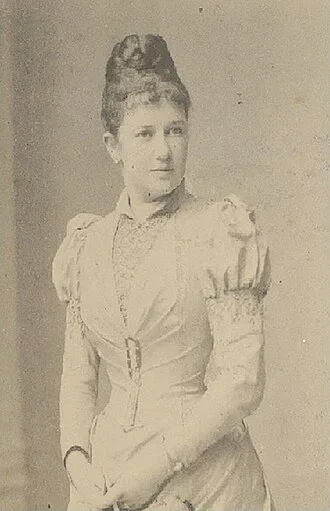
Gisela Januszewska was born on January 22, 1867, in the Moravian village of Drnovice, in a place that was then within the borders of the Austro-Hungarian Empire and is today in the Czech Republic. Januszewska's father, Leopold Rosenfeld, who came from a Jewish family, was the real estate manager of Grubišno Polje. Januszewska's younger brother, satirist Alexander Roda, who was also known as "Roda" (a name meaning "stork" in Serbo-Croatian) within the family, later officially adopted this name.
After graduating from a private school in Brno, she married the much older Joachim Kuhn; However, this marriage did not last long and Januszewska filed for divorce a few years later. After this change in his life, he settled in Switzerland, where he completed his *matura* and then enrolled at the University of Zurich and completed his medical education.
She graduated as a medical doctor on April 12, 1898, and began to be known as Gisela Kuhn, which was her name after graduation.
Januszewska, who started her medical career as a volunteer at the Zurich Women's Hospital, moved to Remscheid, Germany, in June 1898, where she worked as a doctor at the local health insurance institution. In March of the following year, she was appointed paramedic in Banja Luka in Bosnia, becoming the town's first female doctor.
During her years there, she focused mostly on facilitating Muslim women's access to healthcare. She married Ladislaus Januszewski for the second time in 1900; However, due to this marriage, he had to leave the civil service. Thereupon, she started working at a polyclinic opened for Muslim women in Banja Luka. In addition to minor surgical interventions, he played an important role in the treatment of diseases such as smallpox, typhoid, typhus and syphilis, which were common in the region at that time.
He particularly attracted attention with the high number of patients with osteomalacia and was recognized for his work on this subject.
After moving to Graz with her husband, Januszewska began her doctoral studies at the University of Graz shortly before the start of the First World War. After her husband's death in 1916, she volunteered to serve in the army medical corps, serving both soldiers and civilians. He was honored with various awards for his wartime efforts, including the German Red Cross and the Austrian Order of Civil Merit.
After the war, he opened his own practice in Graz in 1919 and worked as a panel doctor for health insurance associations in Styria and Carinthia until 1933. He became the second Austrian doctor to receive the title of *Medizinalrat* for his contributions to the field of medicine.
In 1937, he was awarded the Knight Order, one of Austria's most prestigious decorations. However, this period of honor did not last long; because a year later Austria was annexed by Nazi Germany. The last years of his life became increasingly dark. After his house in Graz was confiscated in 1940, he had to move to Vienna.
📚 Source: Wikipedia