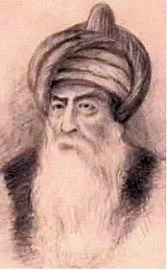
The son of a stonemason, he received a technical education and became a military engineer. He rose rapidly through the ranks to become first an officer and finally a Janissary commander, with the honorific title of Sinan. He refined his architectural and engineering skills while on campaign with the Janissaries, becoming expert at constructing fortifications of all kinds, as well as military infrastructure projects, such as roads, bridges and aqueducts.
At about the age of fifty, he was appointed as chief royal architect, applying the technical skills he had acquired in the army to the "creation of fine religious buildings" and civic structures of all kinds. He remained in this post for almost fifty years.
His masterpiece is the Selimiye Mosque in Edirne, although his most famous work is the Suleiman Mosque in Istanbul. He headed an extensive governmental department and trained many assistants who, in turn, distinguished themselves; these include Sedefkar Mehmed Agha, architect of the Sultan Ahmed Mosque and Mimar Hayruddin, architect of the Stari Most.
He is considered the greatest architect of the classical period of Ottoman architecture and has been compared to Michelangelo, his contemporary in the West. Michelangelo and his plans for St. Peter's Basilica in Rome were well known in Istanbul, since Leonardo da Vinci and he had been invited, in 1502 and 1505 respectively, by the Sublime Porte to submit plans for a bridge spanning the Golden Horn. Mimar Sinan's works are among the most influential buildings in history.
Early years and background
Mimar Sinan was born with the name Joseph in a small town called Ağırnas near the city of Kayseri in Anatolia (as stated in an order by Sultan Selim II). His birth is variously placed either between 1489 and 1491 or between 1494 and 1499. His origin is disputed, which is usually stated to be Armenian or Cappadocian Greek.
According to the Encyclopædia Britannica, Sinan had Armenian or Greek origin. One argument that lends credence to his Rum (Orthodox Christian) background is a decree by Selim II dated Ramadan 7 981 (ca. December 30, 1573), which granted Sinan's request to forgive and spare his relatives from the general exile of Kayseri's Rum (Orthodox Christian) community to the island of Cyprus; this decree was published in the June 1930-May 1931 edition of the Istanbul Turkish journal Türk Tarihi Encümeni Mecmuası.
Godfrey Goodwin stated that "after the Ottoman conquest of Cyprus in 1571, when Selim II decided to repopulate the island by transferring Rum (Orthodox Christian) families from the Karaman Eyalet, Sinan intervened on behalf of his family and obtained two orders from the Sultan in council exempting them from deportation." Relatives of Mimar Sinan from Ağırnas and a few other villages were also included on the list.
One of his relatives traveled to Istanbul and explained the situation to Sinan. Sinan wrote a petition to the sultan in the form of a letter, requesting that his relatives be removed from the list. Selim II granted this request; in this letter, the names of his relatives are given as Üleysi, Kudanşah, and Sarıoğlu Düvenci.
Furthermore, in the work titled "Tarih-i Edirne" by Örfî Mehmed Ağa, Mimar Sinan himself states that his grandfather's name was "Toğan/Doğan"; all of these names are of Turkish origin, which makes it likely that he came from a Turkified Greek or Christian Turkish family.
Sinan's place of birth, Ağırnas, was a Rum (Orthodox Christian) village with no Armenian inhabitants, which some scholars argue would give more credence to the theory of him being of Greek or Christian Turkish origin. Additionally, before the Greeks evacuated the village, a Cappadocian Greek family from the village named Taşçıoğlu (Greek: Ταστσιόγλου) had claimed Sinan as a member of their own family.
Turkish scholars have meanwhile argued that Sinan's family was Christian Turkish. In 1935, a council commissioned by the Turkish Historical Society went so far as to open up Sinan's tomb and measure his skull so as demonstrate his Turkish "racial" heritage.
Less popular theories among scholars are that Sinan was Albanian, or even Jewish, A local tradition in the village of Shiroka Lăka holds that Sinan was of Bulgarian origin and his family came from that village.
Sinan grew up helping his father in his work, and by the time that he was conscripted would have had a good grounding in the practicalities of building work. There are three brief records (Anonymous Text; Architectural Masterpieces; Book of Architecture) in the library of Topkapı Palace, dictated by Sinan to his friend and biographer Mustafa Sâi Çelebi.
In these manuscripts, Sinan divulges some details of his youth and military career. His father is referred to as "Abdülmennan" (literally "Servant of the Generous and Merciful One"), a title which was commonly used in the Ottoman period to define the non-Muslim father of a Muslim convert.
Military career
In 1512, Sinan was conscripted into Ottoman service under the devshirme system. He was sent to Constantinople to be trained as an officer of the Janissary Corps and converted to Islam. He was too old to be admitted to the imperial Enderun School in the Topkapı Palace but was sent instead to an auxiliary school. Some records claim that he might have served the Grand Vizier Pargalı İbrahim Pasha as a novice of the Ibrahim Pasha School.
Possibly, he was given the Islamic name Sinan there. He initially learned carpentry and mathematics but through his intellectual qualities and ambitions, he soon assisted the leading architects and got his training as an architect.
During the next six years, he also trained to be a Janissary officer (acemioğlan). He possibly joined Selim I in his last military campaign, Rhodes according to some sources, but when the Sultan died, this project ended. Two years later he witnessed the conquest of Belgrade. Under the new sultan, Suleiman the Magnificent, he was present, as a member of the Household Cavalry, at the Battle of Mohács.
He was promoted to captain of the Royal Guard and then given command of the Infantry Cadet Corps. He was later stationed in Austria, where he commanded the 62nd Orta of the Rifle Corps. He became a master of archery, while at the same time, as an architect, learning the weak points of structures when gunning them down.
In 1535 he participated in the Baghdad campaign as a commanding officer of the Royal Guard. In 1537 he went on expeditions to Corfu and Apulia and Moldavia.
During these campaigns he proved himself an able architect and engineer. When the Ottoman army captured Cairo, Sinan was promoted to chief architect and was given the privilege of tearing down any buildings in the captured city that were not according to the city plan.[citation needed] During the campaign in the East, he assisted in the building of defences and bridges, such as a bridge across the Danube.
He converted churches into mosques. During the Persian campaign in 1535 he built ships for the army and the artillery to cross Lake Van. For this he was given the title Haseki'i, Sergeant-at-Arms in the body guard of the Sultan, a rank equivalent to that of the Janissary Ağa.[citation needed]
When Chelebi Lütfi Pasha became Grand Vizier in 1539, he appointed Sinan, who had previously served under his command, to the office of Architect of the Abode of Felicity. This was the start of a remarkable career. The job entailed the supervision infrastructure construction and the flow of supplies within the Ottoman Empire.
He was also responsible for the design and construction of public works, such as roads, waterworks and bridges. Through the years he transformed his office into that of Architect of the Empire, an elaborate government department, with greater powers than his supervising minister. He became the head of a whole Corps of architects, training a team of assistants, deputies and pupils.[citation needed]
Work
His training as an army engineer gave Sinan an empirical approach to architecture rather than a theoretical one--similar to Europe-based architects of roughly the same period such as Brunelleschi and Michelangelo.
Various sources state that Sinan was the architect of at least 374 structures which included 92 mosques; 52 small mosques (mescit); 55 schools of theology (medrese); 7 schools for Koran reciters (darülkurra); 20 mausoleums (türbe); 17 public kitchens (imaret); 3 hospitals (darüşşifa); 6 aqueducts; 10 bridges; 20 caravanserais; 36 palaces and mansions; 8 vaults; and 48 baths. Sinan held the position of chief architect of the palace, which meant being the overseer of all construction work of the Ottoman Empire, for nearly 50 years, working with a large team of assistants consisting of architects and master builders.
The development and maturing stages of Sinan's career can be illustrated by three major works. The first two of these are in Istanbul: the Şehzade Mosque, which he calls a work of his apprenticeship period and the Süleymaniye Mosque, which is the work of his qualification stage. The Selimiye Mosque in Edirne is the product of his master stage.
Şehzade Mosque is the first of the grand mosques created by Sinan. The Mihrimah Sultan Mosque, which is also known as the Üsküdar Quay Mosque, was completed in the same year and has an original design with its main dome supported by three half domes. When Sinan reached the age of 70, he had completed the Süleymaniye Mosque complex.
This building, situated on one of the hills of Istanbul facing the Golden Horn, and built in the name of Süleyman the Magnificent, is one of the symbolic monuments of the period. The diameter of the dome, which exceeds the 31 m (102 ft) of the Selimiye Mosque which Sinan completed when he was 80, is the most outstanding example of the level of achievement reached by Sinan.
Mimar Sinan reached his artistic peak with the design, architecture, tile decorations and land stone workmanship displayed at Selimiye.
Another area of architecture where Sinan produced unique designs are his mausoleums. The Mausoleum of Şehzade Mehmed is notable for with its exterior decorations and sliced dome.[clarification needed] The Rüstem Paşa mausoleum is a very attractive structure in classical style.
The mausoleum of Süleyman the Magnificent has an octagonal body and flat dome. Sinan's own mausoleum, which is located in the north-east part of the Süleymaniye complex on the other hand, is a very plain structure.
Sinan masterfully combined art with functionalism in the bridges he built. The largest of these is the nearly 635 m (2,083 ft) long Büyükçekmece Bridge. Other important examples are the Ailivri Bridge, the Old Bridge in Svilengrad on the Maritsa, the Lüleburgaz (Sokullu Mehmet Pasha) Bridge on the Lüleburgaz River, the Sinanlı Bridge over the river Ergene and the Mehmed Paša Sokolović Bridge over Drina river in Bosnia and Herzegovina.
While Sinan was maintaining and improving the water supply system of Istanbul, he built arched aqueducts at several locations within the city. The Mağlova Arch over the Alibey River, which is 257 m (843 ft) long and 35 m (115 ft) high, has two tiers of arches, and is one of the best examples of its kind.
At the start of Sinan's career, Ottoman architecture was highly pragmatic. Buildings were repetitions of former types and were based on rudimentary plans. They were more an assembly of parts than a conception of a whole. An architect could sketch a plan for a new building and an assistant or foreman knew what to do, because novel ideas were avoided.
Moreover, architects used an extravagant margin of safety in their designs, resulting in a wasteful use of material and labour. Sinan would gradually change all this. He was to transform established architectural practices, amplifying and transforming the traditions by adding innovations, trying to approach perfection.
The early years (till the mid-1550s): apprenticeship period
During these years he continued the traditional pattern of Ottoman architecture, but he gradually began exploring other possibilities, because during his military career he had had the opportunity to study the architectural monuments in the conquered cities of Europe and the Middle East.
His first opportunity to design a major building was the Hüsrev Pasha Mosque and its double medresse in Aleppo, Syria. It was built in the winter of 1536-1537 for his commander-in-chief and the governor of Aleppo between two army campaigns. It was built hastily and this is evident in the coarseness of execution and the crude decoration.
His first major commission as the royal architect was the construction of the Haseki Sultan Complex for Hurrem Sultan, the wife of the sultan, Suleiman the Magnificent. He had to follow the plans drawn by his predecessors. Sinan retained the traditional arrangement of the available space without any innovations. Nevertheless, it was already better built than the Aleppo mosque and it shows a certain elegance.
However, it has suffered from many restorations. Sinan is credited to have built a defensive tower in Vlorë, south Albania, in 1537, very similar to the White Tower of Thessaloniki, as well as Muradie Mosque, during Suleiman the Magnificent's stay in the town for the preparation of his expedition towards Italy.
In 1541, he started the construction of the mausoleum (türbe) of the Grand Admiral Hayreddin Barbarossa. It stands on the shore of Beşiktaş on the European part of Istanbul, at the site where his fleet used to assemble. Oddly enough, the admiral is not buried there, but in his türbe next to the Iskele mosque. This mausoleum has been severely neglected since then.
Mihrimah Sultan, the only daughter of Suleiman and Hurrem and wife of the Grand Vizier Rüstem Pasha gave Sinan the commission to build a mosque with medrese (college), an imaret (soup kitchen) and a sibyan mekteb (Qur'an school) in Üsküdar.
The imaret no longer exists. This Iskele Mosque (or Jetty mosque) already shows several hallmarks of Sinan's mature style: a spacious, high-vaulted basement, slender minarets, single-domed baldacchino, flanked by three semi-domes ending in three exedrae and a broad double portico. The construction was finished in 1548.
The construction of a double portico was not a first in Ottoman architecture, but it set a trend for country mosques and mosques of viziers in particular. Rüstem Pasha and Mihrimah required them later in their three mosques in Constantinople and in the Rüstem Pasha Mosque in Tekirdağ. The inner portico traditionally have stalactite capitals while the outer portico has capitals with chevron patterns (baklava).
When sultan Suleiman the Magnificent returned from another Balkan campaign, he received news that his son Şehzade Mehmed had died at the age of twenty-two. In November 1543, not long after Sinan had started the construction of the Iskele Mosque, the sultan ordered Sinan to build a new major mosque with an adjoining complex in memory of his favourite son.
This Şehzade Mosque would become larger and more ambitious than his previous ones. Architectural historians consider this mosque as Sinan's first masterpiece. Obsessed by the concept of a large central dome, Sinan turned to the plans of mosques such as the Fatih Pasha Mosque in Diyarbakır or the Piri Pasha Mosque in Hasköy.
He must have visited both mosques during his Persian campaign. Sinan built a mosque with a central dome, this time with four equal half-domes. This superstructure is supported by four massive, but still elegant, free-standing octagonal fluted piers and four piers incorporated in each lateral wall. In the corners, above roof level, four turrets serve as stabilizing anchors.
This coherent concept already is markedly different from the additive plans of traditional Ottoman architecture. Sedefkar Mehmed Agha would later copy the concept of fluted piers in his Sultan Ahmed Mosque in an attempt to lighten their appearance. Sinan, however, rejected this solution in his next mosques.
Mid-1550s to 1570: qualification stage
By 1550, Suleiman the Magnificent was at the height of his powers. Having built a mosque for his son, he felt it was time to construct his own imperial mosque, an enduring monument larger than all the others, to be built on a gently sloping hillside dominating the Golden Horn. Money was no problem, since he had accumulated a treasure from the loot of his campaigns in Europe and the Middle East.
He gave the order to Sinan to build a mosque, the Süleymaniye, surrounded by a külliye consisting of four colleges, a soup kitchen, a hospital, an asylum, a hamam, a caravanserai and a hospice for travellers (tabhane). Sinan, now heading a formidable department with a great number of assistants, finished this formidable task in seven years.
Before Süleymaniye, no mosques had been built with half cubic roofs. He got the idea of half cubic roof design from the Hagia Sophia. Through this monumental[according to whom?] achievement, Sinan emerged from the anonymity of his predecessors.
Sinan must have known the ideas of the Renaissance architect Leone Battista Alberti (who in turn had studied De architectura by the Roman architect and engineer Vitruvius), since he too was concerned in building the ideal church, reflecting harmony through the perfection of geometry in architecture. But, contrary to his Western counterparts, Sinan was more interested in simplification than in enrichment.
He tried to achieve the largest volume under a single central dome. The dome is based on the circle, the perfect geometrical figure representing, in an abstract way, a perfect God. Sinan used subtle geometric relationships, using multiples of two when calculating the ratios and the proportions of his buildings. However, in a later stage, he also used divisions of three or ratios of two to three when working out the width and the proportions of domes, such as the Sokollu Mehmed Pasha Mosque at Kadırga.
While he was fully occupied with the construction of the Süleymaniye, Sinan or his subordinates drew up the plans and gave instructions for many other constructions. Sinan built a mosque for the Grand Vizier Pargalı İbrahim Pasha and a mausoleum (türbe) at Silivrikapı (Constantinople) in 1551.
The next Grand Vizier, Rüstem Pasha gave Sinan several more commissions. In 1550 he built a large inn (han) in the Galata district of Istanbul. About ten years later he built another han in Edirne, and between 1544 and 1561 the Taṣ Han at Erzurum. He designed a caravanserai in Eregli and an octagonal madrasah in Constantinople.
Between 1553 and 1555, Sinan built the Sinan Pasha Mosque at Beşiktaş, a smaller version of the Üç Şerefeli Mosque at Edirne, for the Grand Admiral Sinan Pasha. This proves again that Sinan had thoroughly studied the work of other architects, especially since he was responsible for the upkeep of these buildings. He copied the old form, pondered over the weaknesses in the construction and tried to solve this with his own solution.
In 1554, Sinan used the form of the Sinan Pasha mosque again for the construction of the mosque for the next Grand Vizier Kara Ahmet Pasha in Constantinople, his first hexagonal mosque. By using a hexagonal plan, Sinan could reduce the side domes to half-domes and set them in the corners at an angle of 45 degrees. Clearly, Sinan must have appreciated this form,[citation needed] since he repeated it later in mosques such as the Sokollu Mehmed Pasha Mosque at Kadırga and the Atik Valide Mosque at Üsküdar.
In 1556, Sinan built the Haseki Hürrem Sultan Hamamı, replacing the antique Baths of Zeuxippus, which are still standing close to the Hagia Sophia. This would become one of the most beautiful hamams he ever constructed.
In 1559, he built the Cafer Ağa madrasah below the forecourt of the Hagia Sophia. In the same year he began the construction of a small mosque for Iskender Pasha at Kanlıca, beside the Bosphorus. This was one of the many minor and routine commissions the office of Sinan received over the years.