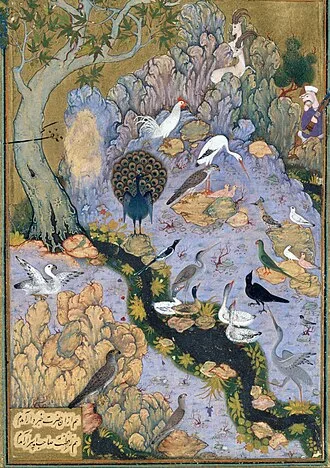
For example, Rumi, one of the best-loved Persian poets, born in Balkh (in modern-day Afghanistan) or Wakhsh (in modern-day Tajikistan), wrote in Persian and lived in Konya (in modern-day Turkey), at that time the capital of the Seljuks in Anatolia. The Ghaznavids conquered large territories in Central and South Asia and adopted Persian as their court language.
There is thus Persian literature from Iran, Azerbaijan, Kurdistan, Afghanistan, Pakistan, India, the wider Caucasus, Turkey, Bangladesh, Tajikistan and other parts of Central Asia, as well as the Balkans. Not all Persian literature is written in Persian, as some consider works written by ethnic Persians or Iranians in other languages, such as Greek and Arabic, to be included.
At the same time, not all literature written in Persian is written by ethnic Persians or Iranians, as Turkic, Caucasian, Indian and Slavic poets and writers have also used the Persian language in the environment of Persianate cultures.
Described as one of the great literatures of humanity, including Goethe's assessment of it as one of the four main bodies of world literature, Persian literature has its roots in surviving works of Middle Persian and Old Persian, the latter of which dates back as far as 522 BCE, the date of the earliest surviving Achaemenid inscription, the Behistun Inscription.
The bulk of surviving Persian literature, however, comes from the times following the Muslim conquest of Persia c. 650 CE. After the Abbasids came to power (750 CE), some Persians became prominent scribes and bureaucrats of the Islamic Caliphate and, increasingly, writers and poets.
The New Persian language literature arose and flourished in Khorasan and Transoxiana; early Iranian dynasties of post-Islamic Iran such as the Tahirids, Samanids, and Ghaznavid, being based in Khorasan.[needs copy edit] Thus, the development of New Persian literature took place primarily outside of the borders of modern Iran, with its earliest form known as Dari rising under late-Sassanian and evolving under the Samanid and Ghaznavid courts.
Persian poets such as Ferdowsi, Saadi, Hafez, Attar, Nizami, Rumi and Omar Khayyam are also known in the West and have influenced the literature of many countries.
Classical Persian literature
Pre-Islamic Persian literature
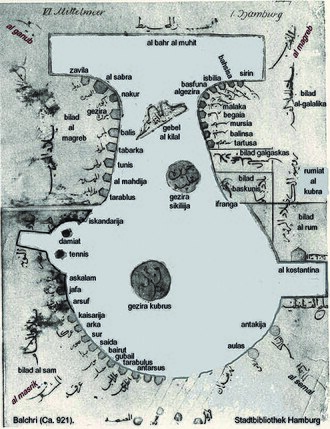
Very few literary works of Achaemenid Iran have survived, partly due to the destruction of the library at Persepolis. Most of what remains consists of the royal inscriptions of Achaemenid kings, particularly Darius I (522–486 BC) and his son Xerxes. The Parsis who fled to India took with them some of the books of the Zoroastrian canon, including some of the Avesta and ancient commentaries (Zend) thereof. Some works of Sassanid geography and travel also survived, albeit in Arabic translations.
No single text devoted to literary criticism has survived from pre-Islamic Iran. However, some essays in Pahlavi, such as "Ayin-e name nebeshtan" (Principles of Writing Book) and "Bab-e edteda’I-ye" (Kalileh o Demneh), have been considered as literary criticism.
Claims regarding the existence of pre-Islamic books on eloquence, such as the 'Karvand', are primarily based on the assertions of the Shu'ubiyya movement, though no physical trace of such works remains. There are some indications that some among the Persian nobility were familiar with Greek rhetoric and literary criticism (Zarrinkoub, 1947).
Persian literature of the medieval and pre-modern periods
While initially overshadowed by Arabic during the Umayyad and early Abbasid caliphates, New Persian soon became a literary language again of the Central Asian and West Asian lands[citation needed]. The rebirth of the language in its new form is often accredited to Ferdowsi, Unsuri, Daqiqi, Rudaki, and their generation, as they used pre-Islamic nationalism as a conduit to revive the language and customs of ancient Iran[citation needed].
Poetry
Poetry was frequently integrated into classical Persian works across various disciplines, including science and metaphysics. Writing in verse was a common practice among many scholars. For example, it is claimed that almost half of Avicenna's medical writings are in verse[citation needed].
Works of the early era of Persian poetry are characterized by strong court patronage, panegyrics, and what is known as سبک فاخر "exalted in style". The tradition of royal patronage is claimed to have begun under the Sassanid era and carried over through the Abbasid and Samanid courts into every major Iranian dynasty[citation needed].
The Qasida was the most famous form of panegyric used, though quatrains such as those in Omar Khayyam's Ruba'iyyat are also widely popular.
The Khorasani style, whose followers mostly were associated with Greater Khorasan, is characterized by its elevated diction, dignified tone, and literate language. The chief representatives of this lyricism are Asjadi, Farrukhi Sistani, Unsuri, and Manuchehri. Panegyric masters such as Rudaki were known for their love of nature, their verses abounding with evocative descriptions.
Through these courts and system of patronage emerged the epic style of poetry, with Ferdowsi's Shahnama at the apex. By glorifying the Iranian historical past in heroic verses, he and other notables such as Daqiqi and Asadi Tusi created works that heavily influenced Iranian cultural identity. Ferdowsi set a model to be followed by a host of other poets later on.
The 13th century marks the ascendancy of lyric poetry with the consequent development of the ghazal into a major verse form, as well as the rise of mystical and Sufi poetry. This style is often called Araqi (Iraqi) style (Araq-e-Ajam) and is known by its emotional lyric qualities, rich meters, and the relative simplicity of its language.
Emotional romantic poetry was not something new, however, as works such as Vis o Ramin by As'ad Gorgani, and Yusof o Zoleikha by Am'aq Bokharai exemplify. Poets such as Sana'i and Attar (who ostensibly inspired Rumi), Khaqani Shirvani, Anvari, and Nizami, were highly respected ghazal writers. However, the most prominent masters of this school are Rumi, Saadi, and Hafiz Shirazi.
Regarding the tradition of Persian love poetry during the Safavid era, Persian historian Ehsan Yarshater notes, "As a rule, the beloved is not a woman, but a young man. In the early centuries of Islam, the raids into Central Asia produced many young slaves. Slaves were also bought or received as gifts. They were made to serve as pages at court or in the households of the affluent, or as soldiers and bodyguards.
Young men, slaves or not, also, served wine at banquets and receptions, and the more gifted among them could play music and maintain a cultivated conversation. It was love toward young pages, soldiers, or novices in trades and professions which was the subject of lyrical introductions to panegyrics from the beginning of Persian poetry, and of the ghazal. " During the same Safavid era, many subjects of the Iranian Safavids were patrons of Persian poetry, such as Teimuraz I of Kakheti.
In the didactic genre, notable works include Sanai's Hadiqat-ul-Haqiqah (Garden of Truth) and Nizami's Makhzan-ul-Asrār (Treasury of Secrets). Some of Attar's and Rumi's works are also grouped in this genre, although they are sometimes classified as lyrical due to their mystical qualities. Two prominent examples of this genre are Saadi's Bustan and Gulistan.
After the 15th century, the Indian style of Persian poetry (sometimes also called Isfahani or Safavi styles) became prominent. This style has its roots in the Timurid era and produced poets such as Amir Khosrow Dehlavi and Bhai Nand Lal Goya.
Prose writings
Notable prose writings of this era include Nizami Arudhi Samarqandi's "Chahār Maqāleh" as well as Zahiriddin Nasr Muhammad Aufi's anecdote compendium Jawami ul-Hikayat.
Shams al-Mo'ali Abol-hasan Ghaboos ibn Wushmgir's work, the Qabus nama (A Mirror for Princes), is a Belles-lettres work of Persian literature. Another notable work is the Siyasatnama, by the Persian vizier Nizam al-Mulk. Kelileh va Demneh, translated from Indian folk tales, is also mentioned in this category. It is seen as a collection of adages in Persian literary studies and thus does not convey folkloric notions[citation needed].
Biographies, hagiographies, and historical works
Among the historical and biographical works in classical Persian are Abolfazl Beyhaghi's Tarikh-i Beyhaqi, Lubab ul-Albab of Zahiriddin Nasr Muhammad Aufi (which is sometimes regarded as a chronological source)[citation needed], as well as Ata-Malik Juvayni's Tarikh-i Jahangushay-i Juvaini (which spans the Mongolid and Ilkhanid era of Iran)[citation needed]. Attar's Tazkerat-ol-Owliya ("Biographies of the Saints") is an account of Sufi mystics, which is referenced in mystical hagiography[citation needed].
Literary criticism
The oldest surviving work of Persian literary criticism after the Islamic conquest of Persia is Muqaddame-ye Shahname-ye Abu Mansuri, which was written during the Samanid period. The work deals with the myths and legends of Shahnameh and is claimed to be the oldest surviving example of Persian prose. It also shows an attempt by the authors to evaluate literary works critically [citation needed]
Storytelling
One Thousand and One Nights (Persian: هزار و یک شب) is a medieval folk tale collection which tells the story of Scheherazade (Persian: شهرزاد Šahrzād), a Sassanid queen who must relate a series of stories to her malevolent husband, King Shahryar (Persian: شهریار Šahryār), to delay her execution.
The stories are told over a period of one thousand and one nights, and every night she ends the story with a suspenseful situation, forcing the King to keep her alive for another day. The individual stories were created over several centuries, by many people from a number of different lands.
The nucleus of the collection is formed by a lost Pahlavi Sassanid Persian book called Hazār Afsānah (Persian: هزار افسان, Thousand Myths), which is believed to be a collection of ancient Indian and Persian folk tales.
During the reign of the Abbasid Caliph Harun al-Rashid in the 8th century, Baghdad had become an important cosmopolitan city. Merchants from Persia, China, India, Africa, and Europe were all found in Baghdad. During this time, many of the stories that were originally folk stories are thought to have been collected orally over many years and later compiled into a single book.
The compiler and 9th-century translator into Arabic is reputedly the storyteller Abu Abd-Allah Muhammad al-Jahshiyari[citation needed]. The frame story of Shahrzad seems to have been added in the 14th century.[citation needed]
Persian dictionaries
The biggest Persian dictionary is Dehkhoda Dictionary (16 volumes) by Ali-Akbar Dehkhoda. It is the largest comprehensive Persian dictionary ever published, comprising 16 volumes (more than 27,000 pages). It is published by the Tehran University Press (UTP) under the supervision of the Dehkhoda Dictionary Institute and was first published in 1931.
It traces the historical development of the Persian language, providing a comprehensive resource to scholars and academic researchers, as well as describing usage in its many variations throughout the world. He names 200 Persian lexicographical works in his dictionary, the earliest, Farhang-i Oim (فرهنگ اویم) and Farhang-i Menakhtay (فرهنگ مناختای), from the late Sassanid era of the 3rd-7th century.
The most widely used Persian lexicons in the Middle Ages were those of Abu Hafs Sughdi (فرهنگ ابوحفص سغدی) and Asadi Tusi (فرهنگ لغت فرس), written in 1092.
The production of Persian dictionaries declined in Iran after the 14th century, while it simultaneously grew in the Indian subcontinent and Ottoman Turkey, regions that were increasingly becoming Persianized. Only 4 dictionaries of Persian were compiled in Iran between the 10th and 19th centuries, while more than 66 were produced in India.
Significant dictionaries from India include the Farhang-e Ghavvas, Sharafnama-ye Ebrahimi, Farhang-i Jahangiri, and Burhan-i Qati. Unlike the Persian dictionaries of India, most dictionaries from Ottoman Turkey are bilingual (Persian-Turkish). Some significant dictionaries of the era are Oqnum-e Ajam, Loghat-e Ne'matallah, and Lesan al-Ajam.
In 1645, Christian Ravius completed a Persian-Latin dictionary, printed at Leiden. This was followed by John Richardson's two-volume Oxford edition (1777) and Gladwin-Malda's (1770) Persian-English Dictionaries, Scharif and S. Peters' Persian-Russian Dictionary (1869), and 30 other Persian lexicographical translations through the 1950s.
Currently, English-Persian dictionaries of Manouchehr Aryanpour and Soleiman Haim are widely used in Iran. Also highly regarded in the contemporary Persian literature lexical corpus are the works of Dr. Mohammad Moin. The first volume of Moin Dictionary was published in 1963.
Influence
Sufi literature
Some prominent medieval Persian poets were Sufis, and their poetry has influenced Sufi traditions across the Muslim world. Rumi is recognized both as a poet and as the founder of a Sufi order. Hafez's work, which incorporated Sufi themes, has gained recognition in both Eastern and Western literary traditions[citation needed]. The themes and styles of this devotional poetry have been utilized by various Sufi and non-Sufi poets.
Notable prose texts in Persian mystic literature include Kimiya-yi sa'ādat, Asrar al-Tawhid, and Kashf ul Mahjoob[citation needed].
Georgian literature
Beginning in the early 16th century, Persian traditions had a large impact on the Georgian ruling elites, which in turn resulted in Persian influence on Georgian art, architecture, and literature. This cultural influence lasted until the arrival of the Russians.
Jamshid Sh. Giunashvili remarks on the connection of Georgian culture with that of the Persian literary work Shahnameh:
The names of many Šāh-nāma heroes, such as Rostom-i, Thehmine, Sam-i, or Zaal-i, are found in 11th- and 12th-century Georgian literature. They are indirect evidence for an Old Georgian translation of the Šāh-nāma that is no longer extant. ...
The Šāh-nāma was translated, not only to satisfy the literary and aesthetic needs of readers and listeners, but also to inspire the young with the spirit of heroism and Georgian patriotism. Georgian ideology, customs, and worldview often informed these translations because they were oriented toward Georgian poetic culture.
Conversely, Georgians consider these translations works of their native literature. Georgian versions of the Šāh-nāma are quite popular, and the stories of Rostam and Sohrāb, or Bījan and Maniža became part of Georgian folklore.
Farmanfarmaian in the Journal of Persianate Studies: