
















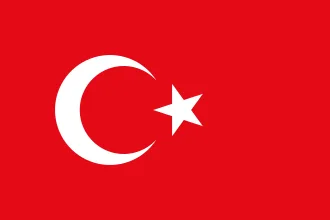
First inhabited by modern humans during the Late Paleolithic, present-day Turkey was home to various ancient peoples. The Hattians were assimilated by the Hittites and other Anatolian peoples. Classical Anatolia transitioned into cultural Hellenization after Alexander the Great's conquests, and later Romanization during the Roman and Byzantine eras.
The Seljuk Turks began migrating into Anatolia in the 11th century, starting the Turkification process. The Seljuk Sultanate of Rum ruled Anatolia until the Mongol invasion in 1243, when it disintegrated into Turkish principalities. Beginning in 1299, the Ottomans united the principalities and expanded. Mehmed II conquered Constantinople (modern-day Istanbul) in 1453.
During the reigns of Selim I and Suleiman the Magnificent, the Ottoman Empire became a global power. From 1789 onwards, the empire saw major changes, reforms, centralization, and rising nationalism while its territory declined.
In the 19th and early 20th centuries, persecution of Muslims during the Ottoman contraction and in the Russian Empire resulted in large-scale loss of life and mass migration into modern-day Turkey from the Balkans, Caucasus, and Crimea. Under the control of the Three Pashas, the Ottoman Empire entered World War I in 1914, during which the Ottoman government committed genocides against its Armenian, Greek, and Assyrian subjects.
Following Ottoman defeat, the Turkish War of Independence resulted in the abolition of the sultanate and the signing of the Treaty of Lausanne. Turkey emerged as a more homogenous nation state. The Republic was proclaimed on 29 October 1923, modelled on the reforms initiated by its founder and first president, Mustafa Kemal Atatürk.
Turkey remained neutral during most of World War II, but was involved in the Korean War. Several military interventions interfered with the transition to a multi-party system.
Turkey is an upper-middle-income and emerging country; its economy is the world's 16th-largest by nominal and 11th-largest by PPP-adjusted GDP. As the 15th-largest electricity producer in the world, Turkey aims to become a hub for regional energy transportation. It is a unitary presidential republic. Turkey is a founding member of the OECD, G20, and Organization of Turkic States.
With a geopolitically significant location, Turkey is a NATO member and has its second-largest military personnel. It may be recognized as an emerging, a middle, and a regional power. As an EU candidate, Turkey is part of the EU Customs Union.
Turkey has coastal plains, a high central plateau, and various mountain ranges with rising elevation eastwards. Turkey's climate is diverse, ranging from Mediterranean and other temperate climates to semi-arid and continental types. Home to three biodiversity hotspots, Turkey is prone to frequent earthquakes and is highly vulnerable to climate change.
Turkey has a universal healthcare system, growing access to education, and increasing levels of innovativeness. It is a leading TV content exporter. With numerous UNESCO World Heritage sites and intangible cultural heritage inscriptions, and a rich and diverse cuisine, Turkey is the fourth most visited country in the world.
Etymology
Turchia, meaning "the land of the Turks", had begun to be used in European texts for Anatolia by the end of the 12th century. As a word in Turkic languages, Turk may mean "strong, strength, ripe" or "flourishing, in full strength". It may also mean ripe as in for a fruit or "in the prime of life, young, and vigorous" for a person.
As an ethnonym, the etymology is still unknown. In addition to usage in languages such as Chinese in the 6th century, the earliest mention of Turk (𐱅𐰇𐰺𐰜, türü̲k̲; or 𐱅𐰇𐰼𐰚, türk/tẄrk) in Turkic languages comes from the Second Turkic Khaganate.
In Byzantine sources in the 10th century, the name Tourkia was used for defining two medieval states: Hungary (Western Tourkia); and Khazaria (Eastern Tourkia). The Mamluk Sultanate, with its ruling elite of Turkic origin, was called the "State of the Turks" (Dawlat at-Turk, or Dawlat al-Atrāk, or Dawlat-at-Turkiyya). Turkestan, also meaning the "land of the Turks", was used for a historic region in Central Asia.
Middle English usage of Turkye or Turkeye is found in The Book of the Duchess (written in 1369–1372) to refer to Anatolia or the Ottoman Empire. The modern spelling Turkey dates back to at least 1719.
The bird called turkey was named as such due to trade of guineafowl from Turkey to England. By the mid-19th century, the name Turkey was sometimes used in referring to international treaties of the Ottoman Empire. In 1920, the Government of the Grand National Assembly adopted the name Türkiye Devleti ("State of Turkey").
With the Treaty of Alexandropol of December 1920, the name Türkiye entered international documents for the first time. In the treaty signed with Afghanistan in 1921, the expression Devlet-i Âliyye-i Türkiyye ("Sublime Turkish State") was used, likened to the Ottoman Empire's name.
Upon the proclamation of the republic on 29 October 1923, the name Türkiye Cumhuriyeti (توركيه جمهوريتى) was adopted. In December 2021, President Recep Tayyip Erdoğan called for expanded official usage of Türkiye, saying that Türkiye "represents and expresses the culture, civilization, and values of the Turkish nation in the best way".
In May 2022, the Turkish government requested the United Nations and other international organizations to use Türkiye officially in English; the UN agreed. Until 2022, its official English name remained the Republic of Turkey. Though not official, the term Turkish Republic is sometimes used in descriptive, historic, or academic contexts.
History
Prehistory and ancient history
Present-day Turkey has been inhabited by modern humans since the late Paleolithic period and contains some of the world's oldest Neolithic sites. Göbekli Tepe is close to 12,000 years old. Parts of Anatolia include the Fertile Crescent, an origin of agriculture. Other important Anatolian Neolithic sites include Çatalhöyük and Alaca Höyük.
Neolithic Anatolian farmers differed genetically from farmers in Iran and Jordan Valley. These early Anatolian farmers also migrated into Europe, starting around 9,000 years ago. Troy's earliest layers go back to around 4500 BC.
Anatolia's historical records start with clay tablets from approximately around 2000 BC that were found in modern-day Kültepe. These tablets belonged to an Assyrian trade colony. The languages in Anatolia at that time included Hattian, Hurrian, Hittite, Luwian, and Palaic. Hattian was a language indigenous to Anatolia, with no known modern-day connections.
Hurrian language was used in northern Syria. Hittite, Palaic, and Luwian languages were "the oldest written Indo-European languages", forming the Anatolian sub-group.
Hattian rulers were gradually replaced by Hittite rulers. The Hittite kingdom was a large kingdom in Central Anatolia, with its capital of Hattusa. It co-existed in Anatolia with Palaians and Luwians, approximately between 1700 and 1200 BC. As the Hittite kingdom was disintegrating, further waves of Indo-European peoples migrated from southeastern Europe, which was followed by warfare.
The Thracians were also present in modern-day Turkish Thrace. It is not known if the Trojan War is based on historical events. Troy's Late Bronze Age layers matches most with Iliad's story.
Early classical antiquity
Around 750 BC, Phrygia had been established, with its two centers in Gordium and modern-day Kayseri. Phrygians spoke an Indo-European language, which was closer to Greek than Anatolian languages. Phrygians shared Anatolia with Neo-Hittites and Urartu. Luwian-speakers were probably the majority in various Anatolian Neo-Hittite states.
Urartians spoke a non-Indo-European language and their capital was around Lake Van. Urartu and Phrygia fell in seventh century BC. They were replaced by Carians, Lycians and Lydians. These three cultures "can be considered a reassertion of the ancient, indigenous culture of the Hattian cities of Anatolia".
In the late Bronze Age, there were three or four Greek-speaking settlements in Anatolia, including Miletus. Around 1000 BC, Greeks started migrating to the west coast of Anatolia. These eastern Greek settlements played a vital role in shaping the Archaic Greek civilization; important cities included Miletus, Ephesus, Halicarnassus, Smyrna (now İzmir) and Byzantium (now Istanbul).
These settlements were grouped as Aeolis, Ionia, and Doris, after the specific Greek groups that settled them. Further Greek colonization in Anatolia was led by Miletus and Megara in 750–480 BC.
Cyrus attacked eastern Anatolia in 547 BC, and Achaemenid Empire eventually expanded into western Anatolia. In the east, the Armenian province was part of the Achaemenid Empire. Following the Greco-Persian Wars, the Greek city-states of the Anatolian Aegean coast regained independence, but most of the interior stayed part of the Achaemenid Empire.
Two of the Seven Wonders of the Ancient World, the Temple of Artemis in Ephesus, and the Mausoleum of Halicarnassus, were located in Anatolia.
Following the victories of Alexander in 334 BC and 333 BC, the Achaemenid Empire collapsed. This led to increasing cultural homogeneity and Hellenization of Anatolia, which met resistance in some places. Following Alexander's death, the Seleucids ruled large parts of Anatolia, while native Anatolian states emerged in the Marmara and Black Sea areas.
In eastern Anatolia, the kingdom of Armenia appeared. In third century BC, Celts invaded central Anatolia and continued as a major ethnic group in the area for around 200 years. They were known as the Galatians.
Rome and Byzantine Empire
When Pergamon requested assistance in its conflict with the Seleucids, Rome intervened in Anatolia in the second century BC. Without an heir, Pergamum's king left the kingdom to Rome, which was annexed as province of Asia. Roman influence grew in Anatolia afterwards. Following Asiatic Vespers massacre, and Mithridatic Wars with Pontus, Rome emerged victorious.
Around the 1st century BC, Rome expanded into parts of Pontus and Bithynia, while turning rest of Anatolian states into Roman satellites. Several conflicts with Parthians ensued, with peace and wars alternating.
According to Acts of the Apostles, early Christian Church had significant growth in Anatolia because of St Paul's efforts. Letters from St. Paul in Anatolia comprise the oldest Christian literature. Under Roman authority, ecumenical councils such as Council of Nicaea (Iznik) in 325 served as a guide for developing "orthodox expressions of basic Christian teachings".
The Byzantine Empire, also referred to as the Eastern Roman Empire, was the continuation of the Roman Empire centered in Constantinople during Late Antiquity and the Middle Ages. The eastern half of the Empire survived the conditions that caused the fall of the West in the 5th century AD, and continued to exist until the fall of Constantinople to the Ottoman Empire in 1453.
During most of its existence, the empire remained the most powerful economic, cultural, and military force in the Mediterranean world. The term Byzantine Empire was only coined following the empire's demise; its citizens referred to the polity as the "Roman Empire" and to themselves as Romans. Due to the imperial seat's move from Rome to Byzantium, the adoption of Christianity as the state religion, and the predominance of Greek instead of Latin, modern historians continue to make a distinction between the earlier Roman Empire and the later Byzantine Empire.[citation needed]
In the early Byzantine Empire period, the Anatolian coastal areas were Greek speaking. In addition to natives, interior Anatolia had diverse groups such as Goths, Celts, Persians and Jews. Interior Anatolia had been "heavily Hellenized". Anatolian languages eventually became extinct after Hellenization of Anatolia.
Seljuks and Anatolian beyliks
According to historians and linguists, the Proto-Turkic language originated in Central-East Asia. Initially, Proto-Turkic speakers were potentially both hunter-gatherers and farmers; they later became nomadic pastoralists. Early and medieval Turkic groups exhibited a wide range of both East Asian and West-Eurasian physical appearances and genetic origins, in part through long-term contact with neighboring peoples such as Iranic, Mongolic, Tocharian, Uralic, and Yeniseian peoples.
During the 9th and 10th centuries CE, the Oghuz were a Turkic group that lived in the Caspian and Aral steppes. Partly due to pressure from the Kipchaks, the Oghuz migrated into Iran and Transoxiana. They mixed with Iranic-speaking groups in the area and converted to Islam. Oghuz Turks were also known as Turkmen or Turkoman.