When we say Turkish literature, we actually understand all the oral and written products produced through the use of our language. The roots of this rich heritage date back to the first written works that appeared on Turkish soil. After these first examples from the late 13th and early 14th centuries, our literature progressed in two main veins until the 19th century: folk literature and divan literature.
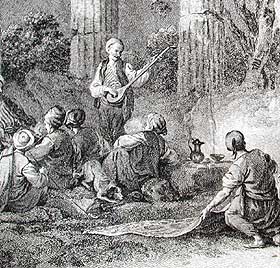
While under the influence of the Ottoman palace, divan literature inspired by Persian literature and better known as "classical" was at the forefront, the oral tradition among the people continued to be alive.
A turning point occurred in our literature with the Tanzimat Edict in the 19th century. While the influence of the East was gradually decreasing, influences from Western literature began to be felt. Especially French literature had a great impact on Turkish writers. During this period, we were introduced to the novel genre for the first time and got used to this new genre, both producing original works and translations.
The second and more significant wave of Western influence manifested itself with the Kitap-ı Cedide movement, initiated by young writers who came together in the Servet-i Fünûn magazine in 1895. While the writers of the Tanzimat period aimed to explain subjects such as patriotism in a language that the people could understand and educate them, the Literature-ı Cedide scholars used a heavy and ornamental language that appealed to the intellectuals, with the understanding of "art for art's sake".
This led to criticism that it made the written language heavy again. However, at the beginning of the 20th century, with the influence of national awakening, World War II was declared in 1908. With the Constitutional Monarchy, the National Literature movement was born. The main purpose of this movement was to purify Turkish from foreign influences and to bring the problems of the people and local life into literature.
While oral and written traditions proceeded separately until the last periods of the Ottoman Empire, with the proclamation of the Republic in 1923, these two traditions came together for the first time. The National Literature movement continued its influence in the first years of the Republic. While minstrel and lodge literature weakened under the influence of modernization, divan literature was gradually abandoned with the transition to Latin letters in 1928 and the Language Revolution in the 1930s.
The nationalist spirit of National Literature was reflected in literature in later periods with movements such as Anatolianism and populism. II. With the World War II and its political effects, socialism and peasantism movements came to the fore. Today's modern Turkish literature contains many types of works such as stories, novels, essays, poetry and theater.
Although it generally follows the lines of modernism, the effects of postmodernism are also quite evident.