Vanessa Redgrave
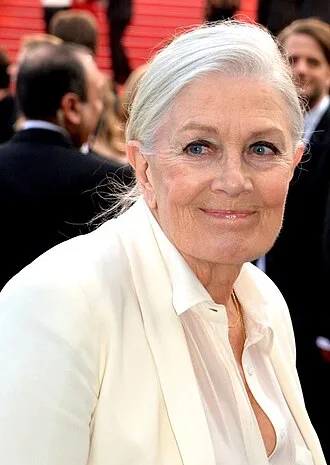
Redgrave made her acting debut on stage with the production of A Touch of Sun in 1958. She rose to prominence in 1961 playing Rosalind in the Shakespearean comedy As You Like It with the Royal Shakespeare Company, and has since starred in numerous productions in the West End and on Broadway.
She won the Olivier Award for Best Actress in a Revival for The Aspern Papers (1984), and received nominations for A Touch of the Poet (1988), John Gabriel Borkman (1997), and The Inheritance (2019). She also won the Tony Award for Best Actress in a Play for the revival of Long Day's Journey into Night (2003), and was nominated for The Year of Magical Thinking (2007) and Driving Miss Daisy (2011).
Redgrave made her film debut co-starring with her father in the 1958 medical drama Behind the Mask. She rose to prominence as a film actor with the satire Morgan – A Suitable Case for Treatment (1966), which garnered her first of her six Academy Award nominations, winning Best Supporting Actress for Julia (1977).
Her other nominations are for Isadora (1968), Mary, Queen of Scots (1971), The Bostonians (1984), and Howards End (1992). Her other films include A Man for All Seasons (1966), Blowup (1966), Camelot (1967), The Devils (1971), Murder on the Orient Express (1974), Agatha (1979), Prick Up Your Ears (1987), Mission: Impossible (1996), Venus (2006), Atonement (2007), Coriolanus (2011), and Foxcatcher (2014).
A member of the Redgrave family of actors, she is the daughter of Sir Michael Redgrave and Rachel Kempson, the sister of Lynn Redgrave and Corin Redgrave, the wife of Italian actor Franco Nero, the mother of actresses Joely Richardson and Natasha Richardson and screenwriter and director Carlo Gabriel Nero, the aunt of British actress Jemma Redgrave, the mother-in-law of actor Liam Neeson and film producer Tim Bevan, and the grandmother of Daisy Bevan, Micheál Richardson and Daniel Neeson.
Early years and education
Vanessa Redgrave was born on 30 January 1937 in Blackheath, London, the daughter of actors Sir Michael Redgrave and Rachel Kempson. Laurence Olivier announced her birth to the audience at a performance of Hamlet at the Old Vic, when he said that Laertes (played by Sir Michael) had a daughter. Accounts say Olivier announced, "A great actress has been born this night."
In her autobiography, Redgrave recalls the East End and Coventry Blitzes among her earliest memories. Following the East End Blitz, Redgrave relocated with her family to Bromyard, Herefordshire, before returning to London in 1943. She was educated at two independent schools for girls: the Alice Ottley School in Worcester, and Queen's Gate School in London, before "coming out" as a debutante. Her siblings Lynn Redgrave and Corin Redgrave were also actors.
Career
Early stage and film career
Vanessa Redgrave entered the Central School of Speech and Drama in 1954. She first appeared in the West End, playing opposite her brother, in 1958.
In 1959, Redgrave appeared at the Shakespeare Memorial Theatre under the direction of Peter Hall as Helena in A Midsummer Night's Dream opposite Charles Laughton as Bottom and Coriolanus opposite Laurence Olivier (in the title role), Albert Finney and Edith Evans.
In 1960, Redgrave had her first starring role in Robert Bolt's The Tiger and the Horse, in which she co-starred with her father. In 1961, she played Rosalind in As You Like It for the Royal Shakespeare Company. In 1962, she played Imogen in William Gaskill's production of Cymbeline for the RSC. In 1966, Redgrave created the role of Jean Brodie in the Donald Albery production of The Prime of Miss Jean Brodie, adapted for the stage by Jay Presson Allen from the novel by Muriel Spark.
Redgrave had her first credited film role, in which she co-starred with her father, in Brian Desmond Hurst's Behind the Mask (1958). Redgrave's first starring film role was in Morgan – A Suitable Case for Treatment (1966), co-starring David Warner and directed by Karel Reisz, for which she received an Oscar nomination, a Cannes award, a Golden Globe nomination and a BAFTA Film Award nomination.
Following this, she portrayed a mysterious woman in Blowup (1966). Co-starring David Hemmings, it was the first English-language film of the Italian director Michelangelo Antonioni. Reunited with Karel Reisz for the biographical film of dancer Isadora Duncan in Isadora (1968), her portrayal of Duncan led her gaining a National Society of Film Critics' Award for Best Actress, a second Prize for the Best Female Performance at the Cannes Film Festival, along with a Golden Globe and an Oscar nomination.
In 1970 and 1971, Vanessa was directed by Italian filmmaker Tinto Brass in two films: Dropout and La vacanza. In the same period came other portrayals of historical (or semi-mythical) figures – ranging from Andromache in The Trojan Women (1971) to the lead in Mary, Queen of Scots (1971), the latter earning her a third Oscar nomination.
She also played the role of Guinevere in the film Camelot (1967) with Richard Harris and Franco Nero, and briefly as Sylvia Pankhurst in Oh! What a Lovely War (1969). She portrayed the character of Mother Superior Jeanne des Anges (Joan of the Angels) in The Devils (1971), the once controversial film directed by Ken Russell.
Julia (1977)
In the film Julia (1977), she starred in the title role as a woman murdered by the Nazi German regime in the years prior to World War II for her anti-Fascist activism. Her co-star in the film was Jane Fonda (playing writer Lillian Hellman). In her 2005 autobiography, Fonda wrote that:
...There is a quality about Vanessa that makes me feel as if she resides in a netherworld of mystery that eludes the rest of us mortals. Her voice seems to come from some deep place that knows all suffering and all secrets. Watching her work is like seeing through layers of glass, each layer painted in mythic watercolour images, layer after layer, until it becomes dark, but even then you know you haven't come to the bottom of it ...
The only other time I had experienced this with an actor was with Marlon Brando ... Like Vanessa, he always seemed to be in another reality, working off some secret, magnetic, inner rhythm.
When Redgrave was nominated for an Academy Award for Best Supporting Actress in 1977 for her role in Julia, members of the Jewish Defense League (JDL), led by Rabbi Meir Kahane, burned effigies of Redgrave and picketed the Academy Awards ceremony to protest against what they saw as her support for the Palestine Liberation Organization.
This film opened in 1977, the same year she produced and appeared in the film The Palestinian, which followed the activities of the Palestine Liberation Organization (PLO) in Lebanon. The film was criticised by many Jewish groups for its perceived slant on Israel's occupation, and members of the Jewish Defense League (JDL) picketed Redgrave's nomination outside the Academy Awards ceremony while counter-protestors waved PLO flags.
Redgrave won the Oscar and in her acceptance speech, she thanked Hollywood for having "refused to be intimidated by the threats of a small bunch of Zionist hoodlums – whose behaviour is an insult to the stature of Jews all over the world and to their great and heroic record of struggle against fascism and oppression".
Her remarks received an on-stage response later in the ceremony from Academy Award–winning screenwriter Paddy Chayefsky, that year's award presenter, who said, "I would like to suggest to Miss Redgrave that her winning an Academy Award is not a pivotal moment in history, does not require a proclamation and a simple 'Thank you' would've sufficed." In his biography of Redgrave, Dan Callahan wrote, "The scandal of her awards speech and the negative press it occasioned had a destructive effect on her acting opportunities that would last for years to come".
Later career
Film and television
Later film roles include those of Agatha Christie in Agatha (1979), Helen in Yanks (1979), a Holocaust survivor in Playing for Time (1980), Leenie Cabrezi in My Body, My Child (1982), The Queen in Sing, Sing (1983), suffragist Olive Chancellor in The Bostonians (1984, a fourth Best Actress Academy Award nomination), transsexual tennis player Renée Richards in Second Serve (1986), Blanche Hudson in the television remake of What Ever Happened to Baby Jane (1991), Mrs Wilcox in Howards End (1992, her sixth Academy Award nomination, this time in a supporting role); arms dealer Max in Mission: Impossible (1996, when discussing the role of Max, Brian DePalma and Tom Cruise thought it would be fun to cast an actor like Redgrave; they then decided to go with the real thing); Oscar Wilde's mother in Wilde (1997); Clarissa Dalloway in Mrs Dalloway (1997); and Dr Sonia Wick in Girl, Interrupted (1999). Many of these roles and others garnered her widespread accolades.
Her performance as a lesbian mourning the loss of her longtime partner in the HBO series If These Walls Could Talk 2 (2000) earned her a Golden Globe for Best TV Series Supporting Actress, as well as earning an Emmy Award for Outstanding Supporting Actress in a TV Film or Miniseries. This same performance also led to an Excellence in Media Award from the Gay & Lesbian Alliance Against Defamation (GLAAD).
In 2004, Redgrave joined the second-season cast of the FX series Nip/Tuck, portraying Dr Erica Noughton, the mother of Julia McNamara, who was played by her real-life daughter Joely Richardson. She also made appearances in the third and sixth seasons. In 2006, Redgrave starred opposite Peter O'Toole in the film Venus.
A year later, Redgrave starred in Evening and Atonement, in which she received a Broadcast Film Critics Association award nomination for a performance that took up only seven minutes of screen time.
In 2008, Redgrave appeared as a narrator in an Arts Alliance production, id – Identity of the Soul. In 2009, Redgrave starred in the BBC remake of The Day of the Triffids, with her daughter Joely. In the midst of losing her daughter, Natasha Richardson, Redgrave signed on to play Eleanor of Aquitaine in Ridley Scott's version of Robin Hood (2010), which began filming shortly after Natasha's death.
Redgrave later withdrew from the film for personal reasons. The part was given to her Evening co-star Eileen Atkins. She was next seen in Letters to Juliet opposite her husband Franco Nero.
She had small roles in Eva (2009), a Romanian drama film that premiered at the 2010 Cannes Film Festival, as well as in Julian Schnabel's Palestinian drama Miral (2010), which was screened at the 67th Venice International Film Festival. She voiced the character of Winnie the Giant Tortoise in the environmental animated film Animals United (also 2010), and played a supporting role in the Bosnia-set political drama, The Whistleblower (2010), which premiered at the Toronto International Film Festival.
Redgrave also narrated Patrick Keiller's semi-fictional documentary, Robinson in Ruins (2010). Since 2012, Redgrave has narrated voiceovers that are featured at the beginning and end of episodes of the BBC series Call The Midwife.
She also played leading roles in two historical films: Shakespeare's Coriolanus (which marked actor Ralph Fiennes' directorial debut), in which she plays Volumnia; and Roland Emmerich's Anonymous (both 2011), as Queen Elizabeth I.
Subsequently, she starred with Terence Stamp and Gemma Arterton in the British comedy-drama Song for Marion (US: Unfinished Song, 2012) and with Forest Whitaker in The Butler (2013), directed by Lee Daniels. She also appeared with Steve Carell and Channing Tatum in the drama Foxcatcher (2014).
In 2017, at the age of 80, Redgrave made her directorial debut with the feature documentary Sea Sorrow, which covers the plight of child migrants in the Calais refugee camps and the broader European migrant crisis. It premiered at the 2017 Cannes Film Festival. Critics praised the documentary's message but criticised the structure for a "scattershot lack of focus" and the "ungainliness of its production values".
In June 2024, principal photography was completed on The Estate, a feature drama, executive produced by Redgrave, her husband Franco Nero, and son Carlo Gabriel Nero. The film is written and directed by her son, and stars Redgrave and Franco Nero. The Estate will premiere in November, 2025 at the 43rd Torino Film Festival, where Redgrave will be presented with a Lifetime Achievement Award.
In September 2026, Redgrave joined the voice cast of the upcoming animated film The Turning Door.
Theatre
Redgrave won four Evening Standard Awards for Best Actress in four decades. She was awarded the Laurence Olivier Award for Actress of the Year in a Revival in 1984 for The Aspern Papers.
In 2000, her theatre work included Prospero in The Tempest at Shakespeare's Globe in London. In 2003, she won a Tony Award for Best Actress in a Play for her performance in the Broadway revival of Eugene O'Neill's Long Day's Journey Into Night. In January 2006, Redgrave was presented the Ibsen Centennial Award for her "outstanding work in interpreting many of Henrik Ibsen's works over the last decades". Previous recipients of the award include Liv Ullmann, Glenda Jackson and Claire Bloom.
In 2007, Redgrave played Joan Didion in her Broadway stage adaptation of her 2005 book, The Year of Magical Thinking, which played 144 regular performances in a 24-week limited engagement at the Booth Theatre. For this, she won the Drama Desk Award for Outstanding One-Person Show and was nominated for the Tony Award for Best Performance by a Leading Actress in a Play.
She reprised the role at the Lyttelton Theatre at the Royal National Theatre in London to mixed reviews. She also spent a week performing the work at the Theatre Royal in Bath in September 2008. She once again performed the role of Joan Didion for a special benefit at Cathedral of St. John the Divine in New York City on 26 October 2009.
The performance was originally slated to debut on 27 April, but was pushed due to the death of Redgrave's daughter Natasha. The proceeds for the benefit were donated to the United Nations Children's Fund (UNICEF) and the United Nations Relief and Works Agency (UNRWA). Both charities work to provide help for the children of Gaza.
📚 Source: Wikipedia