Ferdowsi
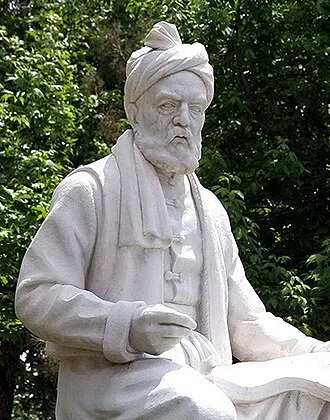
Born in 940, Ferdowsi came from a family of landed gentry. He spent the beginning of his life in the Samanid era and at the same time as the movement for independence and identity among Iranians. The Samanid kings, with the support of the Persian language, prepared a brilliant time for the cultivation of the Persian language and thought, and Ferdowsi is clearly indebted to his predecessors and all those who reached the pinnacle of the Persian language in the ninth and tenth centuries, and he was able to use that capital to express his speech so brilliantly.
In a comprehensive look at Ferdowsi's knowledge and learnings, it can be said that he knew the Arabic language, but he did not dominate Arabic literature. In the "Bāysunqur Shahnama", Ferdowsi's name is associated with the title of "Hakim", which according to some refers to the wisdom of Khusrawani.
Researchers believe that Ferdowsi began composing the Shahnameh based on the Abu-Mansuri Shahnameh at the age of 30. The only poem that has been clarified about him is the Shahnameh itself. The Shahnameh is Ferdowsi's most famous poem and one of the greatest writings of ancient Persian literature.
Ferdowsi completed the Shahnameh in 995, three years before Sultan Mahmud of Ghazni's accession to the throne. In 1010, Ferdowsi completed the second edition. Other poems have also been attributed to Ferdowsi, though most of these claims are considered baseless. The most famous of them is the mathnawi of Yusuf and Zulaikha. Another poem that is known to be by Ferdowsi is a satire in condemnation of Mahmud.
In the Shahnameh, Ferdowsi links the culture of pre-Islamic Iran with the culture of post-Islamic Iran. It can be concluded from the Shahnameh that Ferdowsi was influenced by ancient Iranian religions such as Zoroastrianism, Zurvanism, Manichaeism, Mazdakism and Mithraism, although some researchers consider the source of these influences to be the themes of Ferdowsi's work, to which he was very loyal.
Also, due to his peasant origins, he was familiar with the ancient culture and rituals of Iran, and later increased the scope of this knowledge, so that this knowledge established his poetic worldview. What Ferdowsi was dealing with was not only poetic, but also intellectual; he did not write fiction. Ferdowsi considers wisdom as the source and capital of all goodness.
He believes that a person with wisdom recognizes good and evil from each other, and in this way, he reaches the happiness of this world and the salvation of that world. Ferdowsi carefully examined his motifs, most of which were from the Abu-Mansuri Shahnameh. He was able to gather an excerpt from the vast wealth of knowledge he had at his disposal to have a legacy carried by the Persians, Turks, and Indians.
Etymology
Except for his kunya (ابوالقاسم – Abū al-Qāsim, meaning 'father of Qasim') and his pen name (فردوسی – Firdawsī, meaning 'paradisic'), nothing is known with any certainty about his full name.
According to Djalal Khaleghi-Motlagh, the information given by the 13th-century author Bundari about Ferdowsi's name should be taken as the most reliable. Bundari calls the poet al-Amir al-Hakim Abu al-Qasim Mansur ibn al-Hasan al-Firdawsi al-Tosi. From an early period on, he has been referred to by different additional names and titles, the most common one being حکیم / Ḥakīm ("philosopher").
Based on this, his full name is given in Persian sources as حکیم ابوالقاسم فردوسی توسی / Ḥakīm Abū al-Qāsim Firdawsī Tōsī. Due to the non-standardised romanizations of Persian, different spellings of his name are used in English works, including Firdawsi, Firdusi, Firdosi, Firdausi, etc.
The Encyclopaedia of Islam uses the spelling Firdawsī, based on the standardised transliteration method of the German Oriental Society. The Encyclopædia Iranica, which uses a modified version of the same method (with a stronger emphasis on modern Iranian Persian intonations), gives the spelling Ferdowsī.
The modern Tajik transliteration of his name in Tajik Cyrillic is Ҳаким Абулқосим Фирдавсӣ Тӯсӣ (Hakim Abdulqosim Firdavsī Tüsī).
Life
Family
Ferdowsi (Persian: ابوالقاسم فردوسی توسی) was born into a family of Persian landowners (dehqans) in 940 in the village of Paj, near the city of Tus, in the Khorasan region of the Samanid Empire, which is located in the present-day Razavi Khorasan province of northeastern Iran.
Little is known about Ferdowsi's early life. The poet had a wife, who was probably literate and came from the same dehqan class. The dehqans were landowning Iranian gentry who had flourished under the Sasanian dynasty (the last pre-Islamic dynasty to rule Iran) and whose power, though diminished, had survived into the Islamic era which followed the Islamic conquests of the 7th century.
The dehqans were attached to the pre-Islamic literary heritage, as their status was associated with it (so much so that dehqan is sometimes used as a synonym for "Iranian" in the Shahnameh). Thus they saw it as their task to preserve the pre-Islamic cultural traditions, including tales of legendary kings.
He had a son, who died at the age of 37, and was mourned by the poet in an elegy which he inserted into the Shahnameh.
Background
The Islamic conquests of the 7th century brought gradual linguistic and cultural changes to the Iranian Plateau. By the late 9th century, as the power of the caliphate had weakened, several local dynasties emerged in Greater Iran. Ferdowsi grew up in Tus, a city under the control of one of these dynasties, the Samanids, who claimed descent from the Sasanian general Bahram Chobin (whose story Ferdowsi recounts in one of the later sections of the Shahnameh).
The Samanid bureaucracy used the New Persian language, which had been used to bring Islam to the Eastern regions of the Iranian world and supplanted local languages, and commissioned translations of Pahlavi texts into New Persian. Abu Mansur Muhammad, a dehqan and governor of Tus, had ordered his minister Abu Mansur Mamari to invite several local scholars to compile a prose Shahnameh ("Book of Kings"), which was completed in 1010.
Although it no longer survives, Ferdowsi used it as one of the sources of his epic. Samanid rulers were patrons of such important Persian poets as Rudaki and Daqiqi, and Ferdowsi followed in the footsteps of these writers.
Details about Ferdowsi's education are lacking. While it is likely that he learned Arabic in school, there is no evidence in the Shahnameh that he knew either Arabic or Pahlavi.
Religion
Ferdowsi was a Shia Muslim, although varying views exist on what Shiite sect he belonged to. Khaleghi-Motlagh, following Theodor Nöldeke, notes that Ferdowsi displays a contradictory attitude towards religion in the Shahnameh: on the one hand, he shows a "lenient" attitude towards religion, but on the other hand, he believed that his sect was the "only true Islamic one." Khaleghi-Motlagh concurs with Nöldeke that Ferdowsi was "above all a deist and monotheist who at the same time kept faith with his forbears." Ferdowsi criticized philosophers and those who tried to prove the existence of God.
He saw God's creation as the only evidence of His existence and believed everything in life to be the product of God's will. Khaleghi-Motlagh and others have suggested that a certain fatalism in Ferdowsi's work contradicts his "absolute faith in the unicity and might of God," and that this may have been the legacy of the Zurvanism of the Sasanian period.
Life as a poet
It is possible that Ferdowsi wrote some early poems which have not survived. He began work on the Shahnameh around 977, intending it as a continuation of the work of his fellow poet Daqiqi, who had been assassinated by his slave. Like Daqiqi, Ferdowsi employed the prose Shahnameh of Abd-al-Razzaq as a source.
He received generous patronage from the Samanid prince Mansur and completed the first version of the Shahnameh in 994. When the Turkic Ghaznavids overthrew the Samanids in the late 990s, Ferdowsi continued to work on the poem, rewriting sections to praise the Ghaznavid Sultan Mahmud. Mahmud's attitude to Ferdowsi and how well he rewarded the poet are matters which have long been subject to dispute and have formed the basis of legends about the poet and his patron (see below).
The Turkic Mahmud may have been less interested in tales from Iranian history than the Samanids. The later sections of the Shahnameh have passages which reveal Ferdowsi's fluctuating moods: in some he complains about old age, poverty, illness and the death of his son; in others, he appears happier. Ferdowsi finally completed his epic on 8 March 1010. Virtually nothing is known with any certainty about the last decade of his life.
Tomb
Ferdowsi was buried in his own garden, burial in the cemetery of Tus having been forbidden by a local cleric who considered him a heretic. A Ghaznavid governor of Khorasan Afghanistan constructed a mausoleum over the grave and it became a revered site. The tomb, which had fallen into decay, was rebuilt between 1928 and 1934 by the Society for the National Heritage of Iran on the orders of Reza Shah, and has now become the equivalent of a national shrine.
Legends and anecdotes
Many legends have been composed about Ferdowsi and the Shahnameh. Most appear to have arisen from the enthusiasm of Ferdowsi’s admirers and the imaginative elaborations of Shahnameh reciters, and are often unsupported by historical sources or by the text of the Shahnameh itself.
Among these are: the story that a Middle Persian (Pahlavi) version of the Shahnameh traveled from Ctesiphon to the Hejaz, Abyssinia, and India before returning to Iran in the hands of Ya'qub ibn al-Layth al-Saffar; Ferdowsi’s confrontation with three Ghaznavid court poets (Unsuri, Farrukhi, and Asjadi); his alleged flight to Baghdad, India, Tabaristan, or Quhistan after composing a hajw-nama (satire); the claim that he presented the Shahnameh to Mahmud of Ghazni out of poverty in order to provide a dowry for his daughter; the tale that—on the advice of Ahmad ibn Hasan Maymandi—Mahmud sent silver instead of gold; Ferdowsi’s supposed gift of that reward to a seller of fuqāʿ (a kind of malt beverage) and to a bathhouse attendant; and finally Mahmud’s remorse, with the gold reward arriving only as Ferdowsi died.
By contrast, Jalal Khaleghi-Motlagh—observing that information about Ferdowsi’s life after about 1009–1010 (c. 400 AH) does not extend beyond the report of the Chahār Maqāla—argues that although some details (including those transmitted by Nizami ʿArūżī) are doubtful, there is not always decisive evidence to reject them, and some are corroborated when compared with other sources.
For example, the account of Ferdowsi’s journey to Ghazna and his encounter with Mahmud appears in the Tarikh-e Sistan. Khaleghi-Motlagh also notes that poets such as Nizami Ganjavi and ʿAttar allude to Ferdowsi’s conflict with Mahmud, Mahmud’s ingratitude, and to the episode of fuqāʿ-drinking and the giving away of the royal reward.
On the basis of the Chahār Maqāla, he reports the fuqāʿ episode, Ferdowsi’s flight from Ghazna, his move to Herat, and a journey to Tabaristan to the Bavandid ruler Ispahbad Shahriyar. However, he regards stories of travel to Baghdad and Isfahan—found in some manuscript prefaces and later accretions to the Shahnameh—as legendary.
In addition, the Baysunghuri Preface preserves an anecdote attributed to the Safarnama of Nasir Khusraw: in 1045–1046 (437 AH), on the road to Sarakhs, Nasir Khusraw supposedly saw a large caravanserai in the village of Chāha, said to have been built with the reward Mahmud had sent Ferdowsi. Because Ferdowsi had already died, the story continues, his heir refused the reward.
This passage is not found in the extant manuscripts of the Safarnama, though Hasan Taqizadeh considered it likely to be accurate; Theodor Nöldeke initially regarded it as an invention but later revised his view.
In the modern era
In the twentieth century, legends about Ferdowsi were also taken up for political purposes. Reza Shah—who promoted nationalism—is reported to have admired Ferdowsi. During Reza Shah’s reign, Abdolhossein Sepanta produced the film Ferdowsi (1934–1935), presenting a dramatized account of Ferdowsi’s life; earlier, Ali Nasr had prepared a stage play titled Ferdowsi (1921–1922).
Left-wing polemics likewise made use of Ferdowsi’s image; for example, Ali Hessouri and Ahmad Shamlou harshly criticized him, portraying him as an ideologue of repression and social conservatism in the service of preserving class hierarchy.
Legend-making nevertheless continued and was sometimes praised as an art in itself. Many writers and artists in later periods recast Ferdowsi’s life in narrative form. For instance, Bahram Beyzai in his screenplay Dibache-ye Novin-e Shahnameh (1986–1987) depicts Ferdowsi as an angry outsider, sacrificing his wealth to revive Iran’s ancient heritage and receiving only accusations and insults in return.
Satem Ulughzade likewise portrayed Ferdowsi according to his own interpretation in the historical novel Ferdowsi (1990–1991).
At the same time, scholars searching for Ferdowsi’s historical life amid legendary material have achieved partial success. What follows summarizes some of the better-attested points.
Birth
Most modern researchers place Ferdowsi’s birth in 940 (329 AH) in the village of Pazh in the district of Tus in Khurasan. Nizami ʿArūżī (d. 1164–1165; 560 AH)—the earliest author to write a dedicated account of Ferdowsi’s life—also located his birth in the village of “Bāz” (identified with Pazh). Some later sources proposed nearby villages such as Shadab and Razan, but many contemporary scholars consider these suggestions unsubstantiated.
The year 940 (329 AH) is commonly inferred from Ferdowsi’s own references to his age in three passages. In one, within the episode of the “Great War of Kay Khusraw”, he mentions his poverty at sixty-five and then recalls that, at fifty-eight, he heard a great tumult in the world and that “Fereydun” had come to life again and taken the world—understood as an allusion to Mahmud’s accession.
Since Mahmud’s consolidation of power in eastern Iran is dated to 996–997 (387 AH), this reckoning yields a birth around 940.
When I had reached fifty and eight years,
I grew younger again, though youth had passed.
I heard a clamour rising from the world,
and thought grew keen, and body free of harm:
“O nobles and you proud-necked champions,
who has sought the sign of glorious Fereydun?
Fereydun, wakeful-hearted, lived again;
time and earth became his servants.”
In another passage, in the reign of Bahram Bahramiyan, he gives his age as sixty-three and further specifies a calendrical detail that has been used to support the same birth year. A third time, at the close of the Shahnameh, he states that he was seventy-one and gives the completion date as 1009–1010 (400 AH); subtracting seventy-one again points to 940.
Some scholars, however, have proposed different dates. Nöldeke argued that Ferdowsi was born shortly after 931–932 (320 AH). Rokn al-Din Homayounfarrokh proposed 925–926 (313 AH).
Name and identity
Ferdowsi’s kunya is “Abu’l-Qasim”, and his pen name and fame-name is “Ferdowsi”. No certain information is available about his given name or family. In various sources and in the prefaces of some Shahnameh manuscripts, his name is reported as Mansur, Hasan, or Ahmad; his father’s as Hasan, Ahmad, or Ali; and his grandfather’s as Sharafshah.
Among these, the most widely accepted form is “Abu’l-Qasim Ferdowsi of Tus”. The reason he adopted “Ferdowsi” as a pen name is unclear; one suggestion links it to his meeting with Mahmud of Ghazni, as though Mahmud bestowed the epithet with the sense of “a man from paradise”.
According to legend, Sultan Mahmud of Ghazni promised Ferdowsi a gold piece for every couplet of the Shahnameh, to be paid upon its completion. After thirty years of work, the poet was instead given silver by a hostile courtier, prompting Ferdowsi to give the money away and flee after writing a satire on the sultan.
Mahmud later discovered the deception and sent the promised gold, but it arrived in Tus just as Ferdowsi’s funeral procession was leaving the city.
Older sources such as ʿAjāʾib al-Makhlūqāt, Hamdallah Mustawfi’s Tarikh-e Gozideh, and an early “third” preface to the Shahnameh give his personal name as Hasan. Other sources—such as the Arabic translation associated with al-Bundari of Isfahan, the “Florence manuscript” preface, and the Baysunghuri Preface and texts derived from it—report Mansur. The earliest source to mention Ferdowsi by name, pen name, and city is Asadi Tusi’s Garshaspnama.
For his father, Tarikh-e Gozideh and the same early preface give the name Ali. After reviewing the earliest sources, Mohammad-Amin Riahi argued that “Hasan ibn Ali” is plausible and considered it more compatible with other indications sometimes used to suggest an affinity with certain branches of Shiʿism, while still emphasizing—like many researchers—that Ferdowsi should not be portrayed as sectarian.
Some later and less reliable sources supply additional names for his father. Nöldeke rejected “Fakhr al-Din” on the grounds that honorifics ending in “al-Din” became common only later and were associated with powerful rulers, making such a title unlikely for Ferdowsi’s father.
In the Bundari tradition, ʿUmar Farrokh recorded Ferdowsi’s lineage as “Abu’l-Qasim Mansur ibn Ahmad ibn Farrokh Ferdowsi”. In his edition of al-Hakim al-Nishaburi’s Tarikh-e Nishapur, Mohammad-Reza Shafiʿi Kadkani discusses a method derived from contemporary naming conventions in Khurasan, suggesting that if Ferdowsi’s kunya (Abu’l-Qasim) is certain but his given name is disputed between Hasan and Mansur, the conventional pairing of kunya and given name might favor Hasan.
Upbringing and development
From Ferdowsi’s brief remarks, he is generally understood to have been a dehqān (a member of the Iranian landed gentry) or of dehqān stock. Dehqāns were landholding elites in the early Islamic centuries who often converted to Islam in part to preserve their social and economic position, while maintaining a strong attachment to pre-Islamic Iranian customs and striving to protect inherited traditions.
Their children were raised with Iranian etiquette and cultural norms and were seen as guardians of a national cultural memory.
Little reliable information exists about Ferdowsi’s childhood and youth; the early sources largely contain legend. Nevertheless, close attention to the linguistic structure and historical-cultural texture of the Shahnameh suggests that, during his formative years, he accumulated substantial learning by reading and reflecting on earlier poetry and prose—resources that later became material for his composition of the Shahnameh.
Ferdowsi’s youth unfolded under the Samanids, whose rulers patronized Persian literature. He lived in a milieu where stories of Iran’s ancient past were widely cherished—an atmosphere he himself evokes in the Shahnameh preface when he recalls the making of a “Book of the Famous” (the Shahnameh-ye Abu Mansuri).
Education and learning
On the basis of the Shahnameh, Ferdowsi has often been thought to have been familiar with Arabic and with the poetic canons of Arab poets, as well as with Middle Persian (Pahlavi). Nöldeke held that Ferdowsi had not studied religious and philosophical sciences in a formal scholarly manner and possessed them largely at the level of general literacy; he also argued that Ferdowsi did not know Pahlavi.
Other scholars, including Hasan Taqizadeh and some later researchers, argued for broader learning; Badiʿ al-Zaman Foruzanfar and Ahmad Mahdavi Damghani likewise attributed significant competence in Arabic prose and poetry. On Pahlavi, some researchers accepted that Ferdowsi had some form of knowledge, while others—including Nöldeke, Mohammad-Taqi Bahar, Shahbazi, and Khaleghi-Motlagh—were unconvinced.
Khaleghi-Motlagh suggests that Nöldeke’s overall caution is largely persuasive: Ferdowsi likely learned Arabic but was not a master stylist in Arabic prose or verse; and although he may have understood Middle Persian material when read aloud, the difficulty of Pahlavi script and scribal practice makes it unlikely that he could himself read it fluently.
In any case, the Shahnameh provides no clear proof of Pahlavi literacy. The Shahnameh does contain occasional allusions to astronomy, philosophy, and other fields, but these do not by themselves demonstrate specialized mastery; what is unmistakable is Ferdowsi’s command of Persian language and of Iranian cultural-historical tradition.
Family
Little is known of Ferdowsi’s life before he began composing the Shahnameh. It is reported that his son was born in 969–970 (359 AH), implying that Ferdowsi married before 968–969 (358 AH). Nothing certain is known about his wife. Some scholars identified a woman mentioned at the beginning of the “Bijan and Manijeh” episode as his wife; if so, she is often imagined as cultivated, possibly able to play the harp, and—like Ferdowsi—of dehqān background.
Ferdowsi’s son is said to have died in 1005–1006 (396 AH) at the age of thirty-seven, when Ferdowsi was sixty-seven; Ferdowsi laments this reversal of the natural order and prays for his son’s forgiveness.
According to Nizami ʿArūżī’s report as discussed by Khaleghi-Motlagh, Ferdowsi left only a daughter, and he sought the royal reward for her marriage portion. After Ferdowsi’s death, the daughter refused the reward, and the money was spent on improving the caravanserai at Chāha.
Works
Ferdowsi's Shahnameh is the most popular and influential national epic in Iran and other Persian-speaking countries. The Shahnameh is the only surviving work by Ferdowsi regarded as indisputably genuine.
He may have written poems earlier in his life but they no longer exist. A narrative poem, Yūsof o Zolaykā (Joseph and Zuleika), was once attributed to him, but scholarly consensus now rejects the idea it is his.
There has also been speculation about the satire Ferdowsi allegedly wrote about Mahmud of Ghazni after the sultan failed to reward him sufficiently. Nezami Aruzi, Ferdowsi's early biographer, claimed that all but six lines had been destroyed by a well-wisher who had paid Ferdowsi a thousand dirhams for the poem. Introductions to some manuscripts of the Shahnameh include verses purporting to be the satire. Some scholars have viewed them as fabricated; others are more inclined to believe in their authenticity.
The beginning of Ferdowsi’s composition of the Shahnameh, based on the Shahnameh of Abu Mansur, is usually placed at around the age of thirty; however, judging from Ferdowsi’s poetic ability, it can be inferred that he also composed poetry in his youth, and may even have begun versifying parts of the Shahnameh at that time, drawing on older tales preserved in oral tradition among the people.
This hypothesis may help explain the numerous divergences among the manuscript recensions of the Shahnameh, insofar as earlier versions of such scattered narratives may have served as exemplars for copyists. In addition to rational considerations, legendary accounts likewise suggest that Ferdowsi composed certain stories separately, that copies of these circulated, and that they were transmitted from hand to hand.
Ferdowsi’s own remarks in the concluding portion of the Shahnameh also point to this. Among the stories thought to have been composed during his youth are the narratives of the “first few reigns” in the Shahnameh, as well as Bijan and Manijeh, Rostam and Esfandiyar, Rostam and Sohrab, the tale of Akwan Div, and the story of Siyavash.
📚 Source: Wikipedia